Plant Overview
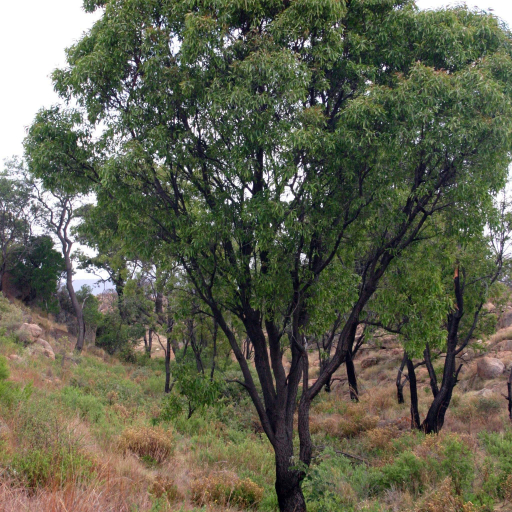
Often called the Willow Beechwood, Faurea saligna is a graceful, slender tree that belongs to the Protea family—though you might not guess it at first glance! Native to the rocky slopes and grasslands of Southern Africa, it is frequently nicknamed "Boekenhout" by locals. It is beloved for its "weeping" silhouette and its ability to transform a landscape with its vivid autumnal colors.
🔍 How to Identify
- 🍃 Willow-like Foliage: The leaves are narrow, lance-shaped, and drooping, mimicking the look of a Willow tree. In autumn, these leaves turn a spectacular bright red or gold before falling.
- 🕯️ Candle-like Blooms: It produces long, slender flower spikes (up to 15cm) that look like fuzzy, creamy-pink candles. These spikes have a delicate, honey-like fragrance.
- 🪵 Rugged Bark: The trunk features dark grey to nearly black bark that is deeply fissured and corky, providing a rugged contrast to its delicate leaves.
🏡 In Your Garden
- 🦜 The Sunbird's Diner: This tree is a high-priority destination for nectar-loving birds. Planting one is the fastest way to invite sunbirds and honey-eaters into your yard.
- 🌱 Root Sensitivity: Like many members of the Protea family, it has a sensitive root system. It thrives best in well-drained, slightly acidic soil and strongly dislikes being moved once established—pick its "forever home" carefully!
- 🛡️ Hardy Survivor: Once established, it is remarkably drought-tolerant and can survive light frosts, making it a resilient choice for temperate to warm climates.
⚠️ Safety & Toxicity
- ✅ Safe Species: Faurea saligna is generally considered non-toxic and safe for both humans and common household pets like cats and dogs.
- 🧤 Skin Protection: While not poisonous, the old, dry bark can be quite rough and "corky." It is wise to wear gardening gloves when pruning to avoid minor skin abrasions.
✨ Fun Fact
The Afrikaans name "Boekenhout" translates to "Book-wood." This name was given by early settlers because the wood’s beautiful, flecked grain reminded them of the European Beechwood used for making furniture and high-quality book covers!

Detailed Care Instructions
To grow a Faurea Saligna plant, also known as the Forest elder or knotty elder, you can follow these steps:
- Obtain seeds or young plants: You can either gather seeds from a mature Faurea Saligna plant or purchase them online or from a nursery. Alternatively, you can obtain a young plant from a nursery.
- Choose the right location: Faurea Saligna plants prefer to grow in full sun to partial shade. They also require well-draining soil, so be sure to choose a location with proper drainage.
- Prepare the soil: Before planting, prepare the soil by loosening it and removing any weeds or debris. Faurea Saligna plants can adapt to various soil types but prefer slightly acidic soil.
- Planting seeds or young plants:
- If using seeds: Sow the seeds directly into the prepared soil. Plant them at a depth of approximately twice their size and cover lightly with soil. Space the seeds at least a few inches apart.
- If using young plants: Dig a hole slightly larger than the root ball of the young plant. Carefully place the plant in the hole and backfill with soil, gently firming it around the roots.
- If using seeds: Sow the seeds directly into the prepared soil. Plant them at a depth of approximately twice their size and cover lightly with soil. Space the seeds at least a few inches apart.
- Watering: After planting, water the plant thoroughly to ensure the soil is moist. For the first few weeks, water regularly to keep the soil consistently moist but not waterlogged. Once established, the plant becomes relatively drought tolerant.
- Mulching and fertilizing: Apply a layer of organic mulch around the base of the plant to help retain moisture and suppress weeds. Additionally, you can fertilize the Faurea Saligna plant with a balanced slow-release fertilizer according to the package instructions.
- Pruning: Faurea Saligna plants benefit from occasional pruning to maintain their shape and remove dead or diseased branches. Prune in late winter or early spring before new growth appears.
- Pests and diseases: Monitor for common pests like aphids, scale insects, or caterpillars. Treat them accordingly with appropriate insecticides if needed. Additionally, be aware of any fungal diseases that might affect the plant and take appropriate preventive measures or consult a professional if necessary.
- Ongoing care: Once established, Faurea Saligna plants require minimal care. However, continue to monitor the plant's water needs and make any necessary adjustments. Regularly inspect the plant for any signs of pests or diseases and address them promptly.
By following these steps and providing the right conditions, you should be able to successfully grow a Faurea Saligna plant.
To water this plant, ensure that the soil is dry before watering it. You can check this by sticking your finger in the soil or using a soil moisture meter. When watering, apply water slowly and evenly to the soil, taking care not to let the water pool around the roots. Allow excess water to drain away from the pot or container. You can water the plant once or twice a week during the growing season. However, reduce the frequency of watering during the winter months when the plant is in its dormant phase. Avoid overwatering the plant as this can lead to root rot.
To fertilize this plant, use a balanced fertilizer with an N-P-K ratio of 10-10-10. Apply the fertilizer in the early spring or late fall, and evenly spread it around the base of the plant. Water the plant immediately after fertilizing to help the nutrients penetrate the soil. Do not over-fertilize, as this can cause leaf burn and damage to the roots.
Faurea Saligna plants prefer a well-draining soil that contains a mix of organic matter, sand, and loam. The soil should have a neutral to slightly acidic pH level, between 6.0 and 7.0. The plant requires nutrient-rich soil with good drainage as too much water can cause root rot. A soil mixture that contains compost and sand or perlite can provide good drainage while helping to retain moisture and nutrients. Adding a slow-release fertilizer can also help to ensure that the plant receives adequate nutrients over an extended period. It is important to avoid using heavy or clay soils, as these can lead to waterlogged roots and other detrimental effects.
Propagation of this plant can be done through the collection of seeds or by stem cuttings. For seed propagation, the seeds should be collected from mature plants and sown in well-drained soil in a warm, semi-shaded area. The soil should be kept moist until the seeds germinate, which can take several weeks.
Stem cuttings can also be taken from the plant in the spring or summer. Cuttings should be at least 10 cm long and have several nodes. The bottom nodes should be removed and the cutting should be dipped in rooting hormone and placed in a well-drained potting mix.
The cutting should be kept moist and in a warm, semi-shaded area until new growth appears. Once new growth appears, the cutting can be transplanted into a larger pot or directly into the garden.
Propagation via division is also possible, although this is less common. It involves dividing the plant into smaller sections and planting them separately. It is important to ensure that each section has adequate roots and shoots before planting.








