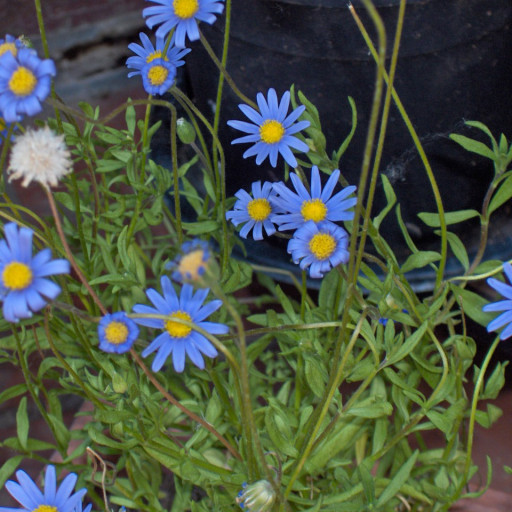
Plant Overview
Known as the "Blue Daisy" or "Kingfisher Daisy," this South African native brings a piece of the sky down to earth. Often described as the happiest plant in the garden, its vibrant contrast of cobalt petals and sunny centers has made it a favorite in coastal and Mediterranean landscapes. It is a resilient little shrublet that turns any sunny corner into a perpetual summer scene.
🔍 How to Identify
- 🌼 Vibrant Blooms: Look for classic daisy-shaped flowers featuring sky-blue to deep azure ray florets surrounding a tight, bright yellow central disc.
- 🍃 Foliage: The leaves are small, oval, and slightly hairy, appearing in a rich, dark green that makes the blue flowers "pop."
- 🪴 Growth Habit: It typically grows as a dense, low-branching evergreen shrub, reaching about 12–18 inches in height and spreading outwards into a rounded mound.
🏡 In Your Garden
- ☀️ Sun Worshiper: This plant thrives in full sun but prefers its "feet" (roots) to stay relatively cool. Applying a layer of mulch can help maintain that balance during intense summer heat.
- ✂️ Deadheading Secrets: To keep the "blue carpet" look all season, pinch off faded flowers regularly. This prevents the plant from putting energy into seeds and encourages a non-stop display of new buds.
- 🌊 Drainage is Key: Adapted to the rocky slopes of the Cape Floristic Region, it cannot tolerate "wet feet." Ensure your soil or potting mix is gritty and fast-draining to prevent root rot.
⚠️ Safety & Toxicity
- ✅ Non-Toxic: Felicia amelloides is generally considered safe and non-toxic for humans, dogs, and cats.
- 🐝 Pollinator Magnet: While safe for pets, it is highly attractive to beneficial garden visitors. It serves as a vital nectar source for butterflies and hoverflies throughout the warmer months.
✨ Fun Fact
🦋 Sleepy Petals: If you check your Blue Daisies at night or during a heavy rainstorm, you’ll notice they look a bit shy; the petals often curl back or close up tight until the sun returns!

Detailed Care Instructions
| Lighting | Full Sun |
| Hardiness Zones | 10A - 11 |
To grow Felicia Amelloides plant, also known as the blue marguerite or blue daisy, you can follow these steps:
- Purchase or obtain Felicia Amelloides plant seeds or seedlings from a nursery or online retailer. Alternatively, you can collect the seeds from dried flower heads.
- Choose a location that receives full or partial sun. Felicia Amelloides plants prefer a sunny position and require at least 6 hours of sunlight per day.
- Prepare the soil by loosening it and adding organic matter such as compost or well-rotted manure. This will improve drainage and provide essential nutrients for the plant.
- Sow the seeds directly into the soil, or if using seedlings, transplant them into the prepared soil. Space the plants around 8-12 inches apart to allow for growth.
- Water the plants regularly, particularly during dry periods. Keep the soil moist but not waterlogged. Avoid overwatering, as this can cause root rot.
- Mulch around the planted area to help retain moisture and control weed growth.
- Once the plants start growing, you can pinch back the tips to encourage bushier growth. This can be done by simply using your fingers to snip off the top few inches of each stem.
- Fertilize the plants with a balanced, water-soluble fertilizer every 4-6 weeks during the growing season. Follow the manufacturer's instructions for proper application.
- Monitor the plants for pests and diseases, such as aphids or powdery mildew. Take appropriate measures, such as using organic pest control methods or fungicides, if necessary.
- Deadhead the spent flowers regularly to encourage more blooms and prevent seed formation. This will help the plant focus its energy on producing new flowers.
- Enjoy the vibrant blue daisies that will bloom throughout the growing season.
Remember to adjust these steps based on your specific climate and growing conditions.

Place in a bright room that is sun drenched almost all day. Or directly in a south-facing window.

Felicia Amelloides is a type of flowering plant that can thrive in a variety of conditions. When it comes to watering, it's important to strike a balance between moist soil and avoiding over-watering.
One way to ensure proper watering is to use a moisture meter or stick your finger into the soil to check for dampness. The ideal soil moisture level for Felicia Amelloides is moist to the touch, but not waterlogged.
When watering, it's best to give the plant a deep soaking rather than frequent light watering. This will encourage deeper root growth and help the plant become more drought-resistant.
Make sure to water the soil around the base of the plant, rather than watering the foliage or flowers directly. This will help prevent fungal diseases or damage to delicate blooms.
Finally, pay attention to weather conditions and adjust watering accordingly. During hot and dry spells, the plant may require more frequent watering, while cool and damp conditions may mean less watering is necessary.
To fertilize this plant, you'll need to use a balanced fertilizer with equal amounts of nitrogen, phosphorus, and potassium. Fertilize every other week during the growing season, but reduce frequency during the dormant season. You can also use a slow-release fertilizer once at the beginning of the growing season. Be careful not to over-fertilize, as this plant is sensitive to excessive nutrients. Before fertilizing, make sure the soil is moist, as fertilizing dry soil can damage the roots. Finally, always follow the instructions on the fertilizer label for application rates and timing.
Felicia amelloides is a species of plant that belongs to the family Asteraceae. This plant requires a well-draining soil, with the addition of organic matter to improve moisture retention. A soil pH of 6.0-7.5 is optimum for growth. It is recommended to use a soil mix consisting of equal parts of peat moss, perlite, and vermiculite. This will provide good drainage as well as nutrient retention. It is important not to use heavy soil or garden soil as it can lead to waterlogging and root rot. Additionally, adding a slow-release fertilizer to the soil mix can provide the necessary nutrients for optimal growth.
Felicia amelloides plant can be propagated easily using stem cuttings. Choose a healthy stem that is about 4-6 inches long and has several leaves. Remove the lower leaves to reveal a 2-inch bare stem. Dip the cutting in rooting hormone powder and plant it in a well-draining potting mix. Water the cutting and cover it with a plastic bag to create a humid environment. Keep the cutting in bright, indirect light. The cutting should root within 4-6 weeks. Once roots have formed, remove the plastic bag and slowly acclimate the cutting to direct sunlight. Transplant the new plant into a larger pot once it has grown enough roots.
Common pests of the blue daisy include Spider mites, aphids. Make a habit of checking your blue daisy frequently for pests so that any infestations can be caught and managed early.








