Plant Overview
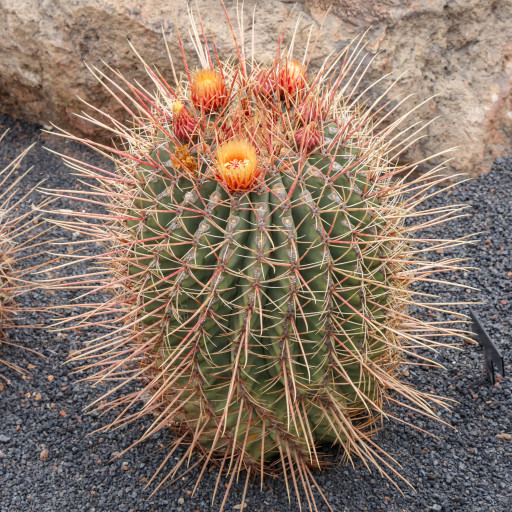
The Ferocactus echidne, fondly known as the Sonora Barrel Cactus, is a classic desert dweller that looks like a sun-drenched sculpture. Originally hailing from the rocky canyons and limestone slopes of central Mexico, this cactus is prized by collectors for its geometric symmetry and vibrant golden spines. It is a slow-growing masterpiece that brings a touch of the rugged Mexican wilderness into any succulent collection.
🔍 How to Identify
- 🌵 The Shape: It begins its life as a perfectly round, blue-green globe, but as it matures over several decades, it stretches into a stout column that can reach up to 2 feet in height.
- 📐 Ribbed Texture: The body features deep, sharp vertical ridges (usually 12–15) that allow the plant to expand and contract like an accordion as it stores or uses water.
- 💛 Spine Clusters: Unlike some of its "Fishhook" cousins, the Sonora Barrel features straight, needle-like spines. These are typically a bright amber or straw-yellow, radiating from the centers of the ribs.
- 🌼 Crown of Flowers: In late spring and summer, a ring of funnel-shaped, lemon-yellow flowers emerges from the very top of the plant, often followed by small, fleshy fruits.
🏡 In Your Garden
- 🏜️ The Need for Grit: This cactus is highly susceptible to root rot if left in standing water. It thrives in "lean" soil—meaning plenty of gravel, perlite, or volcanic rock and very little organic peat.
- ☀️ Light & Color: To keep its spines dense and vibrant, it requires "hard" growth, which means plenty of direct sunlight. In low-light conditions, the cactus will lose its blue-green hue and become "etiolated," stretching out into an unattractive, weak shape.
- 🏺 Root Sensitivity: As it matures, it develops a significant taproot. It generally dislikes being moved once established, so choose a permanent sunny spot or a deep, sturdy pot to avoid frequent transplanting.
⚠️ Safety & Toxicity
- 🚫 Physical Hazard: The Ferocactus echidne is not chemically toxic to humans or pets. However, it is physically formidable; the spines are incredibly rigid and can cause deep puncture wounds if handled without care.
- 🧸 Placement: Due to its sharp exterior, it is best kept away from walkways, low-dwelling pets, or areas where children play. If you must move it, use thick leather gloves or a "hose-wrap" technique to protect your hands.
✨ Fun Fact
The species name echidne is derived from the Greek word for "sea urchin" or "viper." Botanists chose this name because the dense, radiating spines of the young plant look remarkably like the protective needles of a sea urchin found on the ocean floor!

Detailed Care Instructions
To grow Ferocactus Echidne, also known as the Mexican lime cactus, follow these steps:
- Choose a suitable location: Ferocactus Echidne thrives in full sunlight, so select a spot that receives at least 6-8 hours of direct sunlight each day. It can also tolerate partial shade, but its growth may be slower.
- Provide well-draining soil: This cactus prefers sandy or gravelly soil with excellent drainage. If your soil is clayey or heavy, mix in some sand or perlite to enhance drainage.
- Water sparingly: Ferocactus Echidne is a drought-tolerant plant that prefers infrequent watering. Allow the top 2-3 inches of soil to dry out completely before watering. During hot summer months, water sparingly once every 2-3 weeks. Reduce watering during winter when the cactus is dormant.
- Avoid overwatering: Too much water can cause root rot or fungal diseases. Ensure that the pot or garden bed has drainage holes to allow excess water to escape.
- Use a balanced fertilizer: During the active growing season, which is usually spring to early fall, you can fertilize your Ferocactus Echidne with a balanced, diluted cactus fertilizer. Follow the instructions on the fertilizer packaging for proper dilution and frequency.
- Repot when necessary: If your Ferocactus Echidne outgrows its pot or shows signs of crowding, it's time to repot. Do this during the spring when the cactus begins its active growth. Choose a pot with drainage holes slightly larger than the current one, and use fresh cactus soil mix.
- Protect from extreme cold: Ferocactus Echidne can tolerate a light freeze, but prolonged exposure to temperatures below 25°F (-4°C) can damage the plant. If you live in a colder region, consider protecting the cactus by moving it indoors during the winter or covering it with frost cloth.
- Prune cautiously: Ferocactus Echidne rarely requires pruning unless there are dead or damaged parts. If necessary, use sterilized pruning shears to remove unhealthy segments, making clean cuts close to the main stem.
With proper care, Ferocactus Echidne can grow into a beautiful and healthy plant. Patience is key with cactus growth as they are generally slow-growing plants.

Place in a bright room that is sun drenched almost all day. Or directly in a south-facing window.

The best way to water this type of cactus is to use the soak and dry method. This involves thoroughly watering the plant until water drains out of the bottom of the pot, and then waiting until the soil is completely dry before watering again. It is important not to over-water or let the plant sit in standing water, as this can cause root rot. In the winter months, it is recommended to water less frequently as the plant is in its dormant stage. It is also important to use well-draining soil and a pot with drainage holes to prevent water from sitting in the soil.
To fertilize the plant, use a balanced fertilizer with an NPK ratio of 10-10-10. Apply the fertilizer once every two weeks during the growing season, which is typically from spring to fall. Mix the fertilizer with water according to the package instructions, and apply it around the base of the plant. Avoid getting fertilizer on the leaves or stem of the plant. During the winter months, the plant goes dormant and does not require fertilization.
Ferocactus Echidne plant prefers well-draining soil that is not too nutrient-rich. The soil should have a pH level between 6.0 and 7.5, and it should not be too compact or dense. A good option is a mixture of coarse sand and perlite with some organic matter, such as peat moss or coconut coir. The soil should allow water to drain easily without becoming too dry or waterlogged. It is also important to use a pot with drainage holes, as excess water can lead to root rot and other issues. Overall, the soil should provide good aeration and drainage while also retaining some moisture for the plant's roots.
To propagate this specific plant, first choose a healthy parent plant with strong and well-developed roots. Use a clean, sharp knife or pair of scissors to carefully remove one of the side pups (baby plants) that has grown from the main stem. Make sure the pup has its own set of roots, which can be gently untangled from the parent plant's roots if necessary.
Next, prepare a well-draining soil mixture that is slightly sandy and low in organic matter. Fill a shallow container with the soil mixture and plant the pup with its roots just below the surface. Water the new plant lightly and place it in a bright, indirect light location.
Keep the soil moist but not waterlogged, and avoid exposing the young plant to direct sunlight or extreme temperatures. Over the next few weeks, monitor the pup closely for any signs of stress or disease and adjust care as necessary.
With proper care, the new plant should begin to develop and grow into a mature Ferocactus Echidne specimen over time.
Common pests of the sonora barrel cactus include Scale insect, mealybugs, spider mites. Make a habit of checking your sonora barrel cactus frequently for pests so that any infestations can be caught and managed early.








