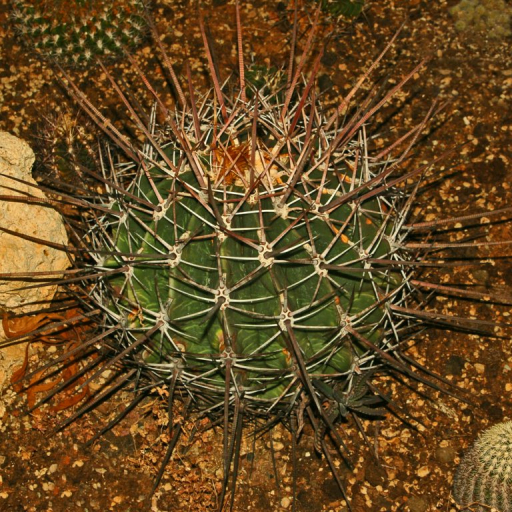
Plant Overview
Known as the Emory’s Barrel Cactus or sometimes the "Traveler's Friend," this desert icon stands like a sturdy, ribbed sentinel in the sun-drenched landscapes of Arizona and Northern Mexico. Often mistaken for a simple green ball in its youth, it matures into a massive, impressive cylinder that can survive for over a century. It is a master of water storage, transforming the harshest desert heat into a slow, steady rhythm of life.
🔍 How to Identify
- 🌵 Body Shape: It begins its life as a perfectly round globe but slowly elongates into a tall, heavy column as it ages, sometimes reaching heights of up to 6 to 8 feet in the wild.
- 🎨 The Spines: Features heavy, thick spines that are often a striking reddish-purple when young, turning gray with age. The central spine is particularly distinctive—it is flattened and usually has a curved "hook" at the tip.
- 🌼 Crown Flowers: In late summer, the very top (the crown) of the cactus produces large, funnel-shaped flowers. These blossoms range from brilliant yellow to a deep, sunset mahogany red.
🏡 In Your Garden
- ☀️ Sun Worship: This cactus is a true heliophile. It requires intense, direct light to develop its signature deep-red spines; without enough sun, the spines will appear pale and the plant may become "stretched" and weak.
- 🏜️ Drainage is Non-Negotiable: Because it evolved on rocky desert slopes, its roots are highly susceptible to rot if they sit in damp soil. It thrives in a "neglect" style of gardening—use a grit-heavy mineral mix and only water when the soil is bone-dry all the way through.
⚠️ Safety & Toxicity
- 📌 Mechanical Hazard: The Emory’s Barrel Cactus is not chemically toxic, but it is physically formidable. The "fish-hook" spines are incredibly strong and can cause deep puncture wounds or painful skin tears.
- 🐾 Pet & Child Safety: It is generally safe in terms of ingestion, but it should be placed in low-traffic areas. The spines are a significant physical risk to curious pets or wandering toddlers who might stumble into it.
✨ Fun Fact
Emory’s Barrel Cactus has a built-in survival compass! Older specimens almost always lean toward the south or southwest. This lean helps protect the plant’s sensitive growing tip from being scorched by the most intense afternoon sun, earning it the nickname "Compass Cactus" among desert hikers.

Detailed Care Instructions
To grow Ferocactus Emoryi, also known as Emory's barrel cactus, you can follow these steps:
- Choose a suitable location: Ferocactus Emoryi prefers full sun exposure, so select a spot in your garden or a sunny windowsill if you plan to grow it indoors.
- Prepare well-drained soil: This cactus prefers well-draining soil to avoid waterlogging and root rot. Use a cactus/succulent mix or amend regular potting soil with sand or small rocks to improve drainage.
- Planting: If growing from a seed, sow it on the soil surface, barely covering with a thin layer of soil. Water lightly and keep the soil moist until germination. If using a small potted plant, make sure the pot has drainage holes and plant it at the same depth as it was in its previous container.
- Watering: Water the plant thoroughly but infrequently. Allow the soil to dry out between waterings to avoid overwatering. During the winter months, reduce watering frequency.
- Fertilization: Fertilize the cactus once or twice a year with a balanced cactus/succulent fertilizer. Follow the package instructions for proper dosage and application.
- Pruning: Ferocactus Emoryi generally doesn't require regular pruning. However, you may remove any dead or damaged spines or discolored areas for aesthetic purposes.
- Protection from frost: If you live in a region that experiences frost, protect the plant by covering it with frost cloth or moving it indoors during extreme cold spells.
- Pests and diseases: Monitor the cactus for signs of pests such as mealybugs or scale insects. Treat them promptly with appropriate insecticides or by manually removing them. Ensure good air circulation to prevent fungal diseases.
Remember that Ferocactus Emoryi is a slow-growing cactus that can take several years to reach full maturity. Patience and care are essential for its successful growth.

Place in a bright room that is sun drenched almost all day. Or directly in a south-facing window.

Ferocactus Emoryi plants should be watered sparingly, as they are highly drought-tolerant. It is important to allow the soil to dry out completely between waterings to prevent root rot. During the growing season, typically spring and summer, water the plant every 2-3 weeks. In the winter months, reduce watering to once a month or less. It is best to water at the base of the plant, avoiding getting water on the spines and body of the plant to prevent rotting. Additionally, it is recommended to use well-draining soil to prevent waterlogged conditions.
To fertilize this plant, use a balanced fertilizer with equal amounts of nitrogen, phosphorus, and potassium. Apply the fertilizer once in early spring and again in midsummer. Water the plant before fertilizing and then apply the fertilizer around the base of the plant, being careful to avoid getting any on the leaves or stem. Water the plant thoroughly after fertilizing. Avoid fertilizing during the winter months when the plant is dormant.
For optimal growth and health, it is recommended to use a well-draining soil mix when planting this particular species of cactus. The soil mix should contain a combination of coarse sand, fine gravel, and porous materials such as perlite or pumice. Avoid using heavy soils that retain water as this can lead to root rot. It is also important to provide adequate drainage to prevent water from pooling at the bottom of the pot. Additionally, adding a layer of rocks or pebbles at the bottom of the pot can aid in drainage and prevent the roots from sitting in water.
The plant in question is a type of cactus species that belongs to the genus Ferocactus. To propagate this plant, one can start by collecting seeds from mature plants during the summer months when they are fully ripe. After collecting the seeds, they should be thoroughly cleaned and then placed in a container filled with cactus soil mix and kept in a warm, sunny location.
Alternatively, one can also propagate the plant through cuttings. To do this, cut a healthy stem from the plant using a sharp, sterile knife and allow it to dry out for a few days to prevent the cut from becoming infected. Once the cutting has dried out, it can be planted in a container filled with cactus soil mix, and kept in a warm, sunny location. It is important to avoid watering the cutting for at least two weeks to prevent it from becoming waterlogged and rotting. With proper care and patience, the cutting or seeds will eventually sprout and produce new plants.
Common pests of the coville's barrel cactus include Scale insect, mealybugs, spider mites. Make a habit of checking your coville's barrel cactus frequently for pests so that any infestations can be caught and managed early.








