Plant Overview
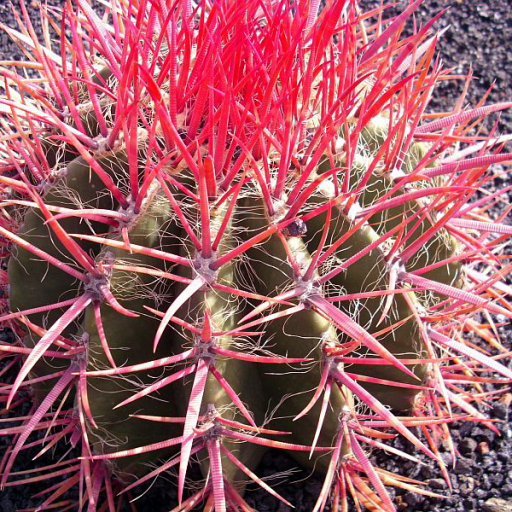
The "Bloody Spined Barrel Cactus" is a dramatic showstopper hailing from the high-altitude deserts of Puebla and Veracruz, Mexico. Known for its fierce, crimson-red needles that appear to glow when backlit by the sun, this cactus looks like a piece of living desert art. While it is a slow grower, it rewards the patient gardener with a regal presence and stunning magenta blooms that crown its head like a floral tiara.
🔍 How to Identify
- 🌵 The Body: Typically starts as a perfect, deep green sphere but matures into a stout, ribbed cylinder that can reach up to three feet in height.
- 🩸 The Spines: Its most famous feature—thick, rigid spines that range from a deep burgundy to a brilliant blood-red, emerging in clusters along the sharp ridges.
- 🌸 The Flowers: Large, trumpet-shaped blossoms in shades of purple, rose, or magenta that appear at the very top of the plant during late spring and summer.
🏡 In Your Garden
- ☀️ Light & Color: To keep those spines looking "bloody" and vibrant, this cactus needs intense, direct sunlight. If kept in the shade, the new spines will grow in pale and the plant may lose its iconic look.
- 🏜️ The "Dry Feet" Rule: Like most barrel cacti, it is highly susceptible to root rot. It requires a gritty, mineral-heavy soil mix (think lots of pumice and perlite) and should never be left sitting in a saucer of water.
- 🌡️ Temperature Limits: While it loves the heat, it is surprisingly hardy against light frosts if kept completely dry, making it a versatile choice for rock gardens in various climates.
⚠️ Safety & Toxicity
- 🌵 Physical Hazard: This plant is not chemically toxic, but it is physically formidable. The spines are incredibly sharp and rigid; they do not "give" when touched and can easily puncture skin or thick clothing.
- 🐾 Pets & Kids: It should be placed far out of reach of curious paws or wandering toddlers. The injuries from a fall onto a Ferocactus can be significant and painful.
✨ Fun Fact
The name haematacanthus is derived from the Greek words haema (blood) and akantha (thorn). In its native Mexican habitat, it is often found clinging to steep limestone cliffs where its red spines help break up the intense mountain wind and provide a tiny bit of shade for the plant's skin.

Detailed Care Instructions
To grow a Ferocactus haematacanthus plant, also known as the Mexican fire barrel cactus, you can follow these steps:
- Choose a suitable location: Ferocactus haematacanthus prefers a bright, sunny location with plenty of direct sunlight. It should be protected from excessive rain or humidity. If you live in a climate with cold winters, consider growing the cactus in a pot that can be moved indoors during the colder months.
- Soil requirements: The cactus prefers well-draining soil to avoid waterlogged conditions. Use a cactus or succulent potting mix, or create your own well-draining mix by combining regular potting soil with sand or perlite.
- Planting: If growing from seeds, plant them in the prepared soil mix and keep the soil lightly moist until the seeds germinate. For mature plants, carefully remove them from their nursery containers and transplant them into larger containers or directly into the ground. Be cautious as the cactus has spines.
- Watering: Ferocactus haematacanthus is drought-tolerant and prefers infrequent but deep watering. Allow the soil to dry out between waterings to prevent the plant from sitting in wet soil, which can lead to root rot. During the winter months, reduce watering further as the cactus goes into dormancy.
- Fertilization: Fertilize the cactus sparingly, using a balanced cactus or succulent fertilizer diluted to half or a quarter of the recommended strength. Apply the fertilizer during the growing season, typically from spring to fall.
- Pruning and maintenance: The Mexican fire barrel cactus generally requires minimal pruning. However, you can remove any dead or damaged parts, but be cautious of the spines. Wear thick gloves and use long-handled pruning shears for safety.
- Protection: In areas with cold winters, protect the cactus from freezing temperatures by moving it indoors or providing a frost cover. It is also important to protect it from excessive rain or moisture, as this can lead to root rot.
Remember that cactus plants can take a long time to grow and mature, so be patient and provide appropriate care.

Place in a bright room that is sun drenched almost all day. Or directly in a south-facing window.

To water this plant, it is best to wait until the soil has completely dried out before watering again. When watering, be sure to water deeply and thoroughly, allowing the water to soak through the entire root system. It is important to avoid getting water on the plant's spines and to only water the soil. During the dormant season, which is typically in the winter, water sparingly. In general, this plant prefers dry conditions and can tolerate periods of drought.
To fertilize this plant, you should use a well-balanced fertilizer with equal amounts of nitrogen, phosphorus, and potassium. During the growing season, fertilize once a month and reduce to every two months during the winter. Avoid fertilizing when the plant is in a state of stress, such as during extreme heat or drought. Always follow the instructions on the fertilizer packaging and apply according to the recommended dosage for your plant's size.
Ferocactus haematacanthus is a type of cactus plant that requires a well-draining soil mixture. The recommended soil mix for this plant should have a high percentage of coarse sand or perlite to ensure adequate drainage. The soil should also include a mixture of organic matter such as peat moss or coconut coir to help retain moisture.
It is important to avoid using soil mixes that are too rich in nutrients or water-holding capacity as this can lead to rotting of the plant's roots. A good rule of thumb for this plant is to use a slightly acidic soil mix with a pH between 6 and 7.
When planting, ensure that the soil is packed firmly around the root system to provide stability for the plant. Once the plant is established, it should be watered sparingly, allowing the soil to dry out between waterings.
To propagate this plant, first, you need to select a healthy and mature plant from which you can take a cutting. Use sterilized pruning shears to cut a piece of the plant, making sure it is at least six inches long.
Next, you need to let the cutting dry for a few days to a week until the cut end forms a callus. This will help prevent rot when you plant the cutting.
Once the callus has formed, you can plant the cutting in a well-draining soil mix. Make sure the soil is moist but not waterlogged, and place the pot in a sunny location.
After a few weeks, you should start to see new roots forming from the bottom of the cutting. Once the roots have grown at least an inch long, you can transplant the cutting into a larger pot with cactus soil mix.
Keep the plant in a sunny location and water it sparingly, allowing the soil to dry out between waterings. With proper care, your propagated plant should grow into a healthy Ferocactus Haematacanthus.








