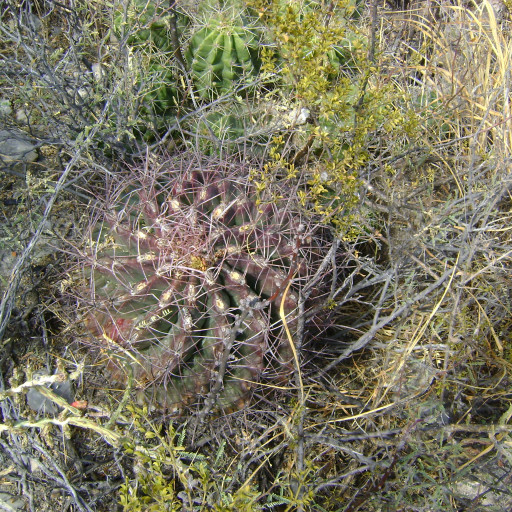
Plant Overview
Often called the Texas Barrel Cactus or Turk’s Head, this desert dweller is famous for its dramatic, recurved spines that look like miniature, hand-forged fishing hooks. Native to the Chihuahuan Desert, it is a rugged survivor that adds a touch of the Wild West to any collection. As it matures, it transitions from a perfect sphere to a handsome column, eventually crowning itself with brilliant, satiny blooms that smell faintly of citrus.
🔍 How to Identify
- 🌵 The Ribbed Body: Features deep, wavy ridges (usually 13 to 17) that allow the plant to expand and contract like an accordion to store water during droughts.
- 🪝 Hooked Spines: The central spines are long, flattened, and distinctly curved at the tip; they often change color from deep red to straw-yellow when wet.
- 🌼 Satiny Flowers: Produces large, funnel-shaped yellow flowers, often with a contrasting maroon or red throat, emerging from the top of the plant in late summer.
🏡 In Your Garden
- ☀️ Sun Worshipper: This cactus craves intense, direct light. Without enough sun, its signature hooked spines will grow thin and pale, and the plant may fail to produce its spectacular summer flowers.
- 🏜️ Drainage is King: It is highly sensitive to "wet feet." Always use a specialized cactus mix with extra perlite or pumice, as the plant's taproot can rot quickly if the soil stays damp for more than a day or two.
- ❄️ Unexpected Hardiness: Unlike many tropical succulents, the Texas Barrel is surprisingly frost-tolerant if kept bone-dry during the winter, making it a star player for outdoor rock gardens in temperate climates.
⚠️ Safety & Toxicity
- 📌 Physical Hazard: This plant is not chemically toxic to humans or pets, but its spines are "mechanical" weapons. The hooks are designed to latch onto skin or fur and are notoriously difficult to extract once they catch.
- 🐾 Placement Matters: Due to the sharp, hooked nature of the spines, keep it away from narrow walkways or areas where curious pets and children play. Always use thick leather gloves or a "towel wrap" method when repotting.
✨ Fun Fact
In the 19th century, desert travelers and Indigenous groups occasionally used the sturdy, hooked central spines of this cactus as actual fishing hooks when traditional tools weren't available!

Detailed Care Instructions
| Color | A Yellow Color With An Inner Scarlet Color In Some Forms |
| Soil Ph | 6.1-7.8 |
| Humidity | Dry |
| Lighting | Full Sun |
| Soil Type | Sandy Or Gravelly |
| Bloom Time | Summer |
| Difficulty | Easy |
| Plant Type | Cactus |
| Mature Size | 24 In. |
| Native Area | Texas, New Mexico, And Chihuahua, Mexico |
| Temperature | 20°C - 35°C |
| Sun Exposure | Full Sun |
| Hardiness Zones | 9-11 |
To grow Ferocactus hamatacanthus, also known as the Mexican fire barrel cactus, you can follow these steps:
- Climate and Sunlight: Choose a location that receives ample sunlight, at least 6 to 8 hours of direct sunlight daily. The cactus prefers warm climates and is suitable for USDA hardiness zones 9-11.
- Soil: Use well-draining soil that is sandy or gritty in nature. You can make a mixture of cactus potting mix with perlite or pumice to enhance drainage. Avoid heavy clay or compacted soils.
- Pot Selection and Repotting: Select a suitable pot with drainage holes to prevent waterlogging. Repot the cactus every 2-3 years in early spring or late fall if it outgrows its current pot.
- Watering: Water the cactus sparingly, allowing the soil to dry out completely between waterings. Overwatering can cause root rot. During hot summer months, increase watering frequency slightly, but always check soil moisture before watering.
- Fertilizing: Use a balanced, slow-release fertilizer specifically designed for cacti or succulents. Apply the fertilizer during the growing season (spring and summer) according to package instructions.
- Pruning: Ferocactus hamatacanthus doesn't require much pruning. However, if you notice any diseased or dead parts, remove them with a sterilized cutting tool to prevent the spread of infection.
- Propagation: The cactus can be propagated from seeds or by taking stem cuttings. Sow the seeds in well-draining soil, and provide warmth and bright light for germination. Stem cuttings should be allowed to dry out for a few days before planting.
- Pest and Disease Control: These cacti are generally resistant to pests and diseases. However, keep an eye out for common cactus pests such as mealybugs, scale insects, or spider mites. If detected, treat with an appropriate insecticide or horticultural oil.
- Winter Care: Since Ferocactus hamatacanthus is not frost-tolerant, protect it from freezing temperatures. If you live in a colder climate, consider growing the cactus in a container that can be moved indoors during winter or provide a protective cover.
Remember to always wear gloves and be cautious of the cactus's spines when handling.

Place in a bright room that is sun drenched almost all day. Or directly in a south-facing window.

The best way to water this plant is to use a watering can or a hose with a gentle flow of water. Do not over-water the plant, as this can cause root rot. Allow the soil to dry out between waterings and avoid getting water on the stem or crown of the plant, as this can lead to fungal growth. Make sure the soil is well-draining and use a sandy or rocky soil mix. If growing the plant in a pot, make sure there are drainage holes and use a pot with a size appropriate to the plant's size.
To fertilize this plant, you will need to mix a slow-release fertilizer into the soil during the spring and summer months. Apply it at half strength to prevent any damage to the roots. Water the plant thoroughly before fertilizing, and avoid fertilizing during the winter months when the plant is dormant. Additionally, consider using a liquid fertilizer every two weeks during the growing season to nourish the plant and promote healthy growth.
The most suitable soil to grow this cactus plant is a well-draining soil mixture that is composed of sand, gravel, and loam. The soil should also be slightly acidic with a pH range of 6.0 to 7.0, and it should not be too rich in nutrients because this will promote excessive growth that can lead to weak and fragile stems. It is recommended to use a soil mix that contains a high percentage of coarse sand and gravel to ensure proper drainage and prevent moisture from accumulating at the roots. Additionally, adding perlite to the soil mix can improve aeration and help prevent soil compaction. Overall, a well-draining, slightly acidic soil mix that is low in nutrients and high in sand and gravel is best for growing this cactus plant.
One way to propagate this plant is by taking stem cuttings in the spring or summer. Choose a healthy stem and use a sharp, clean knife to cut off a section of the stem that is at least 4 inches long. Leave the cutting to dry for a few days to allow the wound to heal and callus over.
Next, prepare a well-draining soil mix and plant the cuttings in it. Keep the soil moist but not waterlogged and place the container in bright, indirect light. It is best to keep the soil temperature between 70-85°F (21-29°C) for optimal root growth.
The cuttings should root within a few weeks and begin to develop new growth. Once the roots have become established, you can transplant the new plants into their own individual containers with fresh soil.
It is important to note that while Ferocactus Hamatacanthus plants can be propagated through stem cuttings, they can also take a long time to grow and mature, sometimes taking up to 10 years to reach their full height and size.
Common pests of the texas barrel cactus include Scale insect, mealybugs, spider mites. Make a habit of checking your texas barrel cactus frequently for pests so that any infestations can be caught and managed early.








