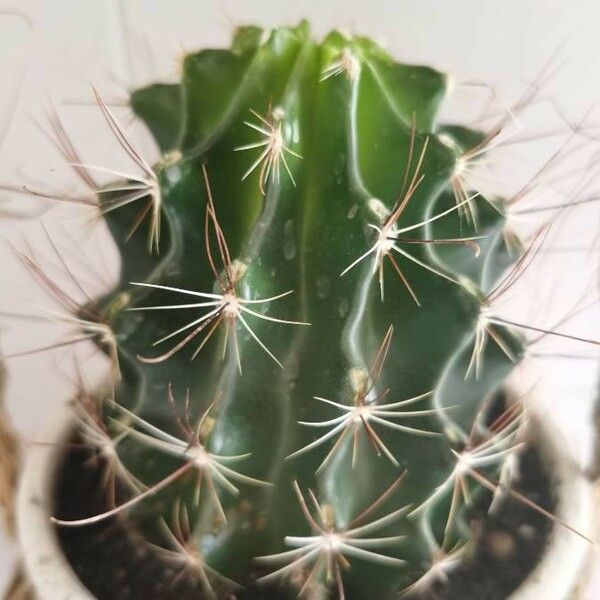
Plant Overview
Often called the Twisted Barrel Cactus or Herrera’s Barrel, this desert giant is a true architectural masterpiece of the Mexican wilderness. While it starts its life as a neat, spherical globe, it eventually stretches into a tall, imposing column that can reach over six feet in height. Known for its distinctively "twisted" ribs and wicked, hooked spines, it looks less like a plant and more like a rugged piece of living sculpture.
🔍 How to Identify
- 🌵 The Ribs: Typically features 13 to 15 deep, sharp ribs. In older specimens, these ribs often begin to spiral around the body, giving the cactus its "twisted" nickname.
- 🎣 The Fishhook Spines: The central spines are particularly striking—wide, flattened, and curved at the tip like a heavy-duty fishing hook. They range in color from dusty red to a weathered greyish-brown.
- 🌸 The Crowned Flowers: During late summer or autumn, a "crown" of funnel-shaped flowers appears at the top. These are usually yellow with reddish mid-stripes, looking like small desert jewels.
🏡 In Your Garden
- ☀️ Sun-Driven Color: This cactus thrives on neglect and intense light. In fact, the more sun it receives, the more vivid and colorful its thick spines become. Without enough light, it may lose its stout shape and become "leggy."
- 🏜️ The Taproot Trap: Like many barrel cacti, Ferocactus herrerae develops a sensitive taproot system. It hates being moved once it reaches maturity, so choose its permanent "forever home" in well-draining, gritty soil right from the start.
- 💧 Winter Hibernation: During the colder months, this plant essentially goes to sleep. Stop watering entirely during winter to prevent "foot rot," as the plant cannot process moisture when the temperatures drop.
⚠️ Safety & Toxicity
- 🌵 Physical Hazard: While not chemically toxic, this plant is "mechanically" dangerous. The hooked spines are incredibly strong and difficult to remove from skin or clothing once they catch.
- 🐾 Pet & Child Safety: Keep this cactus away from high-traffic areas or curious pets. The spines can cause deep puncture wounds that are prone to infection if not cleaned immediately.
✨ Fun Fact
In its native habitat in Mexico, the Ferocactus genus has a history of being a "life-saver." While the internal pulp is far too acidic and bitter to drink like water, indigenous groups historically used the hollowed-out "barrels" as makeshift cooking pots or even as emergency sources of moisture for livestock.

Detailed Care Instructions
To successfully grow Ferocactus herrerae, follow these steps:
- Climate: Ferocactus herrerae thrives in warm and dry climates. It requires full sun exposure, so choose a location with at least 6 hours of direct sunlight per day.
- Soil: Use a well-draining soil mix specifically formulated for cacti and succulents. This type of soil prevents waterlogging, which can cause root rot in cacti.
- Planting: Select a suitable pot with drainage holes to ensure excess water can escape. Place 1-2 inches of small rocks or gravel at the bottom of the pot for additional drainage. Plant the Ferocactus herrerae at the same depth as it was in the nursery pot, ensuring the roots are adequately covered with soil.
- Watering: Allow the soil to dry out completely between watering sessions. Overwatering can lead to root rot, so be mindful not to give the plant too much water. During the active growing season (spring and summer), water thoroughly and then wait until the soil is completely dry before watering again. Reduce watering in the dormant season (fall and winter).
- Fertilizing: Ferocactus herrerae is a slow-growing plant and does not require frequent fertilizing. Apply a balanced liquid fertilizer diluted to half strength once a month during the active growing season to provide necessary nutrients.
- Pruning: Remove any dead, damaged, or diseased parts using sterilized pruning shears. This helps maintain the plant's overall health and appearance.
- Pests and Diseases: Keep an eye out for common cactus pests such as mealybugs, spider mites, and scale insects. Regularly inspect the plant and treat any infestations immediately using an appropriate insecticidal soap or neem oil.
- Propagation: Ferocactus herrerae can be propagated through seed or by taking stem cuttings. Sow seeds in a well-draining cactus mix and keep them warm until germination occurs. Stem cuttings should be allowed to callus over for a few days before planting in well-draining soil.
Remember to regularly monitor your Ferocactus herrerae for any signs of stress or pests, and provide the necessary care as described above.

Place in a bright room that is sun drenched almost all day. Or directly in a south-facing window.

The best way to water this type of plant is to ensure that the soil is completely dry before watering. Use a watering can or hose with a gentle stream of water to avoid disturbing the plant's roots. Allow the water to soak into the soil around the base of the plant, making sure not to overwater as this can lead to root rot. It is also important to water sparingly during the winter months when the plant is dormant.
To properly fertilize this plant, you should apply a balanced liquid fertilizer during its growing season. Dilute the fertilizer to half-strength and feed it once every 4-6 weeks. Be sure to water it thoroughly before and after fertilizing to prevent fertilizer burn. During the plant's dormant period, avoid fertilizing as it is not actively growing.
Ferocactus Herrerae plant thrives well in well-draining soil that is composed of a mix of sand, perlite, and a small amount of peat moss to improve water-holding capacity. The soil should be slightly acidic to neutral with a pH range of 6.0-7.0. The plant does not tolerate wet feet, so it is crucial to ensure the soil is well-drained to avoid any chances of root rot. Adding gritty materials like pumice or gravel can also aid in creating a more porous soil mix. The soil should be dense enough to hold the plant's weight and provide support to its roots. It is important to avoid using heavy soils like clay, loam, or garden soil, which can hold onto water and cause the plant's roots to rot.
First, select a healthy and mature plant for propagation. Using a sharp and sterilized knife, cut a stem from the plant at an angle. Allow the cutting to dry for a few days until it forms a callus. Next, prepare a well-draining soil mix, preferably with sand or perlite added to it. Plant the cutting in the soil mix and water lightly. Place the pot in a bright and warm location but avoid direct sunlight. Allow the cutting to establish its roots for a few weeks before watering again. Gradually increase the amount of water until the plant is fully established.








