Plant Overview
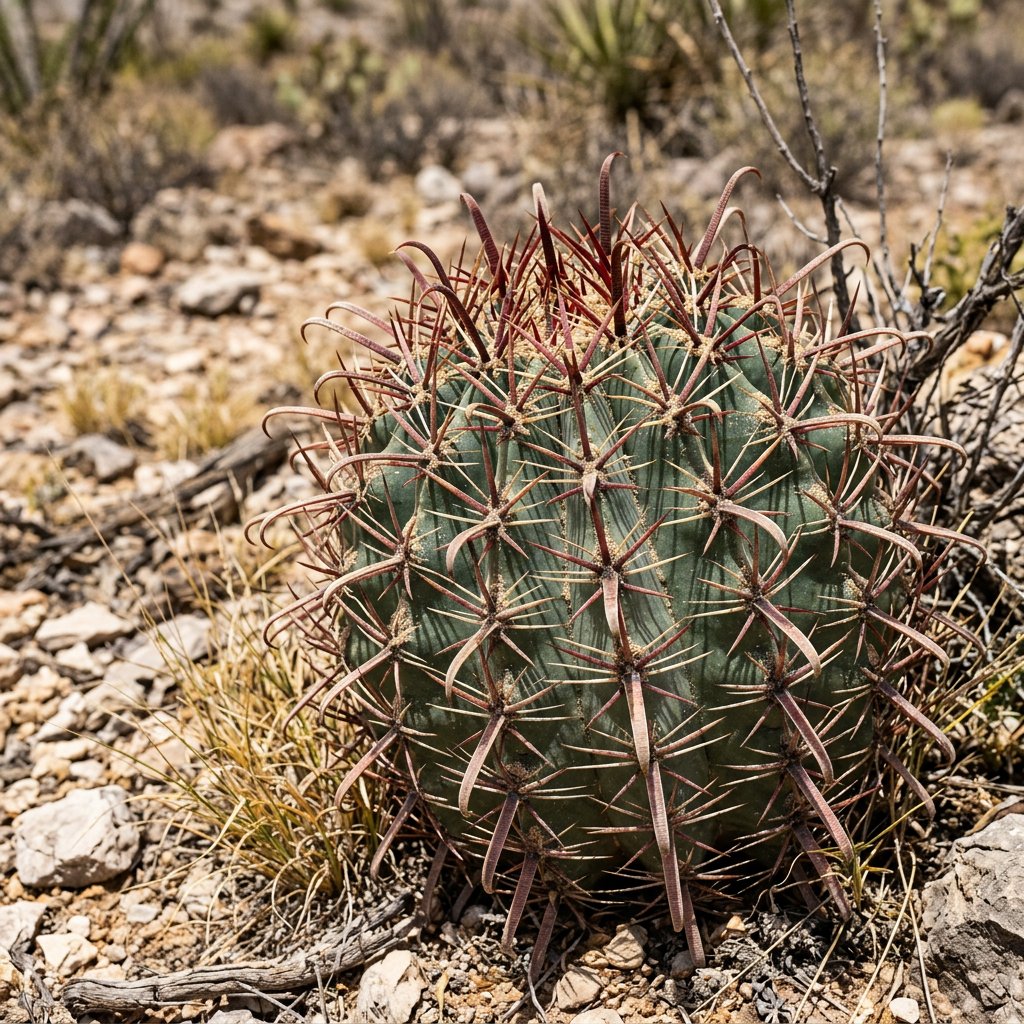
Known as the Devil’s Tongue Barrel Cactus, this stout, rib-heavy succulent is a masterpiece of desert engineering. Native to the high-plateau regions of Mexico, it earns its sinister nickname from its broad, flattened, and hooked central spines that resemble a curved tongue. It is a slow-growing favorite for rock gardens, prized for its striking geometric symmetry and its habit of staying low to the ground.
🔍 How to Identify
- 🌵 The Ribs: Features deep, vertical ridges (usually between 13 and 23) that allow the plant to expand like an accordion as it stores water.
- 👅 The Spines: Look for the distinctive central spine—unusually broad, flat, and curved downward like a hook. These spines are often a vibrant reddish-purple, especially when wet.
- 🌸 The Blooms: Unlike many cacti that bloom in the spring, this species often waits for late autumn or winter to produce fragrant, bell-shaped flowers in shades of royal purple or magenta.
🏡 In Your Garden
- ☀️ Light Intensity: This cactus is a sun-worshiper. It requires intense, direct light to develop its vivid spine coloration; in low light, the "tongues" will appear dull and the plant may lose its compact shape.
- 🏜️ Root Sensitivity: It possesses a relatively delicate root system for its size. It hates "wet feet" and is prone to rot if the soil stays damp. Use a gritty, mineral-heavy cactus mix and avoid transplanting unless absolutely necessary, as it can be slow to recover from root disturbance.
⚠️ Safety & Toxicity
- ⚔️ Physical Hazard: While the Ferocactus latispinus is not chemically toxic to humans or pets, its spines are incredibly sharp and hooked. They can easily snag clothing or skin, leading to painful puncture wounds.
- 🛡️ Strategic Placement: Because of its defensive armor, it should be placed away from narrow walkways or low areas where curious pets and toddlers might accidentally tumble into it.
✨ Fun Fact
In its native Mexico, this plant is sometimes called the Candy Cactus. Historically, the inner pulp was boiled with sugar to create a traditional sweet treat known as acitrón, though this practice is now heavily discouraged to protect wild populations from over-harvesting.

Detailed Care Instructions
| Humidity | Dry |
| Lighting | Full Sun |
| Toxicity | Poisonous |
| Difficulty | Easy |
| Temperature | 20°C - 35°C |
| Hardiness Zones | Min 9B |
To grow Ferocactus Latispinus, also known as Devil's Tongue, you can follow these steps:
- Choosing a suitable location: Select a spot in your garden or indoors with full sunlight. Ferocactus Latispinus thrives in hot and arid conditions.
- Soil preparation: Use a well-draining soil mix that is specifically designed for cacti and succulents. It should be sandy and composed of equal parts of potting soil, sand, and perlite.
- Planting: Start by selecting a healthy Ferocactus Latispinus plant or obtaining seeds. If using seeds, sow them on the soil surface and gently press them in. If using a plant, dig a hole in the soil slightly larger than the root ball and place the plant in the hole. Cover the roots with soil, ensuring the plant is stable.
- Watering: After planting, water your Ferocactus Latispinus lightly to settle the soil around the roots. Once established, water the plant sparingly, allowing the soil to dry out between watering sessions. Overwatering can lead to root rot, so it's important to be cautious.
- Fertilizing: During the growing season (spring to summer), you can apply a balanced, water-soluble cactus fertilizer diluted to half strength, typically every two to four weeks. Follow the package instructions for accurate dilution ratios.
- Pruning: Ferocactus Latispinus generally requires no pruning. However, if there are damaged or diseased parts, you can remove them using clean and sharp pruning shears to maintain the plant's health and appearance.
- Protection: If you live in an area with frost or freezing temperatures, it's important to protect your Ferocactus Latispinus from the cold. Move potted plants indoors or cover outdoor plants with protective fabric or blankets during colder seasons.
- Monitoring: Keep an eye out for signs of pests, such as mealybugs or aphids, and treat them accordingly using organic pest control methods or insecticidal soap.
By following these steps, you can successfully grow Ferocactus Latispinus and enjoy its unique appearance and resilience.

Place in a bright room that is sun drenched almost all day. Or directly in a south-facing window.

To properly water this particular desert plant, it is important to understand its natural habitat and needs. Ensure that the soil is completely dry before watering, and then give it a deep watering session, allowing excess water to drain out of the bottom of the container or soil bed. It is important not to over-water the plant, as this can lead to root rot or other diseases. During the winter months, reduce watering as the plant's metabolic rate slows down. The amount and frequency of watering may also vary depending on the environmental conditions, such as temperature and humidity.
To fertilize this plant, you can use a balanced fertilizer with an N-P-K ratio of around 10-10-10. Apply the fertilizer once a month during the growing season, which is typically in the spring and summer months. Be sure to dilute the fertilizer according to package instructions to prevent burning the plant. Water the plant well before and after applying the fertilizer to help it absorb the nutrients. Avoid fertilizing during the plant's dormant period in the fall and winter.
The Ferocactus Latispinus plant requires a well-draining soil mixture to thrive. It is important to use a soil mix that is specifically formulated for cacti and succulent plants, which typically includes sand, perlite, and peat moss. The pH level of the soil should be slightly acidic to neutral, with a range between 6.0 to 7.0. An ideal soil composition for this plant would be sandy loam, as it ensures good drainage and allows air to penetrate the roots. Too much moisture retention in the soil can lead to root rot, which can cause the plant to decline in health or die. Therefore, it is recommended to avoid using heavy, clay-like soil types, as they can retain high levels of water. Adding a layer of gravel or small rocks at the bottom of the pot can also help with drainage.
To propagate this particular type of plant, you will need to first obtain a healthy specimen. Once you have a suitable plant, you can propagate it through a process called seed germination. This involves collecting seeds from the plant and preparing them for planting.
To start, you will need to harvest the seeds from the Ferocactus Latispinus plant. This can be done by allowing the plant to produce flowers and then waiting for the flowers to turn into seed pods. Once the seeds have matured, you can collect them and remove them from the seed pods.
Next, you will need to prepare a potting mix for the seeds. This should be a well-draining soil mixture that contains a blend of sand, perlite, and peat moss. Once you have mixed the soil, you can plant the seeds into a container filled with this soil mixture.
During the germination process, it is important to keep the soil moist but not overly wet. The seeds should be kept in a warm, bright location to encourage germination. After several weeks, the seeds should start to sprout and you will have new Ferocactus Latispinus plants.
As the plants grow, you may need to transplant them into larger containers or into the ground if you have a suitable outdoor location. With proper care, your propagated Ferocactus Latispinus plants should thrive and produce flowers and seeds of their own in the future.
Common pests of the devil's tongue barrel include Scale insect, mealybugs, spider mites. Make a habit of checking your devil's tongue barrel frequently for pests so that any infestations can be caught and managed early.








