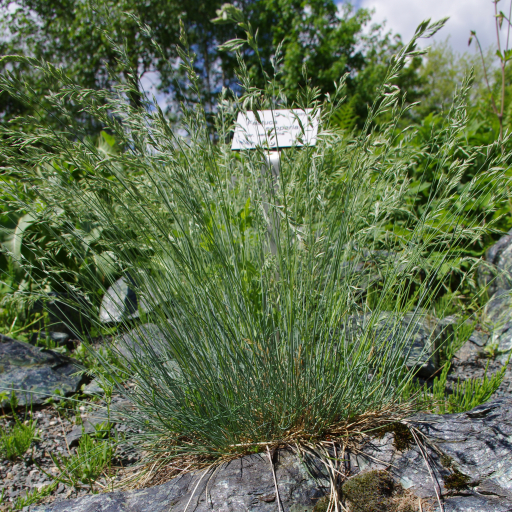
Plant Overview
Often called the "Bearskin Fescue," this architectural wonder looks more like a patch of vibrant green moss than a traditional garden grass. Originating from the high, rocky peaks of the Pyrenees, it forms perfectly round, prickly cushions that add a unique geometric texture to any space. It is the go-to choice for gardeners looking to create a "zen" or alpine aesthetic without the high maintenance of delicate mosses.
🔍 How to Identify
- 🌿 Foliage Texture: Stiff, needle-like leaves that are very fine and grow in incredibly dense, matted tufts.
- 🟢 Rich Color: Unlike the silvery-blue of its cousin (Blue Fescue), Bearskin Fescue maintains a deep, lush emerald green year-round.
- 🌾 Summer Blooms: In early summer, it produces delicate, light-green flower spikes that age to a golden-straw color, rising just above the foliage.
🏡 In Your Garden
- 🪨 The "No-Wet-Feet" Rule: Because it hails from mountain slopes, this plant demands excellent drainage. It thrives in gritty or rocky soil and will quickly rot if left in heavy, waterlogged clay.
- ☀️ Cooler Climates: While it loves the sun, it prefers "cool" sun. In extremely hot, humid regions, it appreciates a bit of afternoon shade to prevent the center of the mound from "burning out" or browning.
⚠️ Safety & Toxicity
- ✅ Non-Toxic: Festuca gautieri is generally considered safe and non-toxic for dogs, cats, and horses.
- 🌵 Physical Touch: While not "sharp" like a cactus, the leaves are quite stiff and "pokey." It isn't the best grass for a barefoot walking path, as it can be slightly irritating to sensitive skin.
✨ Fun Fact
🐻 The "Bear" Connection: It earned the name "Bearskin" because the dense, bristly mounds resemble the thick, coarse fur of a brown bear. In its native habitat, these mounds are so tough that they can withstand being stepped on by heavy mountain wildlife without losing their shape!

Detailed Care Instructions
To grow Festuca Gautieri, also known as the blue fescue or blue grama grass, you can follow these steps:
- Choose a suitable location: Festuca Gautieri thrives in full sun to partial shade, so select a spot in your garden or landscape that receives at least 6 hours of sunlight per day.
- Prepare the soil: This grass prefers well-draining soil. If your soil is heavy or compacted, amend it with organic matter like compost or well-rotted manure to improve drainage.
- Planting: It is best to plant Festuca Gautieri in spring or early fall. Dig a hole that is slightly larger than the root ball of your plant. Place the plant in the hole, ensuring that the crown is level with the soil surface. Backfill the hole with soil and gently firm it around the plant.
- Watering: After planting, water the grass thoroughly to settle the soil around the roots. In the first few weeks, keep the soil moist but not waterlogged. Once established, Festuca Gautieri is quite drought-tolerant and only requires occasional watering during prolonged dry periods.
- Mulching: Apply a layer of mulch around the plant to help retain moisture and suppress weed growth. Organic mulches like wood chips or pine straw work well.
- Pruning and maintenance: Festuca Gautieri is a low-maintenance plant. Trim off any dead or browned leaves in early spring or late fall to maintain its neat appearance. You can also divide the plant every few years to propagate or rejuvenate it.
- Fertilizer: This grass does not require much fertilizer. However, you can apply a slow-release, balanced fertilizer in early spring to provide the plant with essential nutrients.
- Pest and disease control: Festuca Gautieri is generally pest and disease-resistant. However, keep an eye out for common grass pests such as aphids or grasshoppers and take appropriate action if necessary.
By following these steps and providing proper care, you can successfully grow Festuca Gautieri plants in your garden or landscape.

Place in a bright room that is sun drenched almost all day. Or directly in a south-facing window.

To water this plant, you should first determine the soil's moisture level by inserting your finger about 2 inches into the soil. If the soil feels dry to the touch, it's time to water the plant. Use a watering can or a hose with a gentle spray nozzle and water around the base of the plant, being careful not to splash water onto the leaves or flowers. It's important to avoid over-watering, as this plant prefers well-draining soil that is not overly wet. Water the plant deeply, but allow the soil to dry out slightly between waterings. If the plant is in a container, make sure the drainage holes are not clogged, and consider using a pot with a saucer to catch excess water. In hot, dry weather, you may need to water more frequently to prevent the soil from drying out completely.
To fertilize this plant, use a balanced fertilizer with equal amounts of nitrogen, phosphorus, and potassium. Apply the fertilizer during the growing season, preferably early in the spring and again in the fall. Be careful not to over-fertilize, as this can lead to excessive growth and reduced plant health. It is also recommended to water the plant thoroughly after fertilizing.
The optimal soil for the growing of the plant referred to as Festuca Gautieri is a well-draining soil that is rich in organic matter. The soil should have a pH level of around 6.5 to 7.5. It should be planted in soil that is fertile, with good moisture retention and should be kept moist during the growing season. This plant prefers to be grown in full sun to partial shade, and it does not tolerate drought conditions well. It requires a consistent watering schedule throughout the growing season, which should be reduced during the winter months. It is recommended to use a slow-release fertilizer for optimal growth.
To propagate this plant, you will need to perform division. First, wait until the plant has fully matured. Then, carefully lift the roots out of the soil and cut the clump into smaller sections. Make sure that each section has some roots and a sufficient amount of foliage. Plant the sections in well-draining soil and water regularly to ensure proper rooting. Avoid disturbing the newly planted sections for at least a month to allow them to establish themselves.
Common pests of the spiky fescue include Thrips. Make a habit of checking your spiky fescue frequently for pests so that any infestations can be caught and managed early.








