Plant Overview
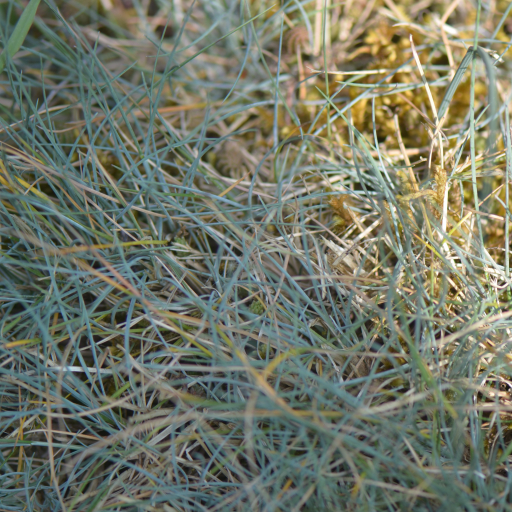
Often called "Hard Fescue," this resilient grass is the quiet hero of the meadow world. Known for its ability to thrive where lusher grasses wither, it forms dense, tufted cushions of fine, hair-like blades that stay green even in harsh conditions. It is a favorite for "no-mow" landscapes, offering a soft, rolling aesthetic that feels like a natural, untouchable prairie.
🔍 How to Identify
- 🌿 Blade Texture: Features very fine, needle-like blades that are surprisingly stiff to the touch, giving it the "hard" designation.
- 🎨 Color Palette: The foliage typically displays a sophisticated grayish-green or dusty blue-green hue rather than a bright emerald.
- 🌱 Growth Habit: It is a clumping or "bunch" grass, meaning it grows in distinct, tidy mounds rather than spreading via aggressive underground runners.
🏡 In Your Garden
- 💧 Drought Specialist: This plant is incredibly water-wise; once its roots are established, it can survive long periods of neglect and high heat without browning.
- ✂️ The "Lazy" Lawn: Because it grows slowly and reaches a modest height, many gardeners leave it unmown to create a "shaggy" meadow look that requires almost zero fuel or electricity to maintain.
- ⛰️ Erosion Control: Its deep, fibrous root system makes it an excellent candidate for stabilizing hillsides or rocky slopes where other plants might wash away.
⚠️ Safety & Toxicity
- ✅ Safe for All: Festuca longifolia is considered non-toxic to humans, dogs, cats, and horses.
- 🐾 Pet-Friendly Texture: Unlike some ornamental grasses with razor-sharp edges, the blades of Hard Fescue are generally soft enough for pets to walk through or sniff without risk of irritation.
✨ Fun Fact
Hard Fescue is a "cool-season" grass, meaning it does most of its growing in the spring and fall; it actually has the unique ability to go dormant during the peak of summer heat to protect itself from drying out!

Detailed Care Instructions
Growing Festuca longifolia, also known as Hard Fescue, can be a rewarding endeavor as it's a hardy and drought-tolerant grass, perfect for low-maintenance lawns and landscaping. Here’s a step-by-step guide to help you grow this plant successfully:
Site Selection
- Sunlight: Choose an area that receives full sun to partial shade. Hard Fescue tolerates shade better than many other fescue species.
- Soil: This plant adapts to a variety of soils, but it thrives best in well-draining soils with a pH between 5.5 and 7.5.
Preparation
- Soil Testing: Test the soil to determine its pH and nutrient levels. Amend the soil according to the test results to achieve optimal growing conditions.
- Weed Control: Clear the planting site of weeds to reduce competition for nutrients and water. You might want to use a pre-emergent herbicide if you're dealing with aggressive weeds.
Planting
- Timing: The best time to plant Festuca longifolia is in early spring or early fall when temperatures are cooler.
- Seeding Rate: Apply seeds at a rate of about 3-5 pounds per 1,000 square feet.
- Planting Method:
- Broadcasting: Spread the seeds evenly over the prepared soil.
- Raking: Lightly rake the soil to cover the seeds with a thin layer of soil (about 1/8 inch).
- Watering: Water the area gently but thoroughly, ensuring good seed-to-soil contact.
Early Care
- Broadcasting: Spread the seeds evenly over the prepared soil.
- Watering: Keep the soil consistently moist, especially through germination and early establishment. This typically means daily watering for the first few weeks.
- Mulching: Applying a light straw mulch can help retain moisture and protect the seeds from birds.
Maintenance
- Watering: Once established, Festuca longifolia is drought-tolerant. Water infrequently but deeply to encourage deep root growth.
- Mowing: If used in a lawn, mow to a height of 2-3 inches. During dry or hot spells, raise the mower height to reduce stress on the grass.
- Fertilizing: This grass typically requires minimal fertilization. Apply a balanced, slow-release fertilizer in early spring and again in early fall if growth appears lacking.
- Weed Control: Hand-pull weeds as needed. Ideally, Festuca longifolia forms a dense turf that naturally inhibits weed growth once established.
- Disease and Pests: Monitor for common lawn diseases and pests. While this grass is relatively hardy, it can occasionally suffer from fungal issues in overly wet conditions. Aerate the soil as needed to improve drainage and airflow.
Additional Tips
- Overseeding: Every few years, overseed your Festuca longifolia lawn to keep it dense and healthy. Perform this task in the early fall to get the best results.
- Thatch Management: Check for thatch buildup and remove it if it exceeds half an inch. Dethatching can promote better air and water penetration.
By following these steps, you can successfully grow and maintain a healthy Festuca longifolia lawn or landscape. This grass's low-maintenance nature and environmental resilience make it an excellent choice for a variety of settings.
To water this plant, it is important to ensure that the soil is consistently moist but not waterlogged. It is best to water deeply and less frequently, rather than shallowly and often. Ensure that the water reaches the roots of the plant, and avoid getting water on the foliage as this can lead to disease. The frequency of watering will depend on factors such as the climate, soil type, and drainage conditions. It is important to monitor the soil moisture level regularly and adjust watering accordingly. During periods of drought or high temperatures, the plant may require more frequent watering. Conversely, during periods of heavy rainfall or cooler temperatures, less frequent watering may be necessary to avoid overwatering the plant.
Here's a guide to fertilizing Festuca Longifolia:
- Soil Preparation: Before planting, ensure your soil is well-draining and has a slightly acidic to neutral pH (6.0-7.0). You can amend the soil with organic compost to improve its fertility and structure.
- Initial Fertilization: When planting Festuca Longifolia, mix a balanced, slow-release granular fertilizer into the soil. Look for a formula with equal parts nitrogen, phosphorus, and potassium (such as 10-10-10) to give the young plants a good start.
- Timing:
- Spring: Apply a balanced 10-10-10 or 14-14-14 slow-release fertilizer in early spring as new growth begins. This provides essential nutrients during the peak growing period.
- Summer: A light application of a balanced fertilizer in mid-summer can help maintain healthy growth, especially if the soil is poor or sandy.
- Autumn: Fertilize again in early autumn with a slow-release, balanced fertilizer to encourage strong root growth before winter.
- Spring: Apply a balanced 10-10-10 or 14-14-14 slow-release fertilizer in early spring as new growth begins. This provides essential nutrients during the peak growing period.
- Application: Apply the fertilizer evenly around the base of the plants, keeping it a few inches away from the stems to avoid burning. Follow the manufacturer’s instructions for the correct amount, generally measured by the square footage of the planted area.
- Watering: Ensure the plants receive adequate water after fertilizing to help the nutrients penetrate the soil. Avoid over-watering, as Festuca Longifolia prefers well-draining conditions.
- Organic Alternatives: If you prefer organic methods, you can use compost, well-rotted manure, or organic fertilizers like fish emulsion or seaweed extract. Apply these materials in the same seasons and in accordance with the instructions on the packaging.
- Maintenance: Regular soil testing can be helpful to monitor nutrient levels and pH, allowing you to make adjustments as needed. A mulch layer of compost or organic matter can also provide a slow, steady release of nutrients and help retain soil moisture.
By following these guidelines, your Festuca Longifolia should thrive and maintain its health and vibrant appearance.
Festuca Longifolia, commonly referred to as fescue grass, grows well in a variety of soil types. However, to maximize growth and health, it is best to use a well-draining soil that is rich in organic matter. The soil should have a pH between 5.5 and 7.5, as this range allows for the proper uptake of nutrients by the roots. Loamy or sandy soils are ideal, as they allow for adequate drainage while retaining moisture and nutrients. Additionally, adding compost or other organic amendments can help improve the soil structure and overall plant health. It is important to avoid heavy clay soils, as they can lead to poor drainage and waterlogging, which can harm the roots of the plant.
Propagating Festuca longifolia involves several steps and can be achieved through either seeds or division, depending on your preference and the resources available. Here are the detailed steps for both methods:
Propagation by Seeds
- Seed Collection:
- Collect seeds from mature plants during late summer or early autumn when the seed heads have dried.
- Ensure seeds are fully matured and dried before harvesting.
- Collect seeds from mature plants during late summer or early autumn when the seed heads have dried.
- Seed Preparation:
- Clean the seeds to remove any debris or chaff.
- Store seeds in a cool, dry place if not planting immediately.
- Clean the seeds to remove any debris or chaff.
- Sowing Seeds:
- Choose a well-draining seed-starting mix. Fill seed trays or pots with the mix.
- Sow the seeds on the surface of the soil. Press them lightly into the soil to ensure good contact.
- Cover the seeds with a thin layer of soil (about 1/8 inch or 3 mm) or leave them exposed, depending on the recommendations for light exposure.
- Choose a well-draining seed-starting mix. Fill seed trays or pots with the mix.
- Germination Conditions:
- Place the trays in a location with bright, indirect light.
- Maintain consistent moisture by misting the soil gently; avoid waterlogging.
- Seeds typically germinate within 2 to 4 weeks, depending on environmental conditions.
- Place the trays in a location with bright, indirect light.
- Transplanting:
- Once seedlings are large enough to handle (usually when they have a few sets of true leaves), transplant them into individual pots or directly into the garden.
- Space the seedlings according to the growth habit and mature size of the plant.
Propagation by Division
- Once seedlings are large enough to handle (usually when they have a few sets of true leaves), transplant them into individual pots or directly into the garden.
- Timing:
- The best time to divide Festuca longifolia is in early spring or early autumn when the plant is not actively growing or flowering.
- The best time to divide Festuca longifolia is in early spring or early autumn when the plant is not actively growing or flowering.
- Preparation:
- Water the plant thoroughly the day before you plan to divide it to ease the process and reduce stress to the plant.
- Water the plant thoroughly the day before you plan to divide it to ease the process and reduce stress to the plant.
- Division Process:
- Carefully dig up the entire clump of the plant using a garden fork or spade.
- Gently shake off the excess soil to expose the roots.
- Use a sharp knife or your hands to divide the clump into smaller sections. Each section should have a healthy portion of roots and foliage. Aim for divisions that are 3 to 4 inches in diameter.
- Remove any dead or diseased parts of the plant during this process.
- Carefully dig up the entire clump of the plant using a garden fork or spade.
- Replanting:
- Prepare the new planting sites by loosening the soil and mixing in some compost if needed.
- Plant each division at the same depth it was growing previously.
- Water thoroughly after planting to help the divisions establish their roots.
- Prepare the new planting sites by loosening the soil and mixing in some compost if needed.
- Aftercare:
- Water the newly planted divisions regularly until they are well-established, which generally takes a few weeks to a couple of months.
- Be mindful of overwatering, as the plant prefers well-drained soil and can be prone to root rot if left in soggy conditions.
By following these steps, you can effectively propagate Festuca longifolia and enjoy its ornamental qualities in your garden.
- Water the newly planted divisions regularly until they are well-established, which generally takes a few weeks to a couple of months.








