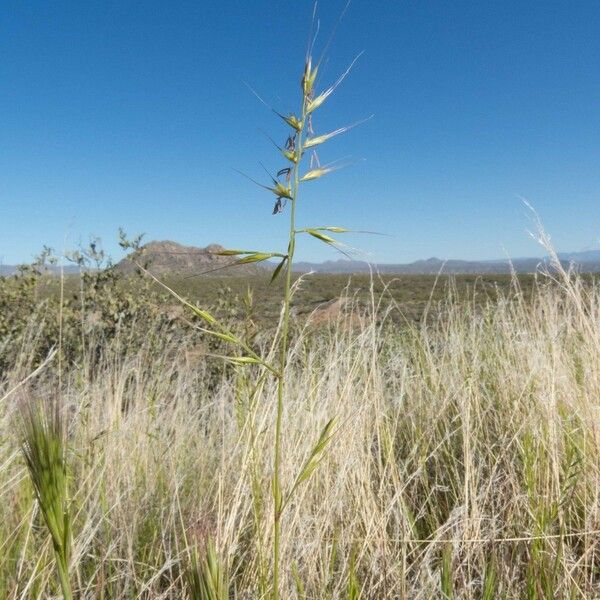
Plant Overview
Often called Small Fescue or Nuttall’s Fescue, this delicate annual grass is a master of survival in the arid landscapes of Western North America. It is like nature’s own "filigree," adding a soft, purple-tinted haze to rocky hillsides and desert floors during the spring. While it looks fragile and airy, it is a tough pioneer species that thrives in the cracks of the earth where other plants struggle to take root.
🔍 How to Identify
- 🌾 Slender Stems: It grows in thin, upright culms that usually reach between 8 to 20 inches. As the plant matures and dries, the stems often take on a beautiful reddish-purple hue.
- 🧵 Thread-like Leaves: The leaf blades are incredibly narrow—almost hair-thin—and are typically folded or rolled inward to help the plant conserve every drop of moisture.
- ✨ Bristly Seed Heads: The flowers appear in loose, open clusters. Each tiny seed pod features long, needle-like "awns" (bristles) that give the plant a fuzzy, shimmering appearance when the sun hits it.
🏡 In Your Garden
- 🏜️ Drought Warrior: This isn't a lush, green lawn grass. It thrives in well-draining, sandy, or even nutrient-poor rocky soil. It is an excellent choice for "rewilding" projects or xeriscaping where you want a natural, meadow-like aesthetic with zero supplemental water.
- 🔄 The Annual Cycle: Because this is an annual grass, it completes its entire life cycle in one season. To see it return next year, resist the urge to mow it down early; let the seeds drop naturally so they can germinate when the rains return.
⚠️ Safety & Toxicity
- ✅ Non-Toxic: Festuca microstachys is generally considered safe and non-toxic for humans, cats, dogs, and livestock.
- 🐕 Mechanical Irritation: Like many wild grasses with "awns," the sharp bristles on the seeds can occasionally get stuck in a pet's fur, ears, or between their paw pads. It is always a good idea to check your dog after a hike through dry grasslands.
✨ Fun Fact
This grass is "cleistogamous," meaning it has a secret superpower: it can pollinate itself while its flowers are still tightly closed. This ensures that even in the harshest, windless conditions, the plant will successfully produce the next generation of seeds!

Detailed Care Instructions








