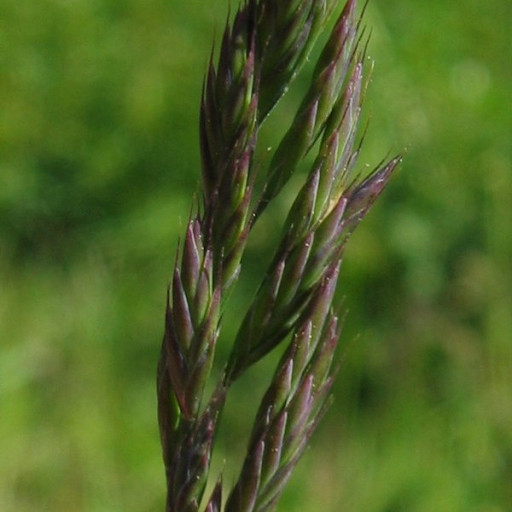
Plant Overview
Commonly known as Red Fescue, this elegant grass is the "unsung hero" of low-maintenance landscapes and shaded woodland gardens. Unlike thirsty, high-maintenance lawns, this resilient species offers a soft, meadow-like aesthetic that feels right at home in a cottage garden or a wild coastal meadow. It is famously durable, originally found clinging to dunes and mountain slopes across the Northern Hemisphere.
🔍 How to Identify
- 🍃 Blade Texture: Features extremely fine, needle-like leaves that are usually folded or rolled, giving the grass a delicate, hair-like appearance compared to broad-leafed lawn varieties.
- 🎨 The Reddish Base: If you look closely at the very bottom of the stems near the soil, you’ll notice a distinct reddish or purple tint that gives the plant its name.
- 🌾 Growth Habit: It grows in dense, lush tufts or spreads slowly via underground runners (rhizomes), creating a thick, carpet-like mat that naturally chokes out weeds.
🏡 In Your Garden
- 🌳 The Shade Specialist: While most grasses turn yellow and thin out under trees, Red Fescue thrives in dappled light and cool shade, making it the perfect solution for those tricky spots under old oaks or maples.
- 💧 Drought Resilience: Because it has a deep, efficient root system, it requires significantly less watering than standard turf once established and can handle poor, sandy soils with ease.
- ✂️ The "No-Mow" Choice: Many gardeners choose not to mow this grass at all. When left to grow, it reaches about 12-15 inches and "slumps" over into soft, flowing emerald waves that look stunning in naturalistic landscapes.
⚠️ Safety & Toxicity
- 🐾 Pet & Child Safe: Red Fescue is considered non-toxic and is perfectly safe for dogs, cats, and children to play on or walk through.
- 🌾 Allergy Alert: Like all grasses, it produces pollen during its flowering stage in late spring or early summer; those with hay fever may experience sneezing if the grass is allowed to grow tall and go to seed.
✨ Fun Fact
Red Fescue is so tough that certain subspecies are "halophytes," meaning they are biologically engineered to survive heavy salt spray from the ocean—a feat that would wither almost any other garden grass!

Detailed Care Instructions
To grow Festuca Rubra (red fescue) plant, follow these steps:
- Choose a suitable location: Red fescue prefers full sun to partial shade and well-drained soil. Make sure the area has good air circulation.
- Prepare the soil: Red fescue tolerates a wide range of soil types, but it prefers slightly acidic to neutral soil. Amend the soil with organic matter and ensure good drainage.
- Plant the seeds or seedlings: You can either start from seeds or purchase seedlings. If starting from seeds, scatter them evenly on the prepared soil and lightly rake them in. For seedlings, dig holes slightly larger than the root ball and place each plant in a hole.
- Water regularly: Keep the soil evenly moist until the plants establish. Water deeply but don't let the soil become waterlogged. Once established, red fescue is drought-tolerant.
- Fertilize sparingly: Red fescue doesn't require heavy fertilization. Apply a slow-release, balanced fertilizer in early spring or early fall to promote healthy growth.
- Mow regularly: For a neat appearance, mow the red fescue at a height of about 2-3 inches. Regular mowing will also help prevent thatch buildup.
- Control weeds: Red fescue is a naturally dense grass that helps in suppressing weeds. However, during the initial establishment period, it is important to minimize competition from weeds. Handpull or use herbicides sparingly to control weeds.
- Provide occasional overseeding: To maintain a lush appearance, overseed the red fescue plants every few years. Scatter the seeds lightly over the lawn and lightly rake them in.
- Monitor for pests and diseases: Though relatively disease and pest-resistant, keep an eye out for common issues such as brown patch disease or fungal diseases. Apply appropriate treatments if necessary.
- Rejuvenate as needed: Over time, red fescue may become compacted or develop a thatch layer. Use a core aerator or dethatcher to rejuvenate the lawn when necessary.
Remember to check with local resources or gardening experts for specific regional advice and recommendations on growing Festuca Rubra in your area.

Place in a bright room that is sun drenched almost all day. Or directly in a south-facing window.

Festuca Rubra is a type of plant that prefers moist soil. When watering this plant, it is important to keep the soil evenly moist without overwatering. This can be achieved by checking the soil regularly and watering when the top inch of soil feels dry to the touch. When watering, pour water slowly near the base of the plant, taking care not to wet the foliage. It is best to water in the early morning or evening when the sun is not as strong to avoid evaporation and moisture loss. Avoid letting water sit in a tray under the plant, as this can lead to root rot. Overall, keeping the soil evenly moist and avoiding overwatering will help ensure the health and vitality of your Festuca Rubra plant.
- Choose a balanced fertilizer: Select a fertilizer that has an equal or close to equal ratio of nitrogen (N), phosphorus (P), and potassium (K), such as a 10-10-10 or 14-14-14 blend.
- Dilute the fertilizer: Read and follow the instructions provided on the fertilizer packaging. Typically, you will need to dilute the fertilizer in water according to the recommended ratio.
- Time the fertilization: Apply the fertilizer to the Festuca Rubra plant during its active growing period, which is usually in the spring or early summer. Avoid fertilizing during extreme weather conditions, such as heatwaves.
- Prepare the soil: Before applying the fertilizer, ensure that the soil around the plant is moist. If the soil is dry, water it lightly before adding the fertilizer.
- Apply the fertilizer: Pour the diluted fertilizer mixture evenly around the base of the Festuca Rubra plant. Be careful not to pour it directly on the plant itself, as this may cause damage.
- Water the plant: After applying the fertilizer, water the plant thoroughly. This helps to transport the nutrients into the roots and soil.
- Avoid overfertilization: Do not exceed the recommended dosage of fertilizer. Overfertilizing can harm the plant and may have negative effects on its growth and health.
- Repeat as needed: Depending on the specific fertilizer and plant requirements, you may need to repeat the fertilization process every few weeks or as indicated on the fertilizer packaging. Always follow the instructions provided.
For optimal growth and health, it is recommended to use a well-draining soil that is rich in organic matter and nutrients. Avoid soils that are heavy and compact, as they may lead to waterlogging and root rot. The pH of the soil should be slightly acidic to neutral, ranging between 6.0 and 7.0. It is also important to ensure proper irrigation, as the plant prefers moist but not waterlogged soil.
Propagating Festuca Rubra can be done using various methods such as division, seed germination, or tissue culture. Here are some details on how to propagate Festuca Rubra:
- Division: Divide the mature Festuca Rubra plant by carefully digging it out of the ground or container. Gently separate the clumps of grass, making sure each division has a sufficient number of roots and shoots. Replant the divisions in suitable soil or containers.
- Seed germination: Collect seeds from the Festuca Rubra plant when they are fully mature and dry. Remove any debris or chaff from the seeds. Create a seed-starting tray or sow the seeds directly in well-prepared soil. Cover with a thin layer of soil, and keep them consistently moist. Germination typically takes around 2-3 weeks. Once the seedlings have developed a few sets of true leaves, they can be transplanted to their desired location.
- Tissue culture: Tissue culture is a more advanced method of propagation that involves taking small sections of tissue from a healthy Festuca Rubra plant and placing them in a sterile culture medium. This method requires specialized equipment and techniques, often conducted in laboratory settings.
Regardless of the chosen propagation method, it is important to provide the young Festuca Rubra plants with adequate light, moisture, and nutrients. Regular monitoring and proper care will help ensure successful propagation and establishment of the new plants.
Common pests of the red fescue include Thrips. Make a habit of checking your red fescue frequently for pests so that any infestations can be caught and managed early.








