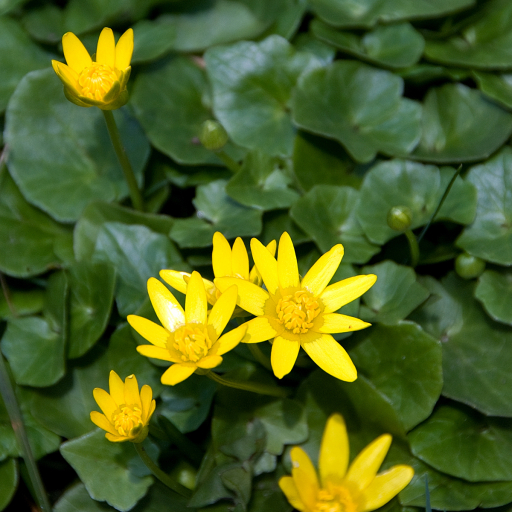
Plant Overview
Often called the "Lesser Celandine" or "Pilewort," Ficaria verna is a cheerful harbinger of spring that carpets woodland floors in brilliant gold. While it is celebrated in European literature—most notably by the poet William Wordsworth—it is viewed with caution in North America, where its aggressive growth can overwhelm local ecosystems. This low-growing perennial is one of the first plants to wake up after winter, taking advantage of the sunlight before the trees above grow their leaves.
🔍 How to Identify
- 🌼 The Flowers: Look for star-shaped, glossy yellow flowers with 8 to 12 petals. This is a key identifier, as most common buttercups only have 5 petals.
- 🍃 The Foliage: The leaves are dark green, fleshy, and heart-shaped (cordate) with a shiny, waxy surface that helps them shed spring rain.
- 🥔 The Roots: If you gently dig beneath the surface, you will find small, finger-like tubers. These "fig-like" root bundles give the plant its Latin name (Ficaria comes from the Latin for "fig").
🏡 In Your Garden
- 🌦️ Spring Ephemeral: This plant is a "fast liver." It emerges, blooms, and sets seed all before the heat of summer arrives. By June, the entire plant usually dies back and disappears underground, leaving a gap in your garden bed.
- 🌱 Invasive Potential: Be wary if you live in the United States or Canada. Because it spreads through tiny bulblets and tubers that break off easily, it can quickly take over a lawn or garden, outcompeting other spring flowers like Bluebells or Trilliums.
- 💧 Damp & Shady: It thrives in the "difficult" spots where other plants struggle—heavy clay, soggy soil, and deep shade are its favorite environments.
⚠️ Safety & Toxicity
- 🚫 Toxic Status: Toxic to humans, dogs, cats, and livestock if ingested.
- 🧪 Chemical Defense: Like many buttercups, it contains protoanemonin. When the plant is crushed or chewed, this toxin can cause intense burning of the mouth, drooling, and digestive distress.
- 🧤 Skin Irritation: The sap can cause redness or even blisters on sensitive skin. It is always a good idea to wear gloves when weeding this species.
✨ Fun Fact
The famous poet William Wordsworth was so enchanted by this plant that he wrote three separate poems in its honor. He even requested that a Lesser Celandine be carved onto his tombstone at St Oswald's Church—though, in a famous botanical blunder, the stonemason accidentally carved the "Greater Celandine," which is a completely different plant from the poppy family!

Detailed Care Instructions
Ficaria verna plants, also known as lesser celandine or fig buttercup, can be grown through the following steps:
- Choose the right location: Ficaria verna plants thrive in partial shade to full sun. Select an area in your garden that receives sunlight for a few hours a day but also has some shade to protect the plants during hot afternoons.
- Prepare the soil: Ficaria verna plants prefer moist, well-draining soil. Amend the soil by adding organic matter such as compost to improve its water retention capabilities and fertility.
- Plant the tubers: Ficaria verna plants propagate through small, round tubers. Plant them in the early spring or fall, about 2-3 inches deep and 4-6 inches apart. Ensure that the concave side of the tuber faces upward.
- Water regularly: Keep the soil consistently moist, but not waterlogged. Water the plants regularly, especially during dry periods, to prevent the soil from drying out.
- Mulch: Apply a layer of organic mulch around the plants to help retain moisture, suppress weed growth, and insulate the roots.
- Fertilize: Ficaria verna plants generally do not require much fertilization. However, if your soil is deficient in nutrients, you can apply a balanced, slow-release fertilizer in the spring or incorporate compost into the soil.
- Control weeds: Regularly inspect your ficaria verna plants for weeds and remove them promptly to prevent competition for nutrients and water.
- Maintenance: In the fall, after the foliage has died back, you can divide the tubers and replant them in new areas or share them with other gardeners. This can help control their spread and rejuvenate the plants.
Note: Ficaria verna plants can be invasive and spread quickly, so it is recommended to contain them in well-defined areas or pots to prevent them from taking over your garden.

Place in a window with dappled sun or a spot in the middle of a room. Or directly in a window facing west or east.

The best way to water this plant is to give it a moderate amount of water on a regular basis. Pay close attention to the soil, ensuring that it remains moist but not waterlogged. Avoid letting the soil dry out completely, as this could cause damage to the plant's roots. Use a watering can or hose to water the plant gently at the base, taking care not to splash water on the foliage. If the plant is grown in a container, make sure that it has adequate drainage holes to allow excess water to escape. In general, it is better to underwater than overwater this plant, as it is somewhat drought resistant and can tolerate periods of dryness. However, consistent and even watering will encourage healthy growth and help the plant reach its full potential.
To fertilize this plant, apply a balanced, slow-release fertilizer in the early spring before active growth begins. Apply the fertilizer according to the manufacturer's instructions, and then water the plant thoroughly. Repeat the application in the fall before the plant goes dormant. Avoid fertilizing during the hot summer months.
The optimal soil for growing this plant should be a well-draining and loose type of soil. The soil pH should be slightly acidic to neutral. The plant prefers moist soil conditions, so the addition of organic matter or compost can help retain moisture and improve soil fertility. The soil should be moderately fertile with a medium texture, avoiding heavy clay soils that may become waterlogged. Additionally, sandy soils may not hold enough moisture for the plant's needs. It is important to avoid overwatering as it can lead to root rot.
To propagate this plant, you can first remove some healthy shoots from the parent plant. Make sure that each shoot has a part of the rhizome system attached to it.
Prepare a pot of well-draining soil mix and gently plant the shoots into the pot by burying the rhizome system just below the soil surface. Water the soil well and keep it moist but not waterlogged.
Place the pot in a bright, indirect light location and maintain a warm temperature of around 68-77°F (20-25°C).
Give the plant some time to establish roots in the new pot. Fertilize it with a balanced liquid fertilizer every 2-3 weeks during the growing season (spring to fall).
After a few weeks, you should start to see new leaves emerging from the soil. This is a sign that the plant has successfully rooted and is growing. You can continue to care for it as you would for the parent plant.
Additionally, you can propagate this plant through division. When repotting the parent plant, carefully separate the rhizomes and replant them into separate pots. This process should be done during the spring or fall seasons.








