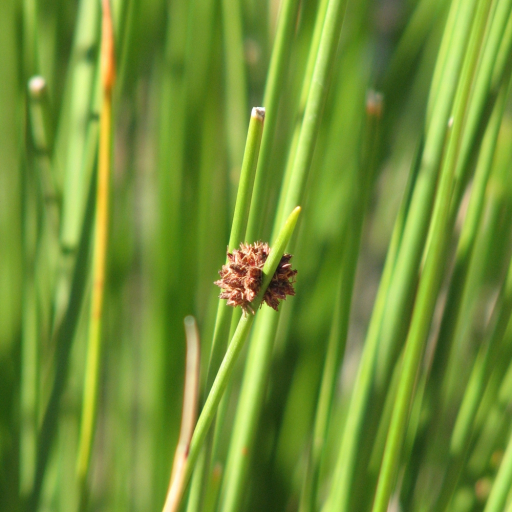
Plant Overview
Known as the Knobby Club-rush, this architectural beauty is a coastal superstar from the Southern Hemisphere. It is the ultimate "low-maintenance" plant, often found dancing in the sea breeze or anchoring sand dunes with its tough, wiry stems. Whether you are looking to add a modern, geometric texture to your garden or need a plant that can survive both a drought and a temporary flood, this rush is a reliable green companion.
🔍 How to Identify
- 🌿 The Stems: Smooth, dark green, and needle-like, these upright stems grow in dense, arching clumps that typically reach about 3 feet (1 meter) in height.
- 🟤 The "Knob": Near the tip of each stem sits a distinctive, brownish, globular flower head. It looks like a small, textured wooden bead or a "knot" tied into the plant.
- 🌱 Growth Habit: It forms a neat, tufted mound that expands slowly via underground rhizomes, providing a clean, fountain-like silhouette.
🏡 In Your Garden
- 🏖️ Coastal Warrior: This plant is legendary for its salt tolerance. It thrives in salt spray and sandy soils, making it the "go-to" choice for seaside landscapes where more delicate plants might wither.
- 💧 Moisture Chameleon: While it is naturally found in boggy areas and near lagoons, it is surprisingly drought-tolerant once established. It is one of the few plants that is equally happy with "wet feet" near a pond or in a dry, rock-filled garden bed.
- 🧤 Tough as Nails: It rarely suffers from pests or diseases. The main "chore" is simply combing through the clump once a year to pull out any old, browned stems to keep it looking fresh.
⚠️ Safety & Toxicity
- ✅ Non-Toxic: Ficinia nodosa is generally considered safe and non-toxic for humans, dogs, and cats.
- 🌾 Texture Warning: Because the stems are very fibrous and tough, they are not particularly digestible. If a curious pet decides to chew on them, the wiry texture might cause minor mechanical irritation to the mouth or throat, but it is not poisonous.
✨ Fun Fact
In its native Australia and New Zealand, this plant is a "Coastal Hero." It is frequently used by environmentalists in land restoration projects to stabilize shifting sand dunes and prevent erosion, acting as a living anchor for the shoreline!

Detailed Care Instructions
Ficinia nodosa, also known as Knobby Club Rush or Knobby Knotweed, is a hardy and low-maintenance plant that can easily be grown in a variety of conditions. Here are some tips on how to grow Ficinia nodosa:
- Light and Temperature: Ficinia nodosa prefers full sun to partial shade and can tolerate a wide range of temperatures, from hot to mild. Ensure that the plant receives at least 6 hours of sunlight per day.
- Soil: Ficinia nodosa grows well in well-draining sandy or loamy soil. It is important to ensure that the soil is not waterlogged as this can lead to root rot.
- Watering: Water the plant regularly, keeping the soil evenly moist but not waterlogged. It is best to let the soil dry out slightly between waterings.
- Fertilizing: Ficinia nodosa is a low-maintenance plant that does not require frequent fertilization. However, you can feed it with a balanced, slow-release fertilizer once a year in spring.
- Pruning: Trim back any dead or damaged leaves as needed to maintain the plant's appearance and health.
- Propagation: Ficinia nodosa can be propagated by division or by taking cuttings. Divide the plant in spring or autumn, ensuring that each division has some roots attached. Cuttings can be taken in spring or summer and should be planted in a well-draining soil mix.
- Pests and Diseases: Ficinia nodosa is relatively pest and disease-resistant. However, watch out for aphids, scale insects, and spider mites. Treat any infestations promptly with a mild insecticidal soap or neem oil.
By following these tips, you can successfully grow and care for Ficinia nodosa in your garden or landscape. Enjoy the unique and attractive foliage of this versatile plant!

Place in a bright room that is sun drenched almost all day. Or directly in a south-facing window.

Ficinia Nodosa plants should be watered regularly, ensuring that the soil is evenly moist but not waterlogged. It is important to allow the top layer of the soil to dry out slightly between waterings to prevent root rot. Water deeply, making sure that the water reaches the roots of the plant. In the winter months, reduce watering frequency to allow the plant to enter a period of dormancy. Avoid getting water on the foliage of the plant, as this can increase the chances of disease. Consider using a watering can or a drip irrigation system to provide a more controlled and consistent watering routine.
To fertilize Ficinia Nodosa, apply a balanced liquid fertilizer once a month during the growing season, which is typically in spring and summer. Dilute the fertilizer to half strength to prevent any potential burning of roots. Water the plant thoroughly after fertilizing to help the nutrients penetrate the soil and reach the roots. Avoid over-fertilizing as it may harm the plant.
Ficinia nodosa plants thrive in well-draining soil that is on the slightly acidic to neutral side of the pH scale. A mixture of sandy soil and peat moss is ideal for these plants, as it provides good drainage while retaining some moisture. Avoid heavy, compacted soils that can lead to waterlogged roots and potential disease issues. Adding perlite or sand to the soil mix can help improve drainage further. Repotting every couple of years with fresh soil can help keep your Ficinia nodosa plant healthy and thriving.
Ficinia nodosa can be propagated through division or by taking stem cuttings.
To propagate through division, carefully lift the plant from its pot or the ground and gently separate the plant into smaller sections, making sure each section has its own roots. Replant the divided sections in separate pots with well-draining soil.
To propagate through stem cuttings, select a healthy stem with several leaves and make a clean cut just below a node. Remove the lower leaves from the cutting and dip the cut end into rooting hormone to encourage root growth. Plant the cutting in a pot with well-draining soil and keep it in a warm, humid environment until roots develop.
Regularly water the newly propagated plants and keep them in a warm, bright location with indirect sunlight. As they grow and develop roots, gradually acclimate them to their new environment before transplanting them into their permanent homes.








