Plant Overview
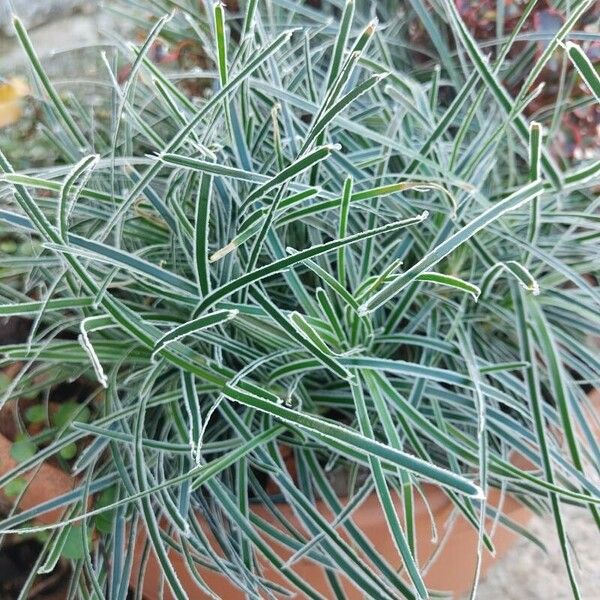
Commonly known as the "Ice Crystal" plant, Ficinia truncata looks as though it has been permanently caught in a delicate morning frost. Originating from the coastal regions of South Africa, this ornamental sedge has become a favorite for modern indoor gardeners and "plant parents" who want something tactile and visually striking without the fuss of high-maintenance tropicals.
🔍 How to Identify
- ❄️ The "Frosty" Edges: The most distinctive feature is the fringe of tiny, white, hair-like cilia along the leaf margins, giving the plant its namesake icy appearance.
- 🌿 Truncated Tips: Unlike most grasses that taper to a point, the leaves of this plant look "truncated" or clipped at the ends, creating a blunt, architectural silhouette.
- Compact Mounds:** It grows in dense, upright tufts or "clumps," rarely exceeding 8-12 inches in height, making it perfect for desktop pots.
🏡 In Your Garden & Home
- 🏖️ Coastal Resilience: In its native habitat, it thrives in sandy, well-draining soils. If you are keeping it at home, use a succulent or cactus mix; it hates "wet feet" and will quickly rot if left in standing water.
- ☀️ Light Preferences: While it loves bright, indirect light to maintain its vibrant green and white contrast, it is surprisingly hardy. However, if the "frosty" edges start to brown, it’s usually a sign of low humidity or too much direct, scorching afternoon sun.
⚠️ Safety & Toxicity
- ✅ Pet & Child Safe: Ficinia truncata is generally considered non-toxic to cats, dogs, and humans, making it a "worry-free" addition to a household with curious nibblers.
- 🧤 Leaf Texture: While not sharp like some saw-grasses, the leaves can be slightly stiff. It is always best to handle the plant gently to avoid damaging the delicate white "ice" fringe.
✨ Fun Fact
The species name truncata comes from the Latin word for "maimed" or "cut off," referring to those unique, blunt-ended leaves that look like they’ve been perfectly trimmed by a pair of invisible scissors!

Detailed Care Instructions
Here are some tips for growing Ficinia Truncata plants:
- Choose the right location: Ficinia Truncata plants prefer full sun but can tolerate partial shade. Make sure they are planted in a well-draining area to prevent waterlogging.
- Soil requirements: They prefer moist soil that is rich in organic matter. If the soil is clayey or compacted, consider adding sand or perlite to improve drainage.
- Watering: Ficinia Truncata plants like consistent moisture but do not like to be excessively wet. Water the plant regularly, keeping the soil evenly moist. However, allow the top inch of soil to dry out between waterings to prevent root rot.
- Fertilizer: You can apply a balanced, slow-release fertilizer in the spring to promote healthy growth. Alternatively, you can use a liquid fertilizer every two to three weeks during the growing season.
- Pruning: Ficinia Truncata plants don't require much pruning. However, you can trim off any dead or damaged leaves to maintain a neat appearance. Avoid trimming off too much foliage at once as it can stress the plant.
- Propagation: Ficinia Truncata plants can be propagated through division or by collecting and planting seeds. To divide the plant, carefully remove the entire plant from the pot and separate the rooted sections. Replant the divisions in fresh soil and water thoroughly.
- Pests and diseases: These plants are generally resistant to pests and diseases. However, occasional pest problems like aphids or mealybugs may occur. Treat infestations with insecticidal soap or neem oil.
Remember to regularly monitor the plant for signs of stress or disease, and provide appropriate care accordingly. With proper care, Ficinia Truncata plants can grow well and thrive in your garden or indoor space.

Place in a bright room that is sun drenched almost all day. Or directly in a south-facing window.

Ficinia Truncata is best watered deeply and regularly to ensure that the soil remains moist. It is important not to overwater the plant, as this can lead to root rot. One way to determine when it is time to water is to check the moisture level by sticking your finger about an inch into the soil. If the soil feels dry at this depth, it is time to water. When watering, it is best to do so at the base of the plant, rather than overhead, as this can cause the leaves to become too wet and increase the risk of disease. It is also important to ensure that the plant is not sitting in standing water, as this can lead to root rot as well. Overall, consistent and mindful watering practices can help promote the health and vitality of your Ficinia Truncata plant.
To properly fertilize Ficinia Truncata plant, follow these instructions:
- Choose a balanced, water-soluble fertilizer suitable for indoor plants.
- Dilute the fertilizer according to the manufacturer's instructions and mix it with water.
- Water the plant thoroughly before applying fertilizer to ensure the soil is damp.
- Slowly pour the diluted fertilizer onto the soil around the base of the plant, avoiding direct contact with the leaves or stems.
- Ensure that the fertilizer is evenly distributed around the plant.
- Use a container with drainage holes to prevent water accumulation, as excessive moisture can harm the plant.
- After fertilizing, water the plant again to ensure the fertilizer is well absorbed into the soil.
- Monitor the plant for any signs of over-fertilization, such as burnt leaves or wilting. If this occurs, flush the soil with water to dilute the excess fertilizer.
- Fertilize the Ficinia Truncata plant every 2-4 weeks during the growing season (spring and summer) to promote healthy growth.
- During fall and winter, reduce the frequency of fertilization to every 6-8 weeks or according to the plant's specific needs.
- Regularly monitor the plant's overall health and adjust fertilization based on its growth and appearance.
Ficinia Truncata prefers well-draining soil that is rich in organic matter. The soil should also have a slightly acidic to neutral pH level. It is recommended to use a sandy loam soil mix with a pH range of 5.5-7.0, as it allows for good root development without waterlogging the roots. A soil mix that incorporates perlite or vermiculite can also improve drainage and promote aeration in the soil. To ensure optimal growth, it is essential to avoid using heavy or compacted soils, as they can prevent healthy root development and inhibit plant growth.
Propagation of Ficinia truncata can be done through various methods such as division, stem cuttings, or by collecting and sowing its seeds.
- Division:
To propagate Ficinia truncata through division, follow these steps:
- Carefully remove the plant from its pot or the ground.
- Gently tease apart the root system to separate individual plants.
- Ensure each division has a healthy, well-developed root system attached to it.
- Replant the divisions in separate containers, ensuring that the soil is well-draining and nutrient-rich.
- Water the newly divided plants thoroughly and place them in a suitable location with adequate sunlight.
- Stem Cuttings:
To propagate Ficinia truncata through stem cuttings, follow these steps:
- Select a healthy, mature plant with well-developed stems.
- Using clean, sharp pruning shears, cut a section of stem measuring approximately 4-6 inches (10-15 cm) in length.
- Remove the lower leaves from the stem, leaving some leaf nodes intact.
- Optionally, apply a powdered rooting hormone to the cut end of the stem to encourage root growth.
- Fill a small container or seed tray with a well-draining potting mix, such as a mixture of sand and peat moss.
- Make a hole in the potting mix and plant the cutting, ensuring at least one or two leaf nodes are below the soil surface.
- Water the cutting thoroughly and place it in a warm, well-lit area away from direct sunlight.
- Keep the potting mix consistently moist but not waterlogged.
- Within a few weeks, roots should start forming, indicating successful propagation.
- Seed Collection and Sowing:
To propagate Ficinia truncata from seeds, follow these steps:
- Allow the plant to produce mature seed heads or seed capsules.
- Ensure the seeds are fully mature and dry before collecting them.
- Collect the seeds by gently tapping the seed heads into a clean container.
- Remove any chaff or debris from the seeds.
- Fill a seed tray or individual pots with a well-draining seed-starting mix.
- Sow the seeds on the soil surface and lightly cover them with a thin layer of the seed-starting mix.
- Water the seeds gently, ensuring the soil remains damp but not waterlogged.
- Place the tray or pots in a warm, well-lit location, but avoid direct sunlight.
- Germination should occur within a few weeks, and once the seedlings are large enough to handle, they can be transplanted into individual containers.
Remember to provide appropriate care and maintenance to the newly propagated Ficinia truncata plants, including regular watering, suitable light conditions, and proper fertilization, to ensure their healthy growth and development.








