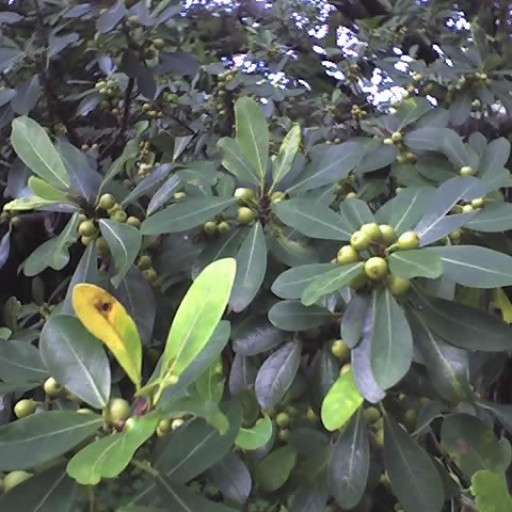
Plant Overview
Often called the Triangle Fig, this West African native looks like a piece of living origami. It is a favorite among interior designers for its geometric, architectural foliage that stands out sharply against more traditional, rounded houseplants. In its native habitat, it can grow as an "epiphyte," starting its life high up in the branches of other trees before sending roots down to the ground.
🔍 How to Identify
- 📐 Triangular Foliage: The most striking feature is the leaves, which are shaped like a delta or a triangle with a distinctively flat top edge.
- 👁️ The Glandular Pore: If you look closely at the tip of the leaf, you may see a tiny dark spot or "eye" where the midrib ends, a unique characteristic of this subspecies.
- 🌳 Woody Texture: It grows as a sturdy, upright shrub or small tree with greyish-brown bark that becomes more textured as the plant matures.
🏡 In Your Garden
- ☁️ The "Breathable" Root Rule: Because of its epiphytic nature, this fig hates "wet feet." It requires a very chunky, well-draining soil mix; if the roots sit in stagnant water, the plant will protest by dropping its unique leaves almost overnight.
- ☀️ Light Nuance: It craves bright, indirect light to maintain its compact, geometric shape. If kept in a corner that is too dark, the stems will become "leggy," and the leaves will lose their sharp triangular definition.
⚠️ Safety & Toxicity
- 🐾 Toxic to Pets: Like most members of the Ficus genus, this plant is toxic to cats and dogs. Ingestion can lead to gastrointestinal upset and drooling.
- 🧴 Latex Irritant: The plant contains a milky white sap (latex) that leaks when a leaf is plucked or a stem is cut. This sap can cause itchy skin irritation or rashes, so it is best to wear gloves when pruning.
✨ Fun Fact
Each species of Ficus has a "soulmate" insect! The Triangle Fig relies on a specific, tiny species of Agaonid wasp to pollinate its flowers, which are actually hidden deep inside the hollow "fruit" (syconium) you see on the branches. Without that one specific wasp, the plant could never produce seeds!

Detailed Care Instructions
To grow a Ficus Natalensis Subsp. Leprieurii, also known as the Natal Fig, follow these steps:
- Choose a suitable location: Natal Figs prefer bright, indirect sunlight. Select a spot where the plant can receive plenty of natural light but is protected from direct sunlight which can scorch its leaves. It can also grow indoors, near a window with filtered sunlight.
- Ensure proper drainage: Natal Figs thrive in well-draining soil. Use a mixture of potting soil, sand, and perlite to improve drainage if growing in containers.
- Provide optimal temperatures: These plants prefer temperatures between 65-85°F (18-29°C). Protect them from extreme temperature changes or frost.
- Watering: Keep the soil consistently moist but not overly wet. Water the plant when the top inch of soil feels dry. Avoid overwatering, as this can lead to root rot.
- Fertilize regularly: Use a balanced liquid fertilizer every four to six weeks during the growing season (spring and summer). Follow the instructions on the fertilizer packaging for proper application.
- Pruning: Natal Figs benefit from occasional pruning to maintain their shape and size. Prune away any dead, damaged, or overgrown branches to promote healthy growth. You can also prune for aesthetics or to control the size of the plant.
- Repotting: If growing in containers, re-pot the Natal Fig when it outgrows its current pot. Generally, it is recommended to repot a ficus every 2-3 years. Use a pot that is slightly larger than the previous one and ensure adequate drainage.
- Pests and diseases: Monitor the plant for common pests such as spider mites, scale insects, and aphids. If detected, use an appropriate insecticidal soap or neem oil to control the infestation. Watch for signs of leaf drop or discoloration, which could indicate an underlying issue like overwatering or insufficient light.
By following these care guidelines, you should be able to successfully grow and maintain a healthy Ficus Natalensis Subsp. Leprieurii plant.

Place in a window with dappled sun or a spot in the middle of a room. Or directly in a window facing west or east.

To properly water the Ficus Natalensis Subsp. Leprieurii plant, it is important to check the soil moisture level before watering. Stick your finger about an inch deep into the soil to see if it feels moist or dry. If the soil feels dry, it's time to water the plant.
Using a watering can or a hose with a gentle spray nozzle, water the plant slowly and evenly, allowing the water to seep into the soil. Avoid getting water on the leaves as this can cause damage or disease.
Depending on the temperature and humidity levels, this plant may need to be watered once or twice a week. However, it is important not to over-water the plant as this can lead to root rot. It is better to underwater than overwater.
If the plant is located in a pot, make sure there are drainage holes in the bottom to allow excess water to escape. Always discard any excess water that collects in the saucer or tray to avoid standing water that can cause root rot.
Observing the plant's behavior is also important. If the leaves start to droop or turn yellow, it could be a sign of either under-watering or over-watering. Adjust the watering regimen accordingly to help ensure this plant thrives.
To fertilize this plant, use a balanced fertilizer with equal amounts of nitrogen, phosphorus, and potassium. Apply the fertilizer every two weeks during the growing season and reduce to once a month during the winter months. Dilute the fertilizer to half strength before applying to avoid burning the roots. Be sure to water the plant thoroughly before and after fertilizing.
The Ficus Natalensis Subsp. Leprieurii plant prefers a well-draining soil with a slightly acidic to neutral pH level. It is recommended to use a soil mixture that consists of equal parts of coarse sand, perlite, and peat moss or coco coir. Adding a small amount of organic matter, such as compost, can also provide additional nutrients for the plant. It is important to make sure the soil is not too wet and to allow for proper drainage to prevent root rot.
To propagate this plant, take a stem cutting that is at least 4 inches long and has 2-3 leaves. Dip the end of the cutting in rooting hormone and plant it in a well-draining soil mix. Keep the soil moist but not waterlogged and place the pot in a bright, indirect light. It is important to keep the cutting in a warm and humid environment. Covering the pot with a plastic bag or placing it in a humidifying tray can help with this. In about 4-6 weeks, roots should form and the cutting can be transplanted into a larger pot with regular potting soil.
Common pests of the ficus natalensis subsp. leprieurii include Scale insect, mealybugs, spider mites, thrips. Make a habit of checking your ficus natalensis subsp. leprieurii frequently for pests so that any infestations can be caught and managed early.







