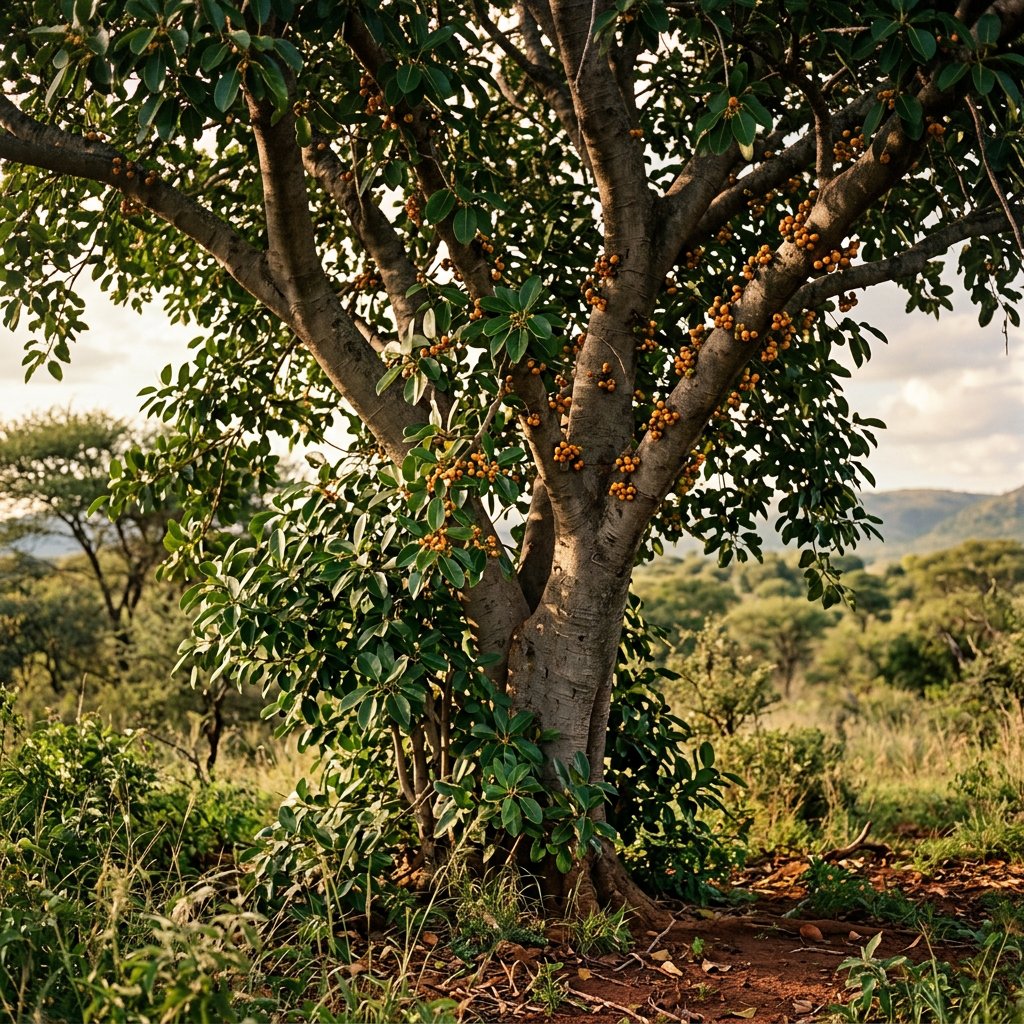
Plant Overview
Commonly known as the Natal Fig, this resilient African native is a master of adaptation. In the wild, it often begins life as a "strangler," germinating in the branches of other trees and sending roots downward to the earth. In the home, it is a prized specimen for its sculptural aerial roots and glossy foliage, making it a world-class favorite for bonsai enthusiasts and indoor gardeners alike.
🔍 How to Identify
- 🍃 The Foliage: The leaves are small, leathery, and teardrop-shaped (obovate). They boast a deep, waxy green color that reflects light beautifully.
- 🪵 The Trunk: Its bark is smooth and light gray, often becoming incredibly thick and twisted with age.
- 🧶 Aerial Roots: One of its most striking features is the production of fine, "beard-like" aerial roots that grow from the branches toward the ground, eventually thickening into secondary trunks.
🏡 In Your Garden
- 🌱 The "Protest" Drop: Like its cousin the Weeping Fig, the Natal Fig hates change. If you move it to a new room or change its light exposure, it may shed its leaves in a "tantrum." Don't panic—it is simply recalibrating to its new environment.
- 💧 Root Sensitivity: This plant prefers to dry out slightly between waterings. Because it often grows as an epiphyte in nature, its roots are sensitive to "wet feet," so ensuring your pot has excellent drainage is non-negotiable.
⚠️ Safety & Toxicity
- 🚫 Status: Mildly toxic to pets and humans.
- 🧪 The Sap: The plant contains a milky white latex sap. This sap can cause skin irritation or rashes (dermatitis) upon contact. If ingested by cats or dogs, it can lead to vomiting and mouth irritation, so keep it on a high shelf away from curious nibblers.
✨ Fun Fact
The Ficus natalensis is the soul of a centuries-old tradition in Uganda. The bark is harvested, soaked, and beaten with wooden mallets to create Bark Cloth, a unique textile. This process is so culturally significant that UNESCO has designated it a "Masterpiece of the Oral and Intangible Heritage of Humanity."

Detailed Care Instructions
To grow Ficus Natalensis plant, also known as Natal fig or river sandpaper fig, follow these steps:
- Choose a suitable location: Ficus Natalensis prefers bright, indirect sunlight. Select a spot that receives partial sun or filtered light. It can also tolerate some shade, but full sun should be avoided.
- Soil requirements: Use a well-draining soil mix that contains equal parts of potting soil, sand, and peat moss. This plant can also grow in different types of soil, but it should be able to drain excess water easily.
- Planting: Select a pot or container with good drainage holes. Place a layer of small rocks or broken pottery pieces at the bottom to facilitate drainage. Gently loosen the root ball of the Ficus Natalensis plant and place it in the pot. Backfill with the prepared soil mix, ensuring that the plant is at the same depth as it was in the original container.
- Watering: Water the plant thoroughly after planting and keep the soil evenly moist. However, avoid overwatering, as this can lead to root rot. Allow the top inch of soil to dry before watering again. Adjust the watering frequency according to the temperature and humidity of your environment.
- Fertilization: Feed the Ficus Natalensis plant once a month during the growing season (spring and summer) with a balanced liquid fertilizer diluted to half strength. Stop fertilizing during the winter months when the plant enters its dormant phase.
- Pruning: Prune the plant as needed to maintain its desired shape and size. Ficus Natalensis can tolerate heavy pruning but avoid removing more than one-third of the plant at a time. Pruning should ideally be done in early spring before new growth emerges.
- Humidity: This plant prefers high humidity levels. You can create a humid environment by placing the pot on a tray filled with water and pebbles. Ensure that the water level is below the pebbles to prevent the roots from sitting in water.
- Temperature: Ficus Natalensis prefers temperatures between 60-80°F (15-27°C). It can tolerate slightly lower temperatures during winter but should ideally be kept away from drafts and cold air.
- Propagation: Ficus Natalensis can be propagated through stem cuttings. Take a cutting of about 6 inches long from a healthy plant and remove the lower leaves. Dip the cut end in rooting hormone and plant it in a well-draining potting mix. Place the cutting in a warm and humid location until roots develop.
Remember that Ficus Natalensis can become a large and vigorous plant, so be prepared to provide adequate space for its growth and adjust the care accordingly.

Place in a window with dappled sun or a spot in the middle of a room. Or directly in a window facing west or east.

To water this plant, you should allow the top inch or two of soil to dry out before watering again. Use room temperature water and water until it begins to run out of the drainage holes in the bottom of the pot. Be sure to empty any excess water from the saucer beneath the pot to prevent root rot. This plant prefers moderate humidity, so you may want to mist it occasionally or place a humidifier nearby. Avoid getting water on the plant's leaves as this can lead to fungal growth.
To fertilize this plant, use a balanced, water-soluble fertilizer with nitrogen, phosphorus, and potassium. Dilute the fertilizer according to package instructions and apply it to the soil every two weeks during the growing season. Avoid over-fertilizing, as this can lead to salt buildup and burn the roots. Additionally, make sure to water the plant before fertilizing and follow up with a thorough watering after application to prevent fertilizer burn.
Ficus Natalensis plant prefers well-draining soil with a pH level ranging between 6.0 and 7.5. The soil should be rich in organic matter and have good aeration to allow proper water drainage. It is recommended to use a mixture of garden soil, perlite, and coconut coir or peat moss to provide the right mix of moisture retention and drainage. The soil should be kept moist but not overly saturated, and it should be checked frequently for water needs. Additionally, adding a layer of mulch on the top of the soil can help to maintain moisture levels and prevent soil erosion.
To propagate this plant, first choose a healthy stem from the parent plant that does not have any disease or damage. Then, take a sharp, clean pair of scissors or pruning shears and make a cut just below a node, which is where leaves attach to the stem. The cutting should be about 6-8 inches long.
Next, remove any leaves on the lower two-thirds of the stem, including the node. This will encourage the plant to focus its energy on producing roots rather than sustaining foliage.
Dip the cut end of the stem in rooting hormone powder to stimulate the growth of roots. Alternatively, you can use honey or aloe vera gel as natural rooting hormones.
Plant the cutting in a pot filled with a well-draining soil mixture. Create a hole in the soil with your finger and insert the cutting so that the remaining leaves are just above the soil line. Gently press the soil around the stem to secure it in place.
Water the plant thoroughly and place it in a bright, indirect light location. Avoid direct sunlight, as this can damage the young plant.
Keep the soil moist but not waterlogged, and mist the cutting daily to provide humidity. Within a few weeks, the cutting should develop roots and new growth, indicating that it has successfully rooted.
Common pests of the natal fig include Scale insect, mealybugs, spider mites, thrips. Make a habit of checking your natal fig frequently for pests so that any infestations can be caught and managed early.








