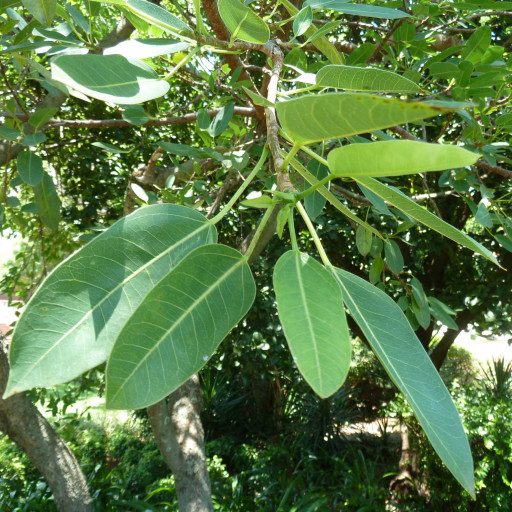
Plant Overview
Often called the Willow-leaf Fig or Narrow-leaf Fig, this elegant tree is a favorite among bonsai enthusiasts and indoor gardeners alike. Originating from the rocky landscapes of Africa and the Arabian Peninsula, it brings a delicate, wispy aesthetic that contrasts with the broad leaves of its cousin, the Fiddle Leaf Fig. In its native habitat, it is a rugged survivor, often found clinging to cliffsides and riverbanks.
🔍 How to Identify
- 🍃 Slender Foliage: The leaves are long, narrow, and pointed, closely resembling the leaves of a willow tree. They are a deep, glossy green with a prominent midrib.
- 🪵 Smooth Bark: Its trunk features smooth, light-gray to tan bark that develops a beautiful "aged" texture and occasional aerial roots as the plant matures.
- 🌿 Compact Growth: Unlike other figs that grow massive quickly, Ficus salicifolia maintains a dense, bushy habit, making it perfect for small spaces or miniature styling.
🏡 In Your Garden
- ☀️ Light Resilience: While it thrives in bright, indirect light, this species is remarkably more tolerant of lower light conditions and moving locations than the notoriously finicky Ficus benjamina.
- 💧 The "Wet-Dry" Balance: It prefers its soil to dry out slightly between waterings. Because it naturally grows in rocky crevices, it is highly sensitive to "wet feet" and requires a very well-draining potting mix to prevent root rot.
- ✂️ Pruning Potential: It is an incredibly vigorous grower that responds well to heavy pruning, which encourages the branches to ramify (split) and create a lush, canopy-like appearance.
⚠️ Safety & Toxicity
- 🐾 Mildly Toxic: Like most members of the Moraceae family, the Willow-leaf Fig contains a milky white sap (latex) that can be problematic.
- 🚫 Irritant Details: The sap can cause skin irritation or "ficus dermatitis" in humans. If ingested by curious cats or dogs, it may cause vomiting, drooling, or mouth irritation.
✨ Fun Fact
The Willow-leaf Fig is considered one of the best species for beginner bonsai because of its "reducing" ability; with proper pruning, its already small leaves can shrink even further to perfectly match the scale of a tiny miniature tree!

Detailed Care Instructions
To successfully grow Ficus Salicifolia, also known as weeping fig or willow leaf fig, follow these steps:
- Choose a suitable location: Ficus Salicifolia prefers bright, indirect light, so place it near a window where it receives filtered sunlight. Avoid placing it in direct sunlight, as it can scorch the leaves. The plant can also tolerate moderate shade.
- Temperature and humidity: Ficus Salicifolia thrives in average room temperatures, ideally between 60-75°F (15-24°C). Avoid exposing it to cold drafts or sudden temperature fluctuations. The plant appreciates higher humidity levels, so consider using a humidifier nearby, misting the leaves regularly, or placing the pot on a tray filled with water and pebbles to increase humidity.
- Watering: Water the plant thoroughly when the top inch (2.5 cm) of soil feels dry. Ensure proper drainage by using a well-draining soil mix and a pot with drainage holes. Empty excess water from the saucer to prevent root rot.
- Fertilizing: Feed the plant with a balanced liquid or granular fertilizer diluted to half-strength every 2-4 weeks during the growing season (spring and summer). Reduce fertilization frequency during fall and winter when the plant is dormant.
- Pruning: Prune the plant to maintain its desired shape or size. Ficus Salicifolia responds well to pruning and can handle significant reductions in size. Trim back leggy or unwanted growth, and remove any dead or diseased branches.
- Repotting: Repot the Ficus Salicifolia every 1-2 years, typically during spring. Choose a pot slightly larger than its current one, and use a well-draining soil mix. Be gentle when handling the roots to avoid damaging them.
- Pest control: Keep an eye out for common pests like mealybugs, scale insects, aphids, and spider mites. Regularly inspect the plant and treat any infestation promptly using an appropriate insecticidal soap or natural pest control methods.
- Propagation: Ficus Salicifolia can be propagated through stem cuttings. Take a 4-6 inch (10-15 cm) cutting from a healthy plant, remove the lower leaves, and place it in a container with moist soil. Keep the soil consistently moist, and within a few weeks, roots should develop.
Remember that Ficus Salicifolia is sensitive to changes, so avoid frequently relocating the plant. With proper care, this beautiful houseplant can thrive and grow well.
To water this plant, it is important to first check the soil moisture levels to ensure that the plant is not being over or under-watered. One way to do this is to stick a finger about an inch deep into the soil to see if it feels dry or moist. If it is dry, it is time to water the plant.
When watering, it is important to use room temperature or slightly warm water and to slowly pour it into the soil around the base of the plant, making sure not to get the leaves wet. The goal is to evenly saturate the soil until water begins to drain out of the bottom of the pot.
It is important to not let the plant sit in standing water as this can lead to root rot. If the plant is in a decorative pot without drainage holes, consider using a plastic saucer underneath it to catch excess water.
Watering frequency will vary depending on factors such as the size of the plant, the size of the pot, and the humidity and temperature of its environment. As a general rule, water the plant when the top inch of soil feels dry to the touch.
To fertilize this plant, use a balanced liquid fertilizer with equal amounts of nitrogen, phosphorus, and potassium. Apply the fertilizer once a month during the growing season and reduce the frequency during winter. Be sure to water the plant thoroughly before and after applying the fertilizer. Avoid over-fertilization as it can cause damage to the plant's roots and foliage.
For optimum growth and health of Ficus Salicifolia plant, it is recommended to use well-draining soil that is rich in nutrients. The soil should be slightly acidic to neutral with a pH range of 6.0-7.0. It is important to avoid heavy, water-logged soils that may cause root rot.
A good soil mix for Ficus Salicifolia plant may consist of a combination of peat moss, perlite, and sand to improve drainage and aeration. Adding organic matter such as compost or aged manure can enhance soil fertility and provide essential nutrients for the plant.
It is also important to ensure that the soil is not compacted, as this can restrict root growth and hinder plant development. Regular fertilization and mulching can also help improve soil health and provide a steady supply of nutrients to the plant.
Overall, the key to success with Ficus Salicifolia plant is to provide a well-balanced and nutrient-rich soil that allows for optimal root development and growth.
Propagation of this plant can be done with stem cuttings taken from a mature healthy plant. The stems should be cut into pieces, each with at least one node and a few leaves. These cuttings should be planted in well-draining soil and kept in a warm and humid location. They need to be watered regularly and misted frequently to maintain the humidity. Once roots have formed, the plant can be gradually acclimated to lower humidity and higher light levels. It is important to not overwater the cuttings as this can cause root rot and damage to the plant.








