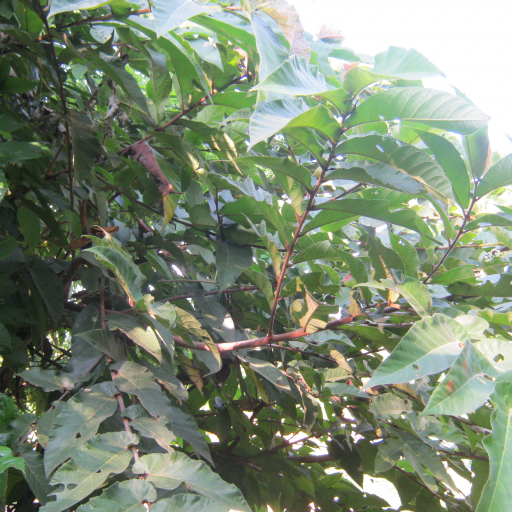
Plant Overview
Known as the Drooping Fig or the Ground-Fruit Fig, this Southeast Asian native is a botanical rebel. While most trees display their fruit high in the canopy, Ficus semicordata hides its treasures at its feet, growing figs on long, vine-like stolons that crawl across the forest floor. In its native Himalayan foothills, it is a vital source of food for both humans and wildlife.
🔍 How to Identify
- 🍃 Lopsided Leaves: The name "semicordata" refers to the leaf base, which is strangely asymmetrical. One side of the leaf base is large and rounded (heart-shaped), while the other is narrow and tapered.
- 🪵 Ground Figs: Look for clusters of small, fuzzy, reddish-brown figs growing on leafless runners that emerge from the base of the trunk and snake along the ground.
- 🖐️ Sandpaper Texture: The dark green leaves are remarkably rough and bristly to the touch, almost like fine-grit sandpaper.
🏡 In Your Garden
- 🌱 Root Space: This tree has an expansive and vigorous root system. If you are planting one, ensure it is far away from underground pipes, garden walls, or house foundations to prevent structural damage.
- 💧 Moisture Lover: In the wild, it thrives near streams and gullies. While it is hardy, it performs best in well-draining soil that remains consistently moist. It is not a fan of prolonged drought and will drop leaves if left too dry.
⚠️ Safety & Toxicity
- 🐾 Sap Sensitivity: Like most members of the Ficus genus, this plant contains a milky white latex sap. This sap can cause skin irritation or rashes in humans, especially when the skin is exposed to sunlight after contact.
- 🐶 Pet Warning: The leaves and stems are mildly toxic to cats and dogs if ingested, potentially leading to gastrointestinal upset or drooling. However, the ripe fruit is generally considered safe and is eaten in many traditional cultures.
✨ Fun Fact
In some parts of Asia, the leaves of the Drooping Fig are so abrasive that they were traditionally used as natural sandpaper to polish wood, pewter, and even ivory!

Detailed Care Instructions








