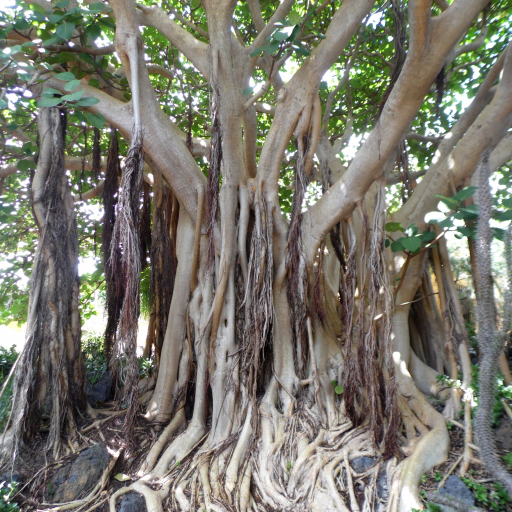
Plant Overview
Known as the African Rock Fig or the Shady Giant, Ficus vasta is a majestic survivor of the arid landscapes across Ethiopia and the Arabian Peninsula. This tree is more than just a plant; it is a living monument, often serving as a historic communal gathering place in dry, rocky regions. Its massive, umbrella-like canopy offers a cool refuge from the scorching sun, making it a legendary figure in African and Middle Eastern folklore.
🔍 How to Identify
- 🍃 The Leaves: Large, leathery, and heart-shaped (cordate), these leaves can grow up to 25cm across. They have a slightly rough texture on the underside and prominent yellow-green veins that create a striking pattern.
- 🌳 The Trunk: The bark is smooth and surprisingly pale—almost silvery-grey—which helps the tree reflect the intense heat of its native desert-edge habitat.
- 🌕 The Figs: The fruits are small, velvety, and covered in soft, fine hairs. They appear in dense clusters directly on the branches or tucked into the leaf junctions, turning a dull yellow or purple when ripe.
🏡 In Your Garden
- 🏗️ Root Management: If you are lucky enough to have the space to grow one, be extremely cautious about placement. Like many figs, it possesses a powerful, invasive root system designed to crack through rocks to find water; keep it far away from house foundations, pipes, or pathways.
- ☀️ Climate Needs: This species is a true sun-worshiper. It requires "baking" heat to thrive and is highly sensitive to frost. While it can survive long periods of drought, it will grow much faster and develop a thicker canopy if given occasional deep watering during the summer months.
⚠️ Safety & Toxicity
- 🐾 Pet Safety: As with most members of the Ficus genus, this plant is toxic to dogs, cats, and horses. Ingestion of the leaves or fruit can lead to gastrointestinal distress.
- 🧴 Latex Sap: The tree produces a thick, milky white sap when cut. This sap can cause skin irritation or rashes (dermatitis) in humans, so it is best to wear gloves when pruning or handling broken branches.
✨ Fun Fact
In Ethiopia, the Ficus vasta is known as the Warka tree. It is so culturally significant that it historically functioned as a "living courthouse." For centuries, village elders would gather in the massive shade of the Warka to hold meetings, resolve legal disputes, and pass down oral traditions.

Detailed Care Instructions
Growing a Ficus Vasta plant, also known as Ficus lyrata or Fiddle-leaf fig, requires the right conditions and care. Here are some steps to help you grow a healthy Ficus Vasta plant:
- Light: Ficus Vasta plants prefer bright, indirect sunlight. Place your plant near a window with filtered light, but avoid direct sunlight as it can scorch the leaves.
- Temperature: Ficus Vasta plants thrive in average room temperatures between 60-75°F (15-24°C). Avoid exposing the plant to drafts or sudden temperature changes.
- Watering: Water the plant thoroughly when the top inch of the soil feels dry to the touch. Ensure the pot has drainage holes to avoid waterlogged soil, which can cause root rot. Overwatering or underwatering can stress the plant, so find a balance and adjust according to your specific environment.
- Humidity: Ficus Vasta plants appreciate higher humidity levels. Mist the leaves occasionally or place a tray of water near the plant to increase the humidity. Avoid misting during winter when the air is typically drier.
- Soil: Plant your Ficus Vasta in well-draining soil that retains moisture without becoming overly soggy. A mixture of peat moss, perlite, and regular potting soil can work well. You can also add some organic compost or slow-release fertilizer to promote growth.
- Fertilizer: During the growing season (typically spring to fall), feed your Ficus Vasta with a balanced liquid fertilizer every 2-4 weeks. Follow the instructions on the fertilizer packaging for proper dilution and application.
- Pruning: Regularly prune your Ficus Vasta to control its size and shape. Remove any dead or yellowing leaves, and trim back leggy stems to encourage bushier growth. You can also pinch off new growth to encourage branching.
- Repotting: Ficus Vasta plants generally need repotting every 1-2 years or when the roots start to outgrow the pot. Choose a pot that is 1-2 sizes larger than the current one and use fresh potting mix. Repot in spring when the plant is actively growing.
Remember, each plant is unique, and it may take some time to find the right balance of light, water, and humidity for your Ficus Vasta. Observe your plant closely and adjust care accordingly.
To water a certain type of plant, first, check the moisture level of the soil. Insert your finger into the soil up to the second knuckle and feel the moisture content. If it feels dry, it's time to water.
Water the plant until the soil is thoroughly moist, but not waterlogged. Allow the excess water to drain out of the pot, as sitting in standing water can cause root rot.
Water the plant once a week or when the soil feels dry. However, it's essential to monitor the plant's humidity levels, especially if the plant is placed in a dry environment. Inadequate humidity levels can cause the plant to dry out, so misting the foliage periodically or placing a humidifier can help retain the moisture.
During the winter months, reduce the frequency of watering, as the plant's growth slows down and requires less water. In summary, remember to check the moisture level, ensure proper drainage, and monitor the humidity to keep the plant healthy.
To fertilize this plant, use a balanced fertilizer with equal parts nitrogen, phosphorus, and potassium. Dilute the fertilizer with water to half strength and apply every two to three weeks during the growing season, which is usually spring and summer. Make sure to water the plant before applying fertilizer to avoid fertilizer burn. Avoid fertilizing during the dormant season (usually fall and winter) as the plant does not need as much nutrients during this time.
Ficus Vasta plant requires a well-draining soil that retains moisture. A soil mixture that is rich in organic matter and contains perlite or pumice can provide the necessary drainage. The pH level of the soil should be slightly acidic to neutral. It is recommended to avoid using heavy clay soils as they can easily become waterlogged and lead to root rot. A good soil mixture would consist of a combination of peat, sand, and either perlite or pumice. Using a high-quality potting mix can also be a good option. It is essential to ensure that the soil remains moist but not waterlogged, as overwatering can lead to damage to the roots. Regular fertilization with a balanced fertilizer can help promote healthy growth.
To propagate this plant, you will need to take a stem cutting from a healthy and mature plant. The cutting should be about 4-6 inches long and taken from the upper part of the plant.
Remove the lower leaves from the stem cutting, leaving a few leaves at the top. Dip the cut end of the stem in rooting hormone powder to encourage root growth.
Insert the stem cutting into a pot filled with well-draining soil. Water the cutting and cover the pot with a clear plastic bag to maintain humidity.
Place the pot in a warm and bright location, but not in direct sunlight. Keep the soil moist but not waterlogged.
After a few weeks, new roots should start to grow from the stem cutting. Once the cutting has established a strong root system and new growth appears, it can be transplanted into a larger pot or into the ground.








