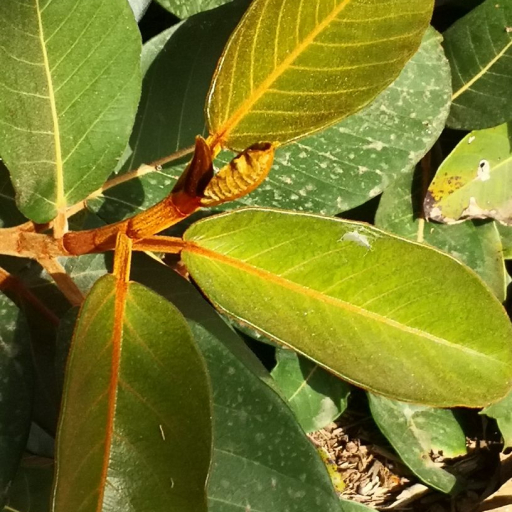
Plant Overview
Known as the Velvet Fig, Ficus velutina is a lush, tropical masterpiece that feels as good as it looks. Native to the cloud forests of Central and South America, this plant is a relative of the famous Fiddle Leaf Fig but offers a much softer, touchable texture. Its name comes from the fine, brownish hairs that cover its young stems and leaf undersides, giving it a luxurious, antique aesthetic.
🔍 How to Identify
- ☁️ Velvety Undersides: The most distinct feature is the soft, fuzzy coating (tomentum) on the undersides of the leaves and the new stems, which feels like suede.
- 🍃 Large Leathery Leaves: The leaves are broad, oval-shaped, and a deep, matte green on top, often growing quite large as the plant matures.
- 🌳 Growth Habit: It typically grows as a dense, upright tree. In its natural habitat, it can reach massive heights, but indoors it remains a manageable, elegant focal point.
🏡 In Your Garden & Home
- ☀️ Light Sensitivity: Like many of its cousins, the Velvet Fig loves bright, indirect light. Direct afternoon sun can scorch its beautiful leaves, while too little light will cause it to lose its "full" look.
- 🧘 The "Ficus Tantrum": This plant appreciates stability. If you move it suddenly or change its environment, it may drop leaves in protest. Find a good spot with high humidity and try to keep it there.
- 💧 Drainage is Key: It dislikes "wet feet." Ensure your pot has excellent drainage and only water when the top two inches of soil feel dry to the touch to prevent root rot.
⚠️ Safety & Toxicity
- 🚫 Irritant Status: High. Like almost all Ficus species, it contains a milky white sap (latex).
- 🐾 Pet & Child Warning: The sap is toxic if ingested and can cause skin irritation or rashes upon contact. Keep it out of reach of curious cats, dogs, and toddlers who might try to nibble the foliage.
✨ Fun Fact
In the wild, the Velvet Fig plays a crucial role in "cloud forest" ecosystems. It is often a "keystone species," meaning many birds and mammals rely almost exclusively on its fruit during seasons when other food sources are scarce!

Detailed Care Instructions
To grow Ficus velutina, also known as the velvet leaf fig or the red-leafed fig, you can follow the steps below:
- Choose a suitable location: Ficus velutina prefers bright, indirect light. Place your plant near a window that receives filtered sunlight. Protect it from extreme temperature fluctuations and cold drafts.
- Select a well-draining pot: Choose a pot with drainage holes to avoid overwatering. The pot size should be appropriate for the plant's current size and provide room for growth.
- Use the right soil mix: Ficus velutina grows well in a soil mix that is high in organic matter. A mix of peat moss, perlite or sand, and some well-rotted compost will provide good drainage while retaining enough moisture.
- Watering: Water your Ficus velutina when the top inch of soil feels dry. Check the moisture level by testing the soil with your finger. Avoid overwatering, as it can lead to root rot. Also, remember that these plants like slightly more humidity, so misting the leaves occasionally can be beneficial.
- Fertilize: Apply a balanced, water-soluble fertilizer every two weeks during the growing season (spring and summer). Dilute the fertilizer according to the package instructions. During the dormant season, reduce fertilizing to once a month or stop altogether.
- Provide support if needed: As Ficus velutina grows, it may need support to maintain an upright form. Use stakes or hoops to gently guide the plant's growth, being careful not to cause damage.
- Pruning: Pruning helps maintain the plant's shape and encourages bushier growth. Prune any damaged or dead foliage, as well as any branches that are crossing or rubbing against each other. Pruning can be done in spring or early summer.
- Propagation: Ficus velutina can be propagated through stem cuttings. Take a 6-8 inch cutting with a few leaves, remove the lower leaves, and place the cutting in a container with water or moist soil until it develops roots. Once roots form, transplant it into a pot with the appropriate soil mix.
- Monitor for pests: Inspect your plant regularly for common houseplant pests such as aphids, mealybugs, or spider mites. Treat any infestations promptly with insecticidal soap or neem oil.
- Rotate your plant: Turn your Ficus velutina occasionally to ensure even growth and prevent it from leaning towards the light source.
Remember that different plants have specific care requirements, so it's essential to research and understand the needs of your Ficus velutina to provide the best conditions for growth.

Place in a window with dappled sun or a spot in the middle of a room. Or directly in a window facing west or east.

Watering this plant requires giving it sufficient moisture to sustain its growth and development. When watering, it is important to ensure that the soil is sufficiently moist but not waterlogged as waterlogging could lead to root rot. Allow the topsoil to dry out slightly before watering again. This plant thrives in humid conditions, so it is recommended to mist it often or place it in a tray with water, allowing the surrounding air to be moisture-rich. Avoid overwatering and always check for drainage holes in the pot before watering. Watering time may also depend on the environmental conditions, with higher temperatures requiring more frequent watering.
To fertilize this plant, use a balanced fertilizer with a ratio of 10-10-10. Dilute the fertilizer with water to half strength and apply it once a month during the growing season. Do not fertilize during the winter months. Make sure the soil is moist before fertilizing to prevent damage to the plant's roots. Avoid over-fertilizing as it can lead to nitrogen burn and leaf drop.
Ficus Velutina prefers well-draining soil that is slightly acidic with a pH range of 6.0 to 6.5. The ideal soil for this plant should have a mixture of sand, loam, and perlite, which makes it light and airy to allow for good drainage. It is also recommended to add organic matter like compost or peat moss to the soil mix for added nutrients and water retention capabilities. Additionally, the plant prefers soil that is rich in nitrogen, phosphorus, and potassium, which can be achieved through the addition of a balanced fertilizer. Overall, the soil for Ficus Velutina should be well-draining, slightly acidic, and nutrient-rich for optimal growth and health.
Propagation of this plant can be done through stem cuttings. Begin by selecting a healthy stem that has no visible damage to it. Take a cutting that is approximately 6-8 inches long and has at least 2-3 healthy leaves near the top. Remove the bottom leaves from the stem and dip the end of the cutting in rooting hormone powder.
Prepare a potting mix of well-draining soil and perlite in a ratio of 1:1. Use a clean pot and fill it up with the prepared potting mix. Make a hole in the center of the potting mix and insert the cutting into it. Pat the soil around the cutting and water it lightly.
Place the pot in a bright spot with indirect sunlight. Water the plant regularly to keep the soil moist but not waterlogged. In 2-4 weeks, roots will start to grow from the cutting. You will notice new growth in a couple of months. Once the new plant has established, it can be transplanted into a larger pot or planted outside.








