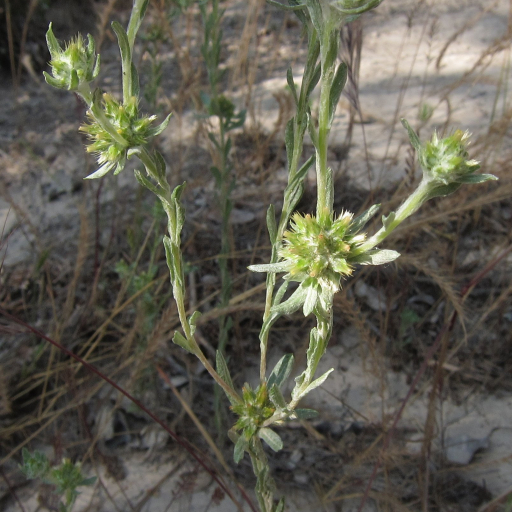
Plant Overview
The Broad-leaved Cudweed, often called the "Woolly Pyramid," is a tiny, silver-furred champion of dry, sun-baked soils. Looking like it was dusted with fine flour or wrapped in a thin layer of cotton, this plant is a master of survival in harsh, gravelly landscapes. While it is considered a rare treasure in parts of Northern Europe, it remains a resilient symbol of the Mediterranean sun.
🔍 How to Identify
- 🌬️ Woolly Coating: The entire plant is covered in dense, white-grey hairs that give it a soft, felt-like texture and protect it from dehydration.
- 📐 Pyramidal Shape: It features distinct, yellow-tipped flower clusters arranged in a branching, pyramid-like structure at the top of the stems.
- 🍃 Wavy Leaves: The leaves are small, spatula-shaped, and often have slightly wavy edges, appearing almost silver under the sunlight.
🏡 In Your Garden
- 🏜️ Loves Neglect: This plant thrives in "disturbed" ground—think gravel paths, sandy edges, or rocky outcrops where other plants struggle to grow.
- 🚫 Low Competition: It is a poor competitor. If you find it in the wild or your garden, it’s usually because the soil is too dry or poor for aggressive grasses to take over.
- 🌱 Annual Lifecycle: As an annual, it lives fast. It germinates, flowers, and drops its seeds all within one season, relying on those seeds to wait in the soil for the next dry spring.
⚠️ Safety & Toxicity
- ✅ Status: Non-toxic and safe.
- 🐾 Details: There are no known toxic effects for humans, cats, or dogs. Because of its woolly, dry texture, most grazing animals tend to ignore it entirely.
✨ Fun Fact
The name "Cudweed" comes from an old English folk belief that these plants could help cows regain their "cud" (the ability to chew and digest food) if they had lost it due to illness. While it has no proven medicinal effect for cattle, the name has stuck for centuries!

Detailed Care Instructions

Place in a bright room that is sun drenched almost all day. Or directly in a south-facing window.

The best method for watering this plant is to water it deeply and infrequently. Before watering, ensure that the top layer of soil is dry to the touch. Then, water the plant slowly and evenly until the water begins to drain out of the bottom of the pot. It is important not to let the plant sit in standing water, as this can cause root rot. Additionally, it is best to water in the morning or early afternoon to allow excess water to evaporate before cooler temperatures arrive. This plant prefers well-draining soil, so if the soil is heavy and clay-like, it may be necessary to add sand or perlite to the mix to improve drainage. In general, it is better to underwater than overwater this plant.
The best soil for Filago Pyramidata is a well-draining, sandy soil that is slightly acidic with a pH range of 5.5 to 7.0. The soil should also be rich in organic matter and have good moisture retention. It is important to avoid soil that is compacted or heavy in clay, as this can lead to poor drainage and waterlogged roots. A top dressing of organic mulch can help to regulate soil moisture and protect roots from extreme temperatures. Proper soil preparation and plant selection are essential for ensuring the health and vigor of this plant species.








