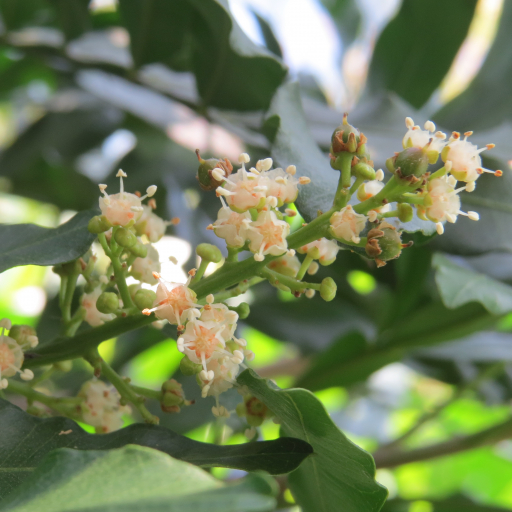
Plant Overview
Known as the "Japanese Fern Tree," Filicium decipiens is a master of disguise. Despite its common name, it isn't a fern at all—it’s actually a flowering evergreen tree—and it doesn’t even come from Japan! Originating from the tropical regions of East Africa, India, and Sri Lanka, this tree is prized for its elegant, lacy canopy that provides a soft, woodland aesthetic to sunny tropical landscapes.
🔍 How to Identify
- 🌿 The "Wings": The most distinctive feature is the "winged" rachis. The central stem of each leaf has flat, leafy extensions between the leaflets, creating a unique geometric pattern.
- 🍃 Fern-like Foliage: The leaves are pinnate and glossy dark green, with narrow leaflets that give the tree its delicate, feathery appearance.
- 🌳 Umbrella Silhouette: It naturally grows into a very neat, symmetrical, rounded crown, often looking perfectly manicured without any pruning.
🏡 In Your Garden
- 🌱 Root Behavior: Unlike many tropical trees, the Japanese Fern Tree has a relatively non-invasive root system. This makes it a favorite for planting near patios, walkways, or in large containers where space is a premium.
- ☀️ Sun & Shelter: It thrives in full sun to partial shade. While it is sturdy, its delicate-looking foliage can be scorched by heavy salt spray, so it’s best kept slightly inland if you live near the coast.
- 💧 Patience is Key: This is a slow-to-moderate grower. Because it develops a deep taproot to find water, it can be difficult to transplant once it reaches maturity—pick its "forever home" carefully!
⚠️ Safety & Toxicity
- 🐾 Pet Safety: The Filicium decipiens is generally considered non-toxic to dogs and cats. It does not contain the harsh alkaloids found in many other tropical ornamentals.
- 👶 Family Friendly: Because it lacks thorns, spines, or irritating saps, it is a very safe choice for gardens where children play. However, the small, olive-like fruits it produces are not for human consumption and may cause mild stomach upset if swallowed.
✨ Fun Fact
The specific epithet decipiens is Latin for "deceiving." It was named this by botanists because its foliage is so convincingly fern-like that it has been "deceiving" plant lovers for centuries!

Detailed Care Instructions
To successfully grow the Filicium decipiens plant, also known as the False aralia or Indian nettle tree, follow these steps:
- Climate: The plant is native to tropical and subtropical regions, so it requires warm temperatures. It thrives in USDA hardiness zones 10 and above. Ensure the temperature doesn't drop below 55°F (13°C).
- Light: Place the plant in a location with bright, indirect sunlight. Avoid direct sun exposure as it can scorch the leaves.
- Soil: The False aralia plant prefers well-draining, loamy soil. Amend the soil with organic matter like compost to improve drainage and fertility.
- Watering: Keep the soil consistently moist but not waterlogged. Allow the top inch (2.5 cm) of soil to dry out between waterings, and adjust the frequency based on environmental conditions.
- Humidity: The plant thrives in high humidity levels. Mist the leaves regularly or place a tray with water near the plant to create a humid microclimate.
- Fertilizer: Use a balanced, water-soluble houseplant fertilizer during the growing season (spring and summer) every four to six weeks. Reduce or stop fertilization during winter when growth slows down.
- Pruning: Trim any dead or damaged leaves to maintain the plant's appearance. You may also prune to control its size or shape. Sterilize your pruning tools before use to prevent the spread of diseases.
- Repotting: If the roots become pot-bound or the plant outgrows its container, repot it into a slightly larger pot with fresh, well-draining soil.
- Pests and diseases: Common pests that affect the False aralia include spider mites, mealybugs, and scale insects. Regularly inspect the plant for signs of infestation, and treat with organic or chemical insecticides if necessary. Ensure good air circulation to prevent fungal diseases.
- Propagation: Filicium decipiens can be propagated through stem cuttings or air layering. Take stem cuttings from healthy, mature plants and root them in a suitable rooting medium. Air layering involves creating a wound on a lower stem section, wrapping it in moist sphagnum moss, and securing it with plastic wrap until roots form.
Remember, it may take time for the Filicium decipiens plant to adjust to its new environment, so be patient and provide consistent care.

Place in a bright room that is sun drenched almost all day. Or directly in a south-facing window.

Watering of this particular plant should be done regularly, but care should be taken not to overwater. The soil should not be allowed to completely dry out before watering, but it should also not be left waterlogged as this can cause root rot. It is best to water the plant deeply at the roots rather than watering the surface, and allowing excess water to drain away. This plant can thrive in moderately moist conditions, so it is important to monitor the moisture level of the soil. The frequency of watering can vary depending on the temperature, humidity, and light levels of the plant's environment. It is also important to avoid getting water on the plant's leaves or foliage, as this can cause damage and reduce its overall health.
To fertilize this plant, use a well-balanced fertilizer with equal amounts of nitrogen, phosphorus, and potassium. Fertilize during the growing season (spring and summer) every two weeks with a diluted solution of fertilizer. Do not fertilize during the winter dormant period. Be careful not to over-fertilize as it can damage the plant.
Filicium Decipiens plant is native to tropical regions and requires a well-draining soil with a neutral to slightly acidic pH. The soil should be rich in organic matter and nutrients to support its growth. It is recommended to use a mixture of peat moss, coco coir, and perlite for the potting soil. Additionally, adding slow-release fertilizers to the soil mix will provide essential nutrients to the plant. The soil should not be too compacted to allow for proper airflow and root development. Watering should be done regularly, but the soil should not be waterlogged to prevent root rot.
Filicium Decipiens plant can be propagated by stem cuttings. First, select a healthy stem that is free from any disease or damage. Cut a 6-inch portion of the stem with a sharp knife or pruning shears just below a node, which is where a leaf or branch once grew. Remove any leaves from the bottom third of the stem, leaving only a few at the top. Dip the cut end of the stem in rooting hormone powder to encourage root growth.
Next, fill a small pot with a well-draining soil mix. Poke a hole in the soil using a pencil or similar object, and insert the stem cutting. Water the cutting lightly to settle the soil around the stem. Place the pot in a bright, warm spot but away from direct sunlight.
Keep the soil moist but not waterlogged. Make sure to mist the plant regularly to maintain humidity. After a few weeks, new growth should appear, indicating that the plant has successfully rooted. Once the plant has established roots, it can be transplanted into a larger pot or planted in the ground.








