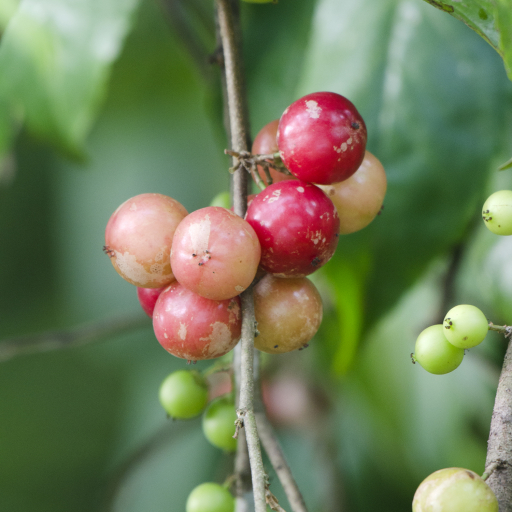
Plant Overview
Known affectionately as the Indian Coffee Plum or Scramberry, this charming tropical tree is a staple in Southeast Asian home gardens. It is beloved for its small, tart fruits that transition from a bright green to a deep, royal purple as they ripen. In local folklore, the tree is often associated with patience, as its fruit holds a secret sweetness that is only revealed to those who know the proper way to handle it.
🔍 How to Identify
- 🌳 The Trunk: Often armed with sharp, woody thorns that can be simple or branched, particularly on younger trees and the lower parts of the main stem.
- 🍃 The Foliage: Elegant, glossy leaves with finely serrated (saw-toothed) edges; new growth often emerges in a beautiful shade of bronze or burgundy before turning dark green.
- 🟣 The Fruit: Round, marble-sized berries (about 1-2 cm) that feature a thin skin and a yellow-white, juicy pulp containing several small, flat seeds.
🏡 In Your Garden
- ☀️ Sun & Space: This tree is a sun-worshipper and requires a bright, open position to thrive and produce a heavy harvest. It is a slow-to-moderate grower but can eventually reach heights of 10 meters if not pruned.
- 🪴 Soil Preference: It is remarkably hardy but performs best in well-draining, fertile soil. Because of its thorny nature and spreading root system, it is best placed as a perimeter tree or a "living fence" rather than near a patio or walkway.
⚠️ Safety & Toxicity
- ✅ Status: The ripe fruit is safe and edible for humans, often used in jams, jellies, or eaten raw.
- 🌵 Physical Hazard: The primary safety concern is the sharp thorns. These can easily puncture skin or paws, so care should be taken when pruning or when children are playing nearby.
- 🐶 Pet Note: While the fruit is not known to be toxic to dogs or cats, the seeds are hard and could pose a choking hazard or cause mild digestive upset if swallowed in large quantities.
✨ Fun Fact
To make the fruit taste sweeter, traditional wisdom suggests rolling the plum firmly between your palms or gently "massaging" it for a minute before eating. This internal bruising breaks down the tannins and releases the sugars, instantly turning a tart snack into a sweet treat!

Detailed Care Instructions
To grow Flacourtia jangomas, also known as Indian cherry or Ramontchi, you can follow these steps:
- Obtain seeds or seedlings: You can purchase seeds or seedlings from a nursery or online. If you have access to a mature Flacourtia jangomas plant, you can collect seeds from its fruits.
- Choose a suitable location: Flacourtia jangomas prefers full sun but can tolerate partial shade. Select a spot in your garden where the plant will receive at least 6-8 hours of sunlight daily.
- Prepare the soil: Flacourtia jangomas grows well in well-draining, fertile soil with a pH level between 6.0 and 7.5. If your soil is heavy or clayey, amend it with organic matter like compost to improve drainage and fertility.
- Plant the seeds or seedlings: If you're using seeds, sow them directly into the prepared soil, following the recommended seed depth mentioned on the seed packet. If you have seedlings, dig a hole slightly larger than the root ball and place the plant in it, ensuring that the soil level matches the previous planting depth.
- Water adequately: Water the plant thoroughly after planting and make sure to keep the soil consistently moist, especially during the first year of growth. However, avoid overwatering as it can lead to root rot.
- Mulch the base: Apply a layer of organic mulch, such as wood chips or straw, around the base of the plant to conserve moisture, suppress weeds, and provide nutrients as it breaks down.
- Prune as needed: Prune your Flacourtia jangomas plant to shape it or remove any dead, damaged, or overcrowded branches. Pruning can be done during late winter or early spring before new growth begins.
- Fertilize sparingly: Flacourtia jangomas generally doesn't require heavy fertilization. You can apply a balanced slow-release fertilizer in spring or use compost or organic fertilizers to provide necessary nutrients.
- Monitor for pests and diseases: Watch out for common garden pests like aphids, mealybugs, or fruit flies, as well as fungal diseases like powdery mildew or leaf spots. Treat infestations or infections promptly using organic or chemical methods as necessary.
- Harvest and enjoy: Flacourtia jangomas typically takes around 3-4 years to bear fruit. Once the fruits are ripe, they can be harvested and consumed fresh or used in various culinary preparations.
Remember to research specific growing requirements for Flacourtia jangomas in your region as climatic conditions can vary.

Place in a bright room that is sun drenched almost all day. Or directly in a south-facing window.

To water the plant, ensure that the soil around the base of the plant is dry to the touch before watering. Avoid getting water on the leaves or fruit of the plant as this can lead to disease and rot. Use a watering can or hose to water the plant deeply, ensuring that the soil is moistened at least 6 inches deep. Allow the soil to dry out slightly between watering to avoid overwatering. During dry spells, the plant may require more frequent watering.
To provide essential nutrients to the Flacourtia Jangomas plant, you can use a balanced fertilizer that contains nitrogen, phosphorus, and potassium. Apply the fertilizer during the growing season, once every two weeks for the first two months, then once a month thereafter. Avoid fertilizing during the plant's dormant period. Dilute the fertilizer according to the instructions on the package and apply it to the soil around the base of the plant. Water the plant thoroughly after application. Monitor the plant's growth and adjust the fertilization routine accordingly.
Flacourtia jangomas plant prefers well-drained soil that is rich in organic matter and has a slightly acidic to neutral pH level. The soil should be able to retain moisture without becoming waterlogged. A mixture of sandy loam and organic compost is ideal for promoting healthy root growth and overall plant development. Avoid using heavy clay soil as it can easily become compacted and hinder root growth. Additionally, the soil should be well-aerated and free from any contaminants or pollutants that may harm the plant. Regular soil testing can help ensure the proper soil composition for optimal growth and health of the Flacourtia jangomas plant.
One way to propagate this plant is by taking cuttings from healthy, mature branches of the plant during the dormant season, which is typically in the colder months of the year. The cuttings should be about 4-6 inches long and contain several nodes, or points where leaves will grow. Remove the lower leaves from the cutting and dip the cut end in a rooting hormone to encourage root growth.
After preparing the cuttings, place them in a soilless potting mix and keep them in a warm, humid environment with bright, indirect light. Keep the soil moist but not waterlogged, and mist the cuttings with water regularly to maintain humidity.
Over time, the cuttings should begin to develop roots and new leaves. Once the plant has established a healthy root system, it can be transplanted into a larger pot or planted in the ground outdoors in a sunny location with well-draining soil.








