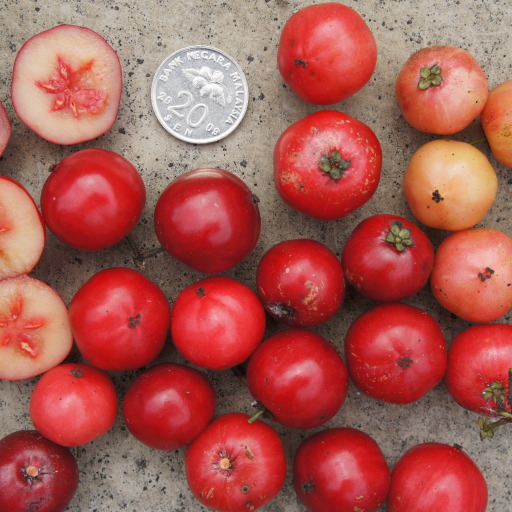
Plant Overview
Often called the Rukam or Indian Plum, this Southeast Asian native is a hidden gem for tropical gardeners and fruit enthusiasts. While it is prized for its deep purple, Vitamin C-rich fruits, it holds a quirky secret: you actually have to "massage" the fruit before eating it to unlock its sweetness! Historically, it has been used as a formidable "living fence" because its trunk is often armored with sharp, branching thorns that keep intruders at bay.
🔍 How to Identify
- 🪝 Thorn-Clad Trunk: Younger trees and suckers are covered in long, woody, and often branched spines that can reach several inches in length.
- 🍃 Glossy Foliage: The leaves are elliptical with distinctly serrated (toothed) edges and a shiny, waxy surface that flushed a beautiful bronze-red when young.
- 🍒 Jewel-Tone Fruit: The round berries start light green, transition through pink, and eventually ripen into a deep, glossy brownish-red or dark purple.
🏡 In Your Garden
- 🏜️ Tropical Resilience: Rukam thrives in humid, tropical environments and prefers deep, nutrient-rich soil. It is surprisingly adaptable but requires excellent drainage to prevent root rot.
- ✂️ Privacy Specialist: Because it grows as a dense shrub or small tree, it is an excellent choice for a privacy screen or "defensive" hedge. Just be sure to plant it away from high-traffic walkways where the thorns might snag passersby.
⚠️ Safety & Toxicity
- 🧤 Physical Hazard: The primary safety concern is the sharp, stiff spines on the trunk and lower branches. These can easily puncture skin or clothing, so wear heavy-duty gloves during maintenance.
- 🐾 Pet & Human Safety: The ripe fruit is edible and safe for human consumption. While not listed as toxic to pets, the high tannin content in unripe fruit may cause mild stomach upset if a large amount is scavenged by a curious dog.
✨ Fun Fact
In many Southeast Asian cultures, it is common knowledge that you must roll a Rukam fruit vigorously between your palms or "bruise" it before taking a bite. This unique ritual breaks down the astringent tannins inside, instantly turning a sour berry into a sweet, jam-like treat!

Detailed Care Instructions

Place in a bright room that is sun drenched almost all day. Or directly in a south-facing window.

The best way to water the Flacourtia Rukam plant is to ensure that the soil is moist but not waterlogged. To achieve this, you should water the plant deeply but infrequently, allowing the soil to dry out a bit in between watering sessions. It is important to pay attention to the weather and adjust your watering schedule accordingly, as the plant may require more frequent watering during hot and dry periods and less frequent watering during cooler and wetter periods. Additionally, you should avoid getting water on the foliage, as this can lead to fungal diseases. Instead, water the plant at the base, using a watering can or a drip irrigation system. Finally, it is crucial to use high-quality water that is free from harmful chemicals and pollutants, as these can damage the plant's roots and inhibit growth.
Flacourtia Rukam plant requires well-draining soil with a balanced mixture of organic and inorganic components. The soil should be nutrient-rich and slightly acidic with a pH level of around 5.5 to 7.0. The ideal soil should be a mixture of clay, loam, sand, and humus, which allows for proper drainage, aeration, and nutrient retention. Adding compost and other organic matter to the soil will aid in soil structure and nutrient retention, which will provide essential nutrients for growth and development. It is important to avoid using heavy soils, as they can lead to waterlogging and root rot. Additionally, the soil should be well-draining to prevent waterlogged roots. It is recommended to provide a nutrient-rich fertilization schedule to enhance the plant's growth and development.








