Plant Overview
Often called Coastal Flaveria or the Yellow-twined Daisy, this resilient wildflower is a traveler at heart. Originally native to South America, it has hitchhiked across the globe, establishing itself in sunny, salty, and often "difficult" landscapes where other plants struggle to survive. It is a pioneer species, known for its ability to turn a patch of neglected, alkaline dirt into a golden carpet of blooms.
🔍 How to Identify
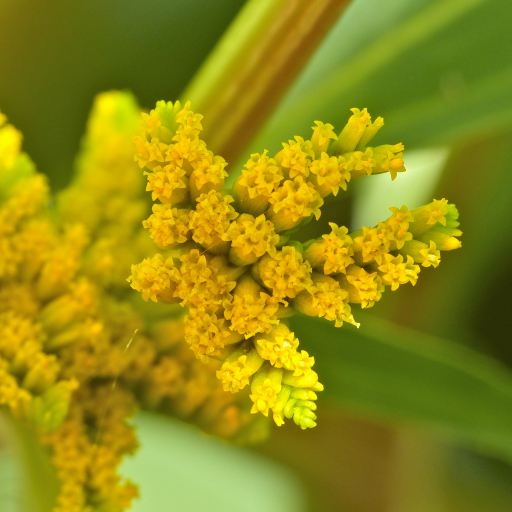
- 🌼 The Flower Heads: Unlike traditional daisies with long petals, this plant features tight, dense clusters of tiny yellow florets. Each cluster looks like a miniature golden pincushion.
- 🍃 Opposite Leaves: The leaves grow directly across from one another on the stem. They are lance-shaped, usually featuring three distinct veins running lengthwise and slightly jagged edges.
- 🌿 Growth Habit: It typically grows as an upright, branching herb, often reaching about 3 feet in height. The stems can sometimes take on a reddish or purplish tint as they age.
🏡 In Your Garden
- 🧂 Saline Specialist: This plant is a "halophyte" enthusiast, meaning it thrives in salty or highly alkaline soils. If you live near the coast or have soil that is too "tough" for roses, Flaveria bidentis will feel right at home.
- 🦋 Pollinator Magnet: While humans might overlook its small flowers, bees and small butterflies find them irresistible. It serves as a vital nectar source in disturbed habitats or during the late summer heat.
⚠️ Safety & Toxicity
- 🟢 General Status: Flaveria bidentis is generally considered non-toxic to humans and common household pets through casual contact.
- 🐄 Livestock Caution: While safe for your dog or cat to sniff, some studies suggest that in large grazing quantities, it can be problematic for livestock. Additionally, its sap may cause very mild skin irritation for those with highly sensitive skin or existing ragweed allergies.
✨ Fun Fact
In the world of botany, the Flaveria genus is a bit of a "science superstar." Researchers study these plants because they are currently evolving between two different types of photosynthesis (C3 and C4). It’s essentially a plant caught in the middle of a major biological upgrade!

Detailed Care Instructions
To grow Flaveria bidentis, also known as the Maximilian sunflower, follow these steps:
- Climate and sunlight: Flaveria bidentis thrives in warm climates and requires full sunlight to grow properly. Make sure your location receives at least six hours of direct sunlight per day.
- Soil preparation: The plant prefers well-draining soil. If your soil is compact or heavy, consider amending it with organic matter, such as compost, to improve drainage. A pH range of 6.0 to 7.5 is ideal for healthy growth.
- Planting: Flaveria bidentis can be propagated from seeds. Sow the seeds directly into the prepared soil, spacing them about 12 to 18 inches apart. Plant the seeds about 1/4 inch deep into the soil.
- Watering: Keep the soil consistently moist but not waterlogged. Water regularly, especially during dry periods, to help establish the roots. Flaveria bidentis is moderately drought-tolerant once established but still requires regular watering.
- Fertilizing: Apply a balanced fertilizer, such as a 10-10-10 or 14-14-14, before planting and again every four to six weeks during the growing season. Follow the manufacturer's instructions for application rates.
- Mulching: Apply a layer of organic mulch, such as wood chips or straw, around the base of the plants. This will help retain moisture in the soil, suppress weed growth, and regulate soil temperature.
- Pruning: Flaveria bidentis plants can reach heights of 5 to 8 feet. If a shorter plant is desired, you can prune it back in early summer to encourage branching and bushier growth.
- Pests and diseases: Flaveria bidentis is generally resistant to pests and diseases. However, keep an eye out for common garden pests like aphids, caterpillars, or snails. Remove any affected leaves or use organic insecticides if necessary.
- Harvesting seeds: Flaveria bidentis produces small seeds that can be collected after the flowers have finished blooming and turned brown. Allow the seedheads to dry on the plant, then gently shake or brush the seeds out into a container.
By following these steps, you should be able to successfully grow Flaveria bidentis plants in your garden. Enjoy the beautiful yellow blooms and the wildlife they attract, as well as the potential seed harvest at the end of the season.

Place in a bright room that is sun drenched almost all day. Or directly in a south-facing window.

To properly water this plant, you should wait until the soil is dry to the touch before watering it. When you do water it, be sure to thoroughly saturate the soil until water flows out of the drainage holes in the bottom of the pot. Avoid overwatering, as this can lead to root rot. Additionally, be sure to use room temperature water rather than cold water straight from the tap, as this can shock the plant's roots. It is also important to make sure that the pot has adequate drainage to prevent water from pooling in the soil.
To fertilize the Flaveria Bidentis plant, mix a balanced fertilizer with equal proportions of nitrogen, phosphorus, and potassium. Apply the mixture to the soil at the base of the plant, taking care not to get fertilizer on the leaves. Water the plant thoroughly after fertilizing. Repeat every 6-8 weeks during the growing season. During the winter months, fertilize less frequently or not at all.
The ideal soil for this plant would be a well-draining, fertile soil with plenty of organic matter. It should have a pH level within the range of neutral to slightly acidic. The soil should be moist, but not overly damp or waterlogged. Avoid using heavy clay soils that tend to retain moisture, as this plant prefers soil that allows for good airflow around the roots. It is also important to ensure that the soil is free of weeds or other debris that may compete for nutrients with the Flaveria Bidentis plant.
Flaveria bidentis plant can be propagated using seeds or cuttings.
To propagate with seeds, collect mature seeds from the plant and sow them into a well-draining soil mix. Keep the soil moist and warm and you should see seedlings emerging in a few weeks.
To propagate with cuttings, take stem cuttings from the plant, ideally from young, healthy growth. Remove the lower leaves from the stem and dip the cut end into rooting hormone. Place the cutting into a container filled with a well-draining soil mix and cover with plastic to help maintain humidity. Keep the soil moist and in a warm, bright location. After a few weeks, the cutting should start to develop roots and can be re-potted or transplanted.








