Plant Overview
Known as the "Large-leaf Flemingia" or "Wild Hops," this sturdy shrub is a hidden hero of the tropical world. While it might look like a simple green bush at first glance, it is a powerhouse of soil restoration and a favorite among permaculture enthusiasts. Its deep roots and nutrient-dense leaves make it a "living fertilizer" that transforms tired earth into a thriving garden bed.
🔍 How to Identify
- 🍃 Trifoliate Leaves: Each leaf is composed of three large, elliptical leaflets that are soft-hairy on the underside and feel slightly rough to the touch.
- 🪵 Winged Stems: Look closely at the leaf stalks (petioles); they feature subtle "wings" or ridges running along the sides, which is a key distinguishing feature from similar legumes.
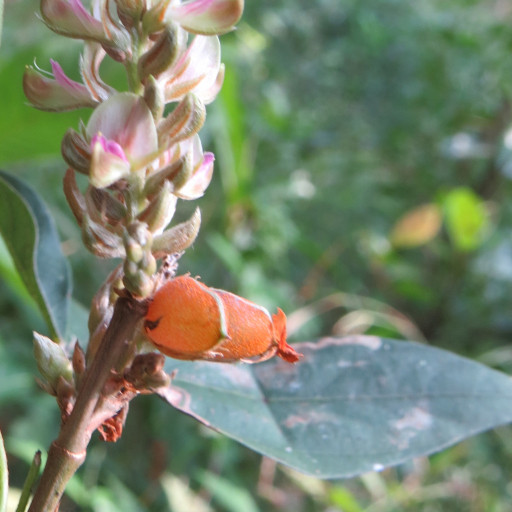
- 🌸 Pea-like Blooms: It produces dense, velvety clusters of small flowers that are typically greenish-white with distinct purple or reddish veins.
🏡 In Your Garden
- 🌱 The Soil Builder: As a nitrogen-fixing legume, this plant pulls nitrogen from the air and stores it in the soil. It is often used for "chop and drop" mulching, where the leaves are pruned and left to decompose, feeding the surrounding plants.
- 🛡️ Erosion Expert: Because it develops a deep, aggressive taproot, it is exceptionally good at holding soil together on slopes and survives long dry spells that would wither more delicate garden plants.
⚠️ Safety & Toxicity
- ✅ Low Risk: Flemingia macrophylla is generally considered non-toxic and is frequently used as a high-protein fodder for goats and cattle.
- 🐾 Pet Safety: There are no recorded toxic effects for dogs or cats, though the fibrous nature of the leaves may cause minor digestive upset if a curious pet decides to snack on them.
✨ Fun Fact
In parts of South Asia and Arabia, the tiny red glands found on the seed pods are harvested to create a brilliant purple-red dye called "Waras." This traditional pigment has been used for centuries to color expensive silk fabrics and even as a cosmetic!

Detailed Care Instructions

Place in a bright room that is sun drenched almost all day. Or directly in a south-facing window.

Water-loving plants flourish in wet or sloppy soil and near ponds. The extensive root system enables these plants to absorb plenty of water. The surface of the soil should be kept moist at all times. Place your pot in a container filled with water to guarantee that plants get enough water. If the ground becomes dry, it is recommended that you water it well. Plants in smaller pots will need to be watered more frequently. Water the soil in which the plant is standing thoroughly using a watering can.








