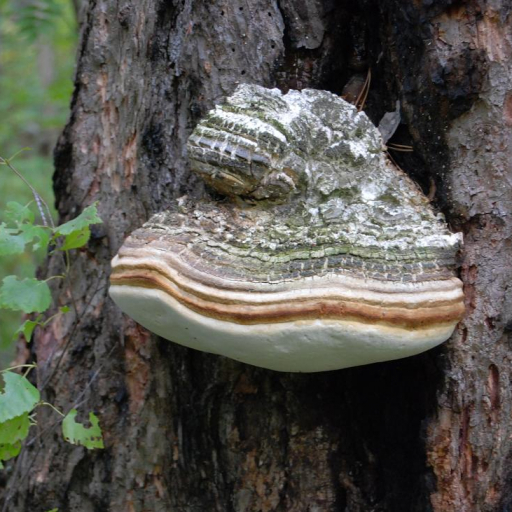
Plant Overview
Known as the "Agarikon" or the "Quinine Conk," this remarkable fungus is a living relic of the world’s most ancient forests. Once described by the Greek physician Dioscorides as a "panacea" for all ails, it has been used for over 2,000 years in traditional medicine. It is a slow-growing giant that hangs from high branches like a chalky, wooden beehive, acting as a sentinel of the old-growth wilderness.
🔍 How to Identify
- 🍄 Shape and Size: It grows in a distinct columnar or "beehive" shape, often becoming quite long and heavy over several decades.
- ⚪ Chalky Texture: The exterior is typically white, cream, or grayish-tan with a crumbly, chalk-like texture that can leave a white residue on your hands.
- 👅 The Bitter Test: A tiny piece on the tongue reveals an incredibly bitter, acrid taste—this is its most famous identifying feature and the reason for the nickname "Quinine Conk."
🌲 Habitat & Ecology
- 🌲 Old-Growth Specialist: You will almost exclusively find this fungus in pristine, old-growth coniferous forests, where it grows primarily on Larch (Larix) trees, though it occasionally appears on Douglas-firs or Hemlocks.
- ♻️ The Great Recycler: As a heart-rot fungus, it slowly breaks down the inner wood of living trees. While this sounds destructive, it creates vital hollows for forest wildlife and recycles nutrients back into the ecosystem over centuries.
⚠️ Safety & Toxicity
- 🚨 WARNING: While not considered "deadly" in the way some mushrooms are, Fomitopsis officinalis is not a culinary mushroom. Its extreme bitterness makes it inedible for food.
- 🧪 Medicinal Context: While historically used for respiratory issues and as an antimicrobial, you should never ingest wild-foraged Agarikon for medicinal purposes without professional guidance. It is also quite rare and endangered in many regions; it is best left on the tree to preserve the forest's health.
✨ Fun Fact
Agarikon is one of the longest-lived fungi in the world; a single specimen can live for over 70 to 100 years, silently witnessing a century of forest history from its perch high in the canopy!

Detailed Care Instructions
To water this plant, make sure that the soil is dry to the touch before giving water. When watering, add enough water to make the soil moist but not soaking wet. Avoid watering the leaves or stem of the plant as this can lead to fungal infections. It is best to water the plant around its base. Allow any excess water to drain away from the pot, and avoid letting the plant sit in water for too long. This plant prefers humidity, so misting the foliage occasionally can be beneficial.
It is recommended to use a soil that is well-draining and loose, with a pH range between 5.5 and 7.5. The soil should also be rich in organic matter and nutrients such as nitrogen, phosphorus, and potassium to promote healthy growth of the plant. It is important to avoid using soil that is clay-heavy or compacted, as it may hinder root growth and lead to waterlogging. Additionally, adding a layer of mulch on top of the soil can help retain moisture and prevent weed growth.







