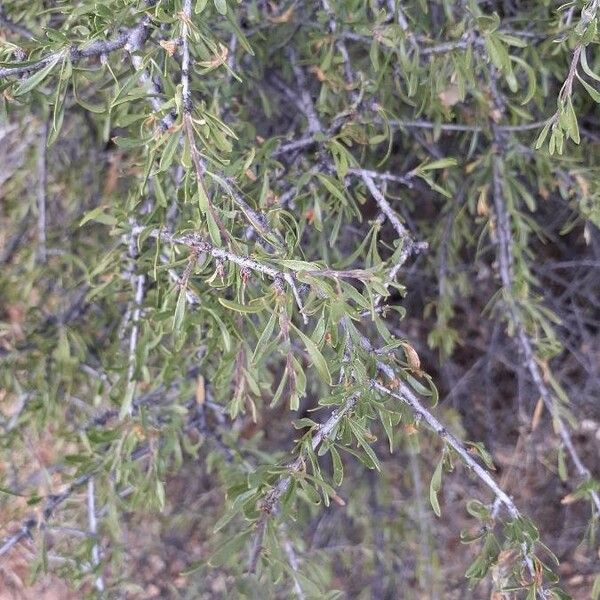
Plant Overview
Known as the Narrowleaf Forestiera or Desert Olive, this resilient shrub is a master of the arid Southwest. Often called "Crucito" in its native range due to its cross-like branching pattern, it creates a dense, protective thicket that serves as a critical desert oasis. While it may appear modest, it is one of the toughest survivors in the Texas and Mexican scrublands.
🔍 How to Identify
- 🌿 Slender Foliage: The leaves are small, stiff, and very narrow (linear), often growing in tight clusters along the stems to conserve moisture in high heat.
- 🌼 Petal-less Blooms: In early spring, the plant produces clusters of tiny, yellowish-green flowers. They lack petals but are rich in nectar, appearing before or alongside new leaves.
- 🫐 "Desert Olives": Female plants produce small, egg-shaped fruits that transition from green to a deep, inky purple or black as they ripen in late summer.
🏡 In Your Garden
- 🌵 The Ultimate Xeriscape: This is a "plant it and forget it" species for dry climates. It thrives in rocky, alkaline soils and can handle extreme heat and drought once its root system is established.
- 🐦 A Living Sanctuary: Because of its intricate, tangled growth habit, it is a favorite nesting site for songbirds. It provides both a safe hiding spot from predators and a bounty of energy-rich berries.
- ✂️ Flexible Form: While it naturally grows as a multi-stemmed shrub, it can be pruned into a formal hedge or even a small, sculptural tree if the lower branches are cleared.
⚠️ Safety & Toxicity
- ✅ Generally Safe: The Narrowleaf Forestiera is not known to be toxic to humans, dogs, or cats.
- 🐾 Wildlife Forage: The berries are a primary food source for birds and small mammals, and the foliage is occasionally browsed by deer, though it is not their first choice.
✨ Fun Fact
The "Desert Olive" is a member of the Oleaceae family, making it a distant relative of the Mediterranean olive and the common Lilac! While its fruits look like olives, they are much more bitter and are best left for the birds to enjoy.

Detailed Care Instructions
To successfully grow Forestiera angustifolia, also known as spring herald, it is important to follow these steps:
- Climate: Check if the plant is suitable for your climate. Forestiera angustifolia is native to the southeastern United States and thrives in USDA hardiness zones 4-9. It prefers warm temperatures and can tolerate both high humidity and drought conditions.
- Sunlight: Select a planting location that receives full sun to partial shade. While the plant can tolerate light shade, it typically prefers at least 6-8 hours of direct sunlight per day for optimal growth.
- Soil: Provide well-draining soil. Forestiera angustifolia can tolerate a wide range of soil types, including sandy, loamy, and clay soils. However, ensuring good drainage will prevent waterlogged conditions that can be harmful to the plant.
- Planting: Plant the spring herald in the spring or early fall. Dig a hole that is wide and deep enough to accommodate the plant's root ball. Place the plant in the hole, backfill it with soil, and gently firm the soil around the base of the plant.
- Watering: Regularly water the newly planted spring herald to establish its root system. Keep the soil moist but not waterlogged. After the plant is established, it can tolerate short periods of drought, but it is beneficial to provide supplemental watering during extended dry spells.
- Pruning: Prune the plant in late winter or early spring before new growth appears. This will help maintain its shape and keep it healthy. Remove any dead or damaged branches, and thin out overcrowded areas if necessary.
- Fertilization: For healthy growth, apply a balanced slow-release fertilizer in early spring. Follow the package instructions for dosage and application methods.
- Pest and disease control: Forestiera angustifolia is relatively resistant to pests and diseases. However, occasional issues with aphids, scale insects, or leaf spots may arise. Monitor the plant regularly, and if problems occur, treat them with appropriate organic or chemical treatments.
- Mulching: Apply a layer of organic mulch, such as wood chips or bark, around the base of the plant. This helps conserve soil moisture, suppress weeds, and regulate soil temperature.
By following these guidelines, you should be able to successfully grow Forestiera angustifolia and enjoy its ornamental beauty in your landscape.

Place in a bright room that is sun drenched almost all day. Or directly in a south-facing window.

The best way to water this plant is to wait until the soil surface is dry to the touch before watering it. When watering, make sure to give the plant a deep watering, allowing the water to soak deeply into the soil. Avoid overwatering as this can lead to root rot and other problems. It is important to note that the watering frequency and amount may vary depending on the climate and specific growing conditions of the plant. Regularly checking the soil moisture level and adjusting watering accordingly is key to keeping the plant healthy.
For optimal growth and health, fertilize this plant in the spring and fall using a balanced, slow-release fertilizer. Apply at a rate of 1-2 pounds per 100 square feet, evenly spreading it around the root zone. Water thoroughly after fertilizing to allow for proper absorption. Avoid over-fertilization, as it can lead to excessive growth and weaken the plant over time.
Forestiera Angustifolia plants thrive in well-draining soil that is rich in organic matter. A sandy loam soil mixture is ideal for this plant, as it allows for proper drainage while retaining enough moisture for the roots to absorb. It is important to avoid heavy clay soils, as they can cause waterlogging and lead to root rot. Adding compost or peat moss to the soil can help improve its texture and fertility.
Additionally, Forestiera Angustifolia plants prefer slightly acidic to neutral soil pH levels, so it is recommended to test the soil before planting and make any necessary adjustments. Regularly adding a balanced fertilizer can also help provide essential nutrients for healthy growth and development.
Overall, providing the right soil conditions is essential for the optimal growth and health of Forestiera Angustifolia plants.
The Forestiera angustifolia plant can be propagated through several different methods, including cuttings, seeds, and layering.
To propagate through cuttings, choose a healthy stem with at least two nodes and remove the leaves from the bottom half of the stem. Dip the cut end of the stem in rooting hormone, then plant it in a pot filled with moist rooting medium. Place the pot in a warm, bright location and keep the soil consistently moist until roots form.
To propagate through seeds, collect mature seeds from the plant in the fall when the fruits are dry and brown. Remove the seeds from the fruit and store them in a cool, dry location until the following spring. Plant the seeds in a pot filled with rich, well-draining soil and keep the soil consistently moist until the seedlings emerge.
To propagate through layering, choose a low-growing branch that can be bent down to the ground without breaking. Scrape the bark on the underside of the branch where it meets the soil, then pin it to the ground with a small stake and cover it with soil. Keep the soil moist and wait for new roots to form at the point where the branch meets the soil. Once roots have formed, cut the branch from the parent plant and transplant it to a new location.








