Plant Overview
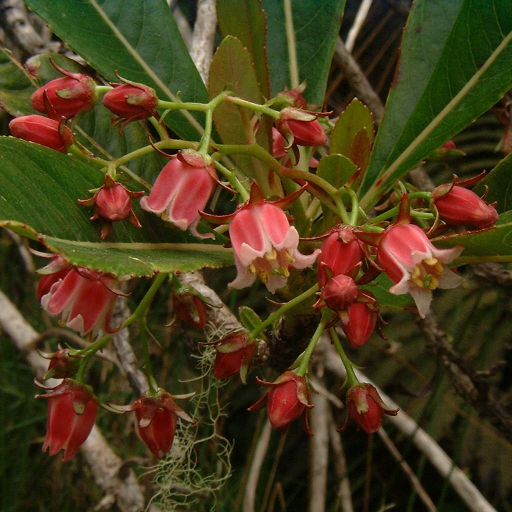
Forgesia racemosa is a hidden gem from the high-altitude forests of Southwest China. Often referred to as the "Graceful Forgesia," this evergreen shrub brings a touch of misty mountain elegance to woodland gardens. With its arching, fountain-like habit and delicate "lily-of-the-valley" style blooms, it feels like a secret discovered in a remote Himalayan pass.
🔍 How to Identify
- 🌿 Foliage: Narrow, lance-shaped leaves with finely serrated edges that shimmer in a deep, glossy green throughout the year.
- 🌸 Bloom Structure: Small, bell-shaped white or pale pink flowers arranged in "racemes" (long clusters) that droop gracefully from the tips of the branches.
- 🪵 Stem Character: Young shoots often emerge with a striking reddish-purple tint, providing a beautiful color contrast against the mature green leaves.
🏡 In Your Garden
- 🌦️ Microclimate Needs: This plant thrives in "Goldilocks" conditions—it dislikes extreme heat and drying winds. It is a perfect candidate for damp, dappled-shade corners or "woodland" style garden beds.
- 🍃 Pruning Nuance: Because it produces its flowers on "old wood" (growth from the previous year), heavy pruning in the winter will cut away next year's blooms. It is best to let it maintain its natural, arching shape, only trimming lightly after the flowers fade.
⚠️ Safety & Toxicity
- 🛡️ General Status: Forgesia racemosa is generally considered non-toxic to humans and common household pets like cats and dogs.
- 🧤 Mechanical Irritation: While not chemically poisonous, the finely serrated edges of the leaves can be slightly abrasive. Wearing gardening gloves during heavy maintenance is recommended to avoid minor skin scratches.
✨ Fun Fact
- 🧬 A Lonely Lineage: Forgesia is what botanists call a "monotypic" genus. This means it is the only species within its entire genus, making it an evolutionary standout with no close "brothers or sisters" in the plant world!

Detailed Care Instructions
To grow Forgesia racemosa, also known as Rangoon creeper, you can follow these steps:
- Sunshine: Choose a spot that receives full sun to partial shade. This vine thrives in warm and tropical climates, but can also tolerate cooler temperatures.
- Soil: Prepare well-draining soil that is rich in organic matter. Rangoon creeper prefers slightly acidic soil with a pH range of 5.5 to 7.0.
- Planting: Select healthy and mature plants from a nursery or propagate from stem cuttings. Dig a hole that is twice the size of the root ball and place the plant in it. Backfill the hole with soil, ensuring the plant is securely planted.
- Watering: Keep the plant well-watered during its initial growing period to help it establish a strong root system. Once established, water deeply and regularly, especially during dry spells.
- Fertilization: Apply a balanced fertilizer or organic compost in the early spring to promote healthy growth. Repeat the application every 2-3 months during the growing season.
- Pruning: Prune the plant to control its shape and size. Remove any dead or damaged branches, and trim back excessive growth to encourage new flowering shoots.
- Support: Rangoon creeper is a vigorous vine that requires support to climb. Provide a trellis, fence, or other sturdy structure for the plant to cling to as it grows.
- Mulching: Mulch around the base of the plant with organic material like wood chips or compost to help retain moisture and suppress weed growth.
- Pests and Diseases: Monitor for common pests like aphids and mealybugs. Treat infestations with organic insecticides or neem oil. Watch for signs of diseases such as leaf spot or powdery mildew, and take necessary steps to control them.
- Flowering: Rangoon creeper blooms during warm seasons, usually in clusters of red, white, or pink flowers that slowly change color over several days. Enjoy the beautiful fragrant flowers and their changing hues as they bloom.
Remember to check if Forgesia racemosa is suitable for your specific climate and growing conditions before planting.

The Forgesia Racemosa plant requires regular and ample watering during the growing season. The soil should be kept consistently moist but not waterlogged. It prefers well-draining soil and does not tolerate standing water. Watering should be reduced during the winter months when the plant goes through its dormant phase. It is recommended to water the plant deeply and infrequently rather than shallowly and frequently. Watering should be done at the base of the plant to avoid wetting the foliage and causing disease. It is also important to note that the plant is sensitive to hard water and should be watered with soft or filtered water if possible.
Here are the fertilizing instructions for the Forgesia Racemosa plant:
- Choose a balanced organic fertilizer specifically formulated for flowering plants. Look for a product with a 10-10-10 or similar NPK ratio.
- Read and follow the manufacturer's instructions on the fertilizer package for proper dilution rates and application methods.
- Apply the fertilizer during the active growing season, which is typically in spring or early summer.
- Before applying the fertilizer, water the plant thoroughly to ensure the soil is moist and capable of absorbing nutrients.
- Measure and mix the fertilizer according to the recommended dilution rate. Too strong a concentration can damage the plant.
- Apply the fertilizer around the base of the plant, avoiding direct contact with the foliage. Alternatively, you can dilute the fertilizer in water and use it to water the plant.
- Gently work the fertilizer into the top layer of soil using a small garden hoe or rake, ensuring it is evenly distributed.
- Water the plant again after fertilizing to help the nutrients penetrate into the soil.
- Repeat the fertilization process every four to six weeks throughout the growing season, following the recommended dosage guidelines.
- Monitor the plant's response to the fertilizer. If you notice any signs of nutrient deficiency or excess (such as yellowing leaves or burnt edges), adjust the amount or frequency of fertilization accordingly.
- Remember to always store fertilizers in a cool, dry place, out of the reach of children and pets.
Following these fertilizing instructions should help promote healthy growth and abundant flowering for your Forgesia Racemosa plant.
When it comes to growing Forgesia Racemosa, it is important to use a well-draining soil mix that is rich in organic matter. The soil should be slightly acidic, with a pH level ranging from 5.5 to 6.5.
It is best to avoid using heavy clay soils or soils with poor drainage, as this can lead to root rot and other issues. A good soil mix for Forgesia Racemosa should contain a combination of coarse sand, peat moss, and sterilized loam.
When planting Forgesia Racemosa, it is important to give the plant enough space to grow and spread out its roots. Make sure to plant it in an area that receives partial shade, as too much sun can scorch the leaves.
Regular watering is important during the growing season, but take care not to overwater, as this can lead to root rot. Fertilize the plant with a balanced, slow-release fertilizer in the spring and summer to promote healthy growth and blooming.
Forgesia Racemosa is an ornamental plant that can be propagated through various methods. Here's a detailed guide on how to propagate this plant:
- Division: This is the most common and effective method of propagating Forgesia Racemosa. Here's how to do it:
a. Begin by carefully removing the mature plant from its pot or garden bed.
b. Gently shake off the excess soil to reveal the root system.
c. Using a clean and sharp knife or gardening shears, divide the plant into smaller sections. Each section should have a healthy rhizome, roots, and foliage.
d. Make sure to cut between the individual growth points or stems to ensure that each section has the potential to grow into a new plant.
e. If necessary, you can trim back the foliage to reduce stress on the plant.
f. Plant the divided sections into separate pots or directly in the garden bed, ensuring that the rhizomes are properly covered with soil.
g. Water the newly divided plants thoroughly and place them in a location with indirect sunlight until they establish themselves.
- Rhizome Cuttings: Another method to propagate Forgesia Racemosa is through root cuttings. Here's how to do it:
a. Choose a healthy, mature plant with well-developed rhizomes.
b. Carefully dig around the plant to expose the rhizomes.
c. Select a healthy, thick rhizome segment.
d. Using a clean and sharp knife, cut the rhizome into 2-3 inch long sections.
e. Each section should have at least one bud or growth point.
f. Plant the rhizome cuttings horizontally into a pot or directly into the garden bed, ensuring that the visible bud or growth point is facing upward.
g. Cover the cuttings with soil, leaving the bud or growth point just above the soil surface.
h. Water the cuttings thoroughly and maintain a consistently moist environment to encourage root development.
i. Place the pot or garden bed in a location with indirect sunlight, away from extreme heat or cold.
j. Within a few weeks, new shoots should emerge from the cuttings, indicating successful rooting.
- Seed Propagation: While less commonly used, Forgesia Racemosa can also be propagated from seeds. Here's how you can do it:
a. Collect mature seeds from the plant when they turn brown and dry on the plant.
b. Clean the seeds by removing any debris or excess pulp.
c. Fill a seed tray or small pots with a well-draining seed-starting mix.
d. Sow the seeds on the surface of the soil, ensuring they are evenly spaced.
e. Lightly press the seeds into the soil, but avoid covering them completely as they require light to germinate.
f. Mist the seeds with water to settle them in place.
g. Place a clear plastic cover over the tray or pots to create a mini greenhouse effect.
h. Keep the seeds consistently moist and provide bottom heat (if possible) to aid in germination.
i. Germination can take anywhere from a few weeks to a couple of months, depending on the conditions.
j. Once the seeds have sprouted, remove the plastic cover and gradually acclimate the young plants to normal conditions.
Remember to provide proper care and maintenance to the newly propagated Forgesia Racemosa plants to ensure their healthy growth.








