Plant Overview
Often called the Chinese Fortune Tree, this rare deciduous shrub is a refined member of the Witch Hazel family. While it doesn't boast the showy "spider" flowers of its cousins, it is prized by collectors for its elegant structure and botanical rarity. Discovered in the mountain forests of China, it brings an air of quiet, ancient sophistication to woodland gardens.
🔍 How to Identify
- 🍃 Textured Foliage: The leaves are broadly oval (obovate) with sharply serrated edges and deeply impressed veins that give the surface a "pleated" or accordion-like texture.
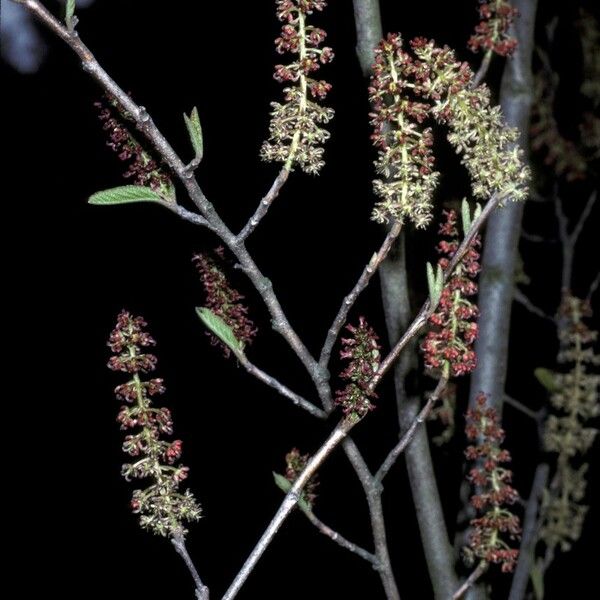
- 🎋 Spring Catkins: In late winter or early spring—often before the leaves even appear—it produces small, dangling greenish-yellow flower clusters that look like delicate, fuzzy tassels.
- 🌰 Woody Capsules: Following the bloom, the plant develops curious, twin-beaked woody seed pods that turn brown and can persist on the branches, adding visual interest in the autumn.
🏡 In Your Garden
- 🌳 The Slow & Steady Grow: This tree is notoriously slow-growing and resents being moved once its roots are set. It prefers rich, slightly acidic soil; think of it as the perfect companion for Camellias or Rhododendrons.
- 🌥️ Woodland Comfort: While it can tolerate full sun in cooler climates, it truly thrives in the dappled light of a woodland edge. Providing a spot sheltered from harsh, drying winds will prevent the delicate spring foliage from tattering.
⚠️ Safety & Toxicity
- ✅ Low Risk: Fortunearia sinensis is not known to be toxic to humans, dogs, or cats. It is a safe choice for family-friendly landscapes.
- 🧤 Physical Protection: While not chemically dangerous, the woody stems and seed capsules can be quite tough. It is always best to wear gardening gloves when pruning to avoid minor scrapes or skin irritation from the bark.
✨ Fun Fact
The genus Fortunearia is what botanists call "monotypic." This means that Fortunearia sinensis is the only species in its entire genus—a true one-of-a-kind survivor that has no close living siblings in the plant world!

Detailed Care Instructions

Place in a bright room that is sun drenched almost all day. Or directly in a south-facing window.

When the top few inches of soil dry out, water your plants. If the top few inches of soil are still moist, do not water your plant. Wait a few days, then poke your finger into the soil to see if anything has changed. Overwatering poses a disease risk, such as the development of fungal diseases in the roots. These plants have adaptations in there leaves that allow them to survive in low water supply.








