Plant Overview
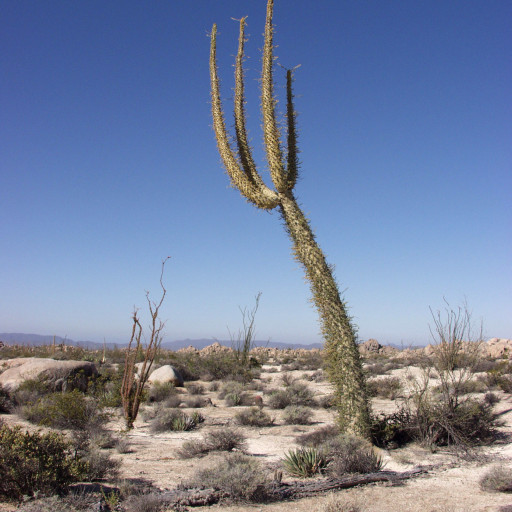
Resembling something plucked straight from a Dr. Seuss book or an alien landscape, the Boojum Tree is one of the world's most peculiar succulents. Native to the Baja California Peninsula, its whimsical, tapering trunk and spindly branches earned it the name "Boojum" from Lewis Carroll’s poem The Hunting of the Snark. In its homeland, it is known as the Cirio, named for its resemblance to tall, flickering altar candles.
🔍 How to Identify
- 🌵 The Trunk: Features a thick, fleshy, columnar trunk that can grow up to 50 feet tall, tapering toward the top like a giant, upside-down parsnip or a very long carrot.
- 🌿 The Foliage: Small, oval green leaves sprout directly from the trunk and woody twigs, but only after a significant rain. During droughts, the tree sheds them to conserve water.
- 🌸 The Crown: In late summer or fall, a cluster of honey-scented, cream-yellow flowers blooms at the very tip of the towering "candle."
- 🗡️ The Spines: Short, sharp thorns cover the thin, horizontal branches that grow out of the main trunk, providing protection against thirsty desert wildlife.
🏡 In Your Garden
- 🏜️ Drainage is Vital: This plant has evolved to survive in some of the harshest deserts on Earth. If kept in a pot or garden, it requires extremely gritty, mineral-heavy soil; it will rot almost instantly if the roots sit in damp compost.
- ⏳ Patience Required: The Boojum is a legendary "slow-grower." It may only gain an inch or two per year, making mature specimens highly prized and expensive. It is a true heirloom plant that can live for over 300 years.
- ☀️ Sun Seeker: It thrives in intense, direct sunlight. If grown indoors, it must be placed in the brightest window possible, or its trunk will stretch and lose its iconic "candle" shape.
⚠️ Safety & Toxicity
- 🛡️ Low Toxicity: The Boojum Tree is not known to be poisonous to humans or common household pets if nibbled.
- 🌵 Mechanical Hazard: The primary danger lies in its sharp spines. Care should be taken when placing it in high-traffic areas where children or pets might bump into the prickly branches.
- 🧤 Handling: Always wear thick gardening gloves when repotting or pruning to avoid painful punctures.
✨ Fun Fact
The Boojum Tree’s trunk is hollow! While the outside is a tough, bark-like skin, the interior is filled with a soft, water-storing pith. Indigenous groups once used the dead, hollowed-out trunks as lightweight containers or even as natural "pipes."

Detailed Care Instructions
To grow Fouquieria columnaris, also known as Boojum tree or cirio, you can follow these steps:
- Choose the right location: Fouquieria columnaris thrives in areas with well-draining soil and full sun. Ensure that the plant will receive at least six hours of direct sunlight each day.
- Prepare the soil: The soil should be sandy or gravelly and have excellent drainage. If the soil is heavy or clayey, add organic matter like compost or sand to improve drainage.
- Watering: Fouquieria columnaris is drought-tolerant and should be watered sparingly. Water the plant only when the topsoil is dry, and try not to overwater to avoid root rot.
- Propagation: You can grow Fouquieria columnaris from seeds or cuttings. If you choose to use seeds, collect them from mature plants and sow them in well-draining soil. Keep the soil slightly moist until the seeds germinate. For cuttings, take a healthy stem cutting, remove the lower leaves, and plant it in a pot with well-draining soil. Keep the soil slightly moist until the cutting establishes roots.
- Temperature: Fouquieria columnaris is native to desert regions and thrives in warm temperatures. It can tolerate temperatures as low as 20°F (-6°C) but may require protection from frost during winter in cooler climates.
- Pruning: Fouquieria columnaris usually does not require much pruning. However, you can remove any dead, damaged, or diseased branches as needed.
- Fertilizer: Fouquieria columnaris is a slow-growing plant and does not require high amounts of fertilizer. If needed, you can apply a balanced, slow-release fertilizer in spring to provide some nutrients.
- Pest and disease control: Fouquieria columnaris is generally pest and disease-resistant. However, watch out for mealybugs, scale insects, or aphids. If necessary, use appropriate insecticidal soaps or organic sprays to control pests.
Remember that growing Fouquieria columnaris can be a gradual process, as it is a slow-growing plant. Be patient, maintain the appropriate conditions, and enjoy watching your plant grow into a unique and fascinating specimen.

Place in a bright room that is sun drenched almost all day. Or directly in a south-facing window.

To properly water this plant, one should ensure that the soil around the roots is consistently moist but not waterlogged. It is important to avoid letting the soil dry out completely and then flooding the roots with water as this can be detrimental to the plant's health. One effective watering method is to allow the soil to dry slightly between watering, then apply water slowly and evenly around the base of the plant, using a watering can or hose with a gentle flow. It is also advisable to water in the early morning or evening to minimize water evaporation and avoid scorching the leaves. High temperatures and dry weather will require more frequent watering, while cool and humid conditions will require less.
To fertilize this plant, you should use a balanced fertilizer with equal parts nitrogen, phosphorus, and potassium. Apply the fertilizer once in the spring and once in the fall, following the recommended dosage instructions on the fertilizer package. Water the plant well before and after fertilizing to help the nutrients absorb properly. Be careful not to over-fertilize, as this can damage the plant.
The ideal soil for this plant is well-draining and sandy or gravelly with a slightly acidic to neutral pH. Mixing sand or pumice into the soil can help improve drainage. The soil should not be too rich in nutrients, as this plant prefers a relatively low-nutrient environment. A mix of coarse sand, perlite, and peat moss or coconut coir can create a suitable growing medium. It is important to avoid compacting the soil around the roots, so care should be taken when planting or repotting this plant. Additionally, this plant prefers to grow in full sun and requires minimal water, so a container should have drainage holes and be allowed to dry out between waterings.
To propagate this plant, you will need to gather the stem cuttings of mature plants during the spring season. Choose a healthy stem with leaves and make a cut at a 45-degree angle with a sharp and clean cut. Remove all the lower leaves from the stem, leaving only a few inches of leaves on top. Dip the cutting in a rooting hormone powder and plant it in a well-drained soil mix, about an inch deep. Water the cutting thoroughly and place it in a bright, but indirect light location. Keep the soil moist, but not waterlogged, and mist the cutting frequently to maintain humidity. It may take several weeks for the cutting to develop roots and start growing new leaves. Once the plant has established roots, you can transplant it to a larger pot or garden bed.








