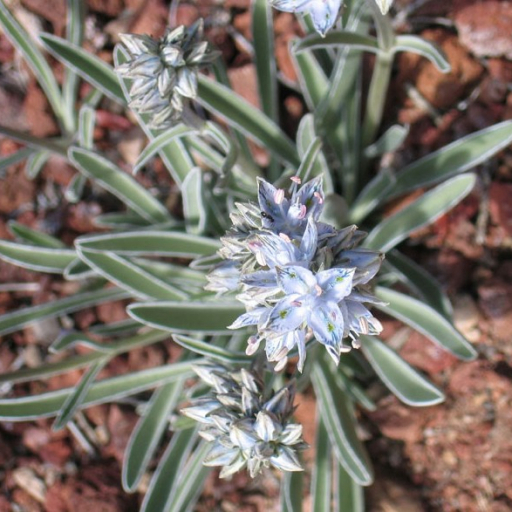
Plant Overview
Often referred to as the Whitestem Elkweed, Frasera albicaulis is a rugged beauty native to the dry, sun-drenched slopes of Western North America. A member of the Gentian family, it carries an air of wild elegance with its frosted foliage and intricate, star-shaped blossoms. It is a plant that thrives where others struggle, painting rocky hillsides with shades of pale lavender and silvery green.
🔍 How to Identify
- 🌿 The Foliage: The most striking feature is the "white stem" look created by the thick, white margins on its long, lance-shaped leaves. These leaves are typically grayish-green and grow in neat pairs or whorls.
- 🌸 The Flowers: Each bloom is a four-petaled masterpiece, usually pale blue to lilac. Look closely to see darker purple speckles and a distinct, fringed nectar gland in the center of each petal.
- 📏 Growth Habit: This is a perennial herb that grows in upright clumps. It features multiple stems arising from a sturdy, woody base, giving it a bushy yet structured appearance.
🏡 In Your Garden
- 🏜️ Drainage is King: Because it is naturally found in sagebrush steppes and ponderosa pine forests, this plant demands exceptionally well-draining soil. It is prone to root rot if kept in heavy, "wet feet" conditions.
- 🌱 The Taproot Rule: Like many prairie gems, it develops a deep, resilient taproot. This makes it incredibly drought-tolerant once established, but it also means it hates being moved. Choose its "forever home" in your garden carefully, as transplanting is often unsuccessful.
⚠️ Safety & Toxicity
- 🟢 Status: Generally considered non-toxic and safe to handle.
- 🐕 Details: While not listed as a poisonous species for pets or livestock, its tissues contain bitter compounds typical of the Gentian family. These are unlikely to be eaten in large quantities, but they may cause minor stomach upset if ingested by curious dogs or cats.
✨ Fun Fact
The fringed, hairy glands on the petals aren't just for show—they are specialized "nectar pits." These structures are designed to perfectly guide specific native bees and pollinators toward the nectar, ensuring the plant is successfully pollinated in its harsh, windy environment.

Detailed Care Instructions
To grow Frasera Albicaulis (green false hellebore), you can follow these steps:
- Choose a suitable location: Frasera Albicaulis prefers full sun to partial shade and well-draining soil. Select a site with these conditions, preferably with some protection from strong winds.
- Prepare the soil: Ensure that the soil is rich in organic matter and slightly acidic. If needed, amend the soil by adding compost or well-rotted manure to improve its fertility and texture.
- Sow seeds or transplant seedlings: Frasera Albicaulis can be started from either seeds or seedlings. If you have seeds, sow them in flats or seed trays in the spring. Cover the seeds lightly with soil and keep them moist. Transplant the seedlings once they have developed several true leaves. Alternatively, you can purchase seedlings from a reputable nursery and transplant them directly into the garden.
- Planting: Dig a hole slightly larger than the plant's root ball and place the seedling in the hole. Backfill the hole with soil and gently firm it around the plant. Water thoroughly to settle the soil.
- Watering and care: Frasera Albicaulis prefers evenly moist soil, so water it regularly, especially during dry spells. However, make sure not to overwater, as this plant does not like saturated soil. Apply a layer of mulch around the base of the plant to retain moisture and suppress weed growth.
- Fertilizing: Frasera Albicaulis generally doesn't require heavy fertilization. However, you can apply a balanced, slow-release fertilizer in the spring to provide some nutrients.
- Pruning: Pruning is not usually necessary for Frasera Albicaulis. However, you can remove any dead or damaged stems to maintain the plant's appearance and health.
- Pest and disease control: Frasera Albicaulis is generally not bothered by pests or diseases. However, it is always a good idea to monitor the plant for any signs of trouble, such as aphids or leaf diseases. Treat any issues promptly with appropriate organic or chemical remedies.
- Winter protection: In colder climates, Frasera Albicaulis may benefit from a layer of mulch or protective cover during the winter to insulate the roots from extreme cold temperatures.
By following these guidelines, you can successfully grow Frasera Albicaulis in your garden and enjoy its beautiful flowers.

Place in a bright room that is sun drenched almost all day. Or directly in a south-facing window.

The Frasera Albicaulis plant should be watered deeply once a week during the growing season. It is important to allow the soil to dry out partially between waterings to prevent root rot. Check the soil moisture level by sticking your finger about an inch into the topsoil. If the soil feels dry, it is time to water. When watering, pour water slowly and deeply at the base of the plant until the soil is moist but not waterlogged. Avoid getting water on the foliage as this can lead to fungal diseases. During the dormant season, reduce watering and let the soil dry out more thoroughly between waterings.
To fertilize this plant, use a slow-release 10-10-10 fertilizer once per year in the spring. Alternatively, use a liquid fertilizer diluted to half strength every two weeks during the growing season. Avoid over-fertilizing, as this can damage the plant.
Frasera Albicaulis plant can grow in a range of soil types but prefers a well-drained, moderately alkaline soil with a pH of 7.5 to 8.5. The soil should be rich in organic matter and have good fertility.
It is important that the soil is well-draining to prevent waterlogging as this can lead to root rot. The plant also prefers a soil that is slightly sandy or loamy with good aeration.
It is recommended to incorporate compost or well-rotted manure into the planting area to increase soil fertility and organic matter.
Overall, Frasera Albicaulis plant prefers a well-drained, alkaline soil that is fertile and high in organic matter.
To propagate this plant, select healthy and vigorous stem cuttings from the parent plant. It is best to take cuttings in the spring or summer when the plant is actively growing. Cut 3 to 4 inches of stem, making sure to include a few leaves.
Remove the bottom set of leaves and dip the cut end of the stem into a rooting hormone. This will increase the chances of successful rooting. Plant the cutting in moist potting soil and cover it with a plastic bag to retain moisture. Keep the cutting in a warm and bright location, but out of direct sunlight.
Check for root development after four to six weeks, by gently tugging on the stem. If there is resistance, roots have formed. At this point, remove the plastic bag and begin acclimating the plant to outdoor conditions by gradually increasing the amount of time it spends outside each day.
Once the plant has fully acclimated to its new surroundings, it can be transplanted into a larger pot or directly into the garden. Water the plant regularly and provide it with adequate sunlight, and it should grow into a healthy and beautiful specimen.








