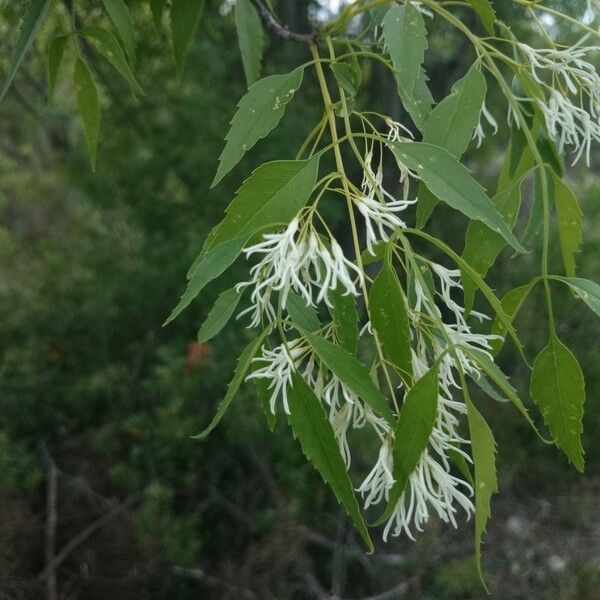
Plant Overview
Known as the Fragrant Ash, this southwestern gem is the "perfumer" of the ash family. Unlike most of its cousins that rely on the wind to spread pollen, this tree produces showy, lace-like white blossoms that fill the air with a sweet, heady scent. It is a resilient survivor of the rocky canyons and limestone slopes of Texas, Arizona, and Mexico.
🔍 How to Identify
- 🌸 The Flowers: Clusters of delicate, creamy-white flowers with four long, narrow petals that appear in late spring.
- 🍃 The Leaflets: Compound leaves typically featuring 3 to 7 leaflets. Each leaflet is distinctively "cuspidate," meaning it tapers into a sharp, elongated point at the tip.
- 🩶 The Bark: Generally smooth and gray on younger trees, developing shallow fissures and a more rugged texture as the plant matures.
🏡 In Your Garden
- 🪨 Limestone Lover: This plant is a specialist for alkaline soils. It thrives in rocky, well-draining limestone areas where other trees might struggle with nutrient uptake.
- ☀️ Drought Warrior: Because it evolved in arid canyons, it has a deep taproot system. It hates "wet feet," so ensure your soil doesn't hold standing water, or it may develop root rot.
- 🦋 Pollinator Magnet: While other ash trees are ignored by bees, the Fragrant Ash is a bustling hub for pollinators who are drawn to its nectar and high-visibility blooms.
⚠️ Safety & Toxicity
- 🟢 Non-Toxic: The Fragrant Ash is generally considered non-toxic to dogs, cats, and horses.
- 🤧 Allergy Note: Like most members of the Fraxinus genus, it produces pollen. While the flowers are beautiful, sensitive individuals may experience hay fever during the peak blooming season.
- 🦌 Deer Resistance: While not completely "deer-proof," its tough, woody nature makes it less palatable than more succulent garden ornamentals.
✨ Fun Fact
The species name cuspidata comes from the Latin word cuspis, meaning "spear" or "pointed end," referring to the needle-like tips of its leaves. It is one of the few ash species in the world that evolved to use insects for pollination rather than the wind!

Detailed Care Instructions
To grow Fraxinus cuspidata (Japanese flowering ash) plants, follow these steps:
- Climate and soil: Ensure you are in a region with a suitable climate for Fraxinus cuspidata. It thrives in USDA hardiness zones 5 to 8. The soil should be well-draining, fertile, and slightly acidic.
- Seed collection: Obtain seeds from a reliable source or collect them from mature Fraxinus cuspidata trees in your area. The best time to collect seeds is in autumn when they are fully mature.
- Seed preparation: Scarify the seeds by nicking or sanding down the hard outer coat to increase water absorption. This enhances germination rates. Alternatively, you can soak the seeds in warm water for 24 hours.
- Germinating the seeds: Plant the prepared seeds in a seed tray or small pots filled with a seed-starting mix. Ensure the depth is about 1/4 inch (6 mm). Keep the soil moist and maintain a temperature of around 70°F (21°C).
- Seedling care: Once the seedlings emerge, provide them with bright, indirect light. Water them regularly to keep the soil consistently moist but not waterlogged. After they develop a few true leaves, you can transplant them into larger pots or into the ground.
- Transplanting: Choose a suitable planting location for your Fraxinus cuspidata plant where it can receive full sun or partial shade. Dig a hole twice as wide as the root ball and slightly deeper. Place the plant in the hole, backfill with amended soil, and gently firm the soil around the roots.
- Watering and fertilizing: Water the newly transplanted plant thoroughly and regularly until it establishes a strong root system. After that, water it deeply but less frequently. Fertilize yearly in spring with a slow-release balanced fertilizer, following the package instructions.
- Pruning and maintenance: Prune Fraxinus cuspidata to remove dead or diseased branches and to shape the plant if desired. Regular pruning is not necessary, but occasional maintenance may be needed. Mulching around the base of the plant helps maintain moisture levels and suppress weed growth.
- Disease and pest management: Monitor your Fraxinus cuspidata plant for signs of common pests like aphids, scale insects, or borers. Treat any infestations promptly using organic or chemical insecticides. Ensure good airflow and avoid overwatering to prevent diseases like powdery mildew or root rot.
- Winter protection: In colder regions, protect young Fraxinus cuspidata plants during winter by covering them with burlap or a frost blanket. Mulching around the base helps insulate the root system from extreme temperatures.
With proper care and suitable growing conditions, your Fraxinus cuspidata plant should thrive and grow into a beautiful tree.
To keep the Fraxinus Cuspidata plant healthy, it is important to provide it with adequate watering. This plant requires moderate watering, which means that the soil should be kept evenly moist at all times, but not waterlogged. Overwatering can lead to root rot and other problems, so it is important to avoid this.
One effective way of watering this plant is to allow the soil to dry out slightly in between watering sessions. Before watering, check the soil by inserting your finger into the soil up to the second knuckle. If it feels dry, it is time to water. If it still feels moist, wait another day or two before watering again.
When watering, aim to wet the entire root zone of the plant. This means that you should water deeply and slowly, allowing the water to soak into the soil rather than just running off the surface. Avoid getting water on the leaves of the plant, as this can lead to fungal diseases.
In summary, the Fraxinus Cuspidata plant should be watered moderately, with the soil kept evenly moist but not waterlogged. Wait for the soil to dry out slightly before watering deeply and slowly, avoiding getting water on the leaves of the plant.
To fertilize this plant, you should apply a balanced, slow-release fertilizer in the springtime just before new growth begins. Be careful not to apply too much fertilizer, as this can harm the plant. Water thoroughly after fertilizing to help the nutrients penetrate the soil. Repeat fertilization every six to eight weeks during the growing season. Avoid fertilizing during periods of extreme heat or drought.
Fraxinus Cuspidata plant prefers a well-draining soil with a good balance of nutrients. It is important to avoid using heavy soils that can lead to waterlogging. A good soil mix for this plant consists of a blend of sandy loam, perlite, and organic matter, such as compost or aged manure. It is also recommended to ensure that the soil pH level is between 6.0 and 7.0. This plant does best in soils that are slightly acidic to neutral.
To propagate this plant, you can start by taking cuttings from a mature specimen. First, select a healthy shoot with a length of around 6 inches. Using a clean and sharp pair of pruning shears, make a diagonal cut at the base, just below a node. Remove any leaves from the lower half of the cutting, leaving just a few at the tip.
Next, prepare the rooting medium. A mix of perlite and vermiculite in a 1:1 ratio works well. Dampen the medium, then insert the cutting into it, burying it about halfway. Cover the container with a plastic bag or dome to create a humid environment.
Place the container in a bright, but indirect light location, such as near a window. Avoid direct sunlight, which can overheat the cutting and dry out the rooting medium. Mist the cutting with water regularly to keep it moist.
Check the cutting after a few weeks. Look for signs of new growth or roots beginning to form. Be patient, as rooting can take several weeks to a few months.
Once the cutting has rooted and new growth has become established, it can be transplanted into a larger container or planted outdoors in a suitable location.








