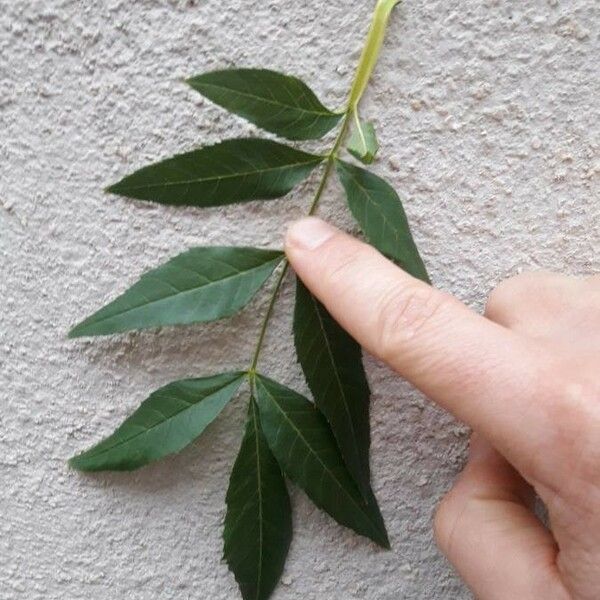
Plant Overview
Known as the Broad-petioled Ash, this elegant tree is a hidden gem from the mountain valleys of China and Japan. It is often admired by arborists for its architectural silhouette and its ability to thrive in cooler, moist climates where other trees might struggle. Unlike its more common ash cousins, this species feels like a relic from an ancient forest, offering deep shade and a serene, cooling presence to any large landscape.
🔍 How to Identify
- 🍃 The Broad Petioles: The hallmark of this tree is the unusually wide, flat base of the leaf stalk where it meets the branch. This "broad foot" is the defining feature that gives the tree its name.
- 🌿 Compound Leaves: It features large, pinnate leaves typically composed of 7 to 11 dark green leaflets with finely serrated edges and a slightly glossy finish.
- 🪵 Textured Bark: As the tree matures, the bark develops a beautiful grayish-brown hue with shallow, interlacing ridges that provide visual interest even in the dead of winter.
🏡 In Your Garden
- ⛰️ Mountain Heritage: Because it originates from high-altitude river valleys, it craves consistent moisture. It doesn't handle extreme droughts well; think of it as a "thirsty" giant that thrives near ponds or in naturally damp soil.
- 🌳 Legacy Planting: This isn't a tree for a small suburban patio. It needs significant room for its root system to expand and its canopy to reach for the sky. It is best planted as a "legacy tree" that will provide shade for generations to come.
⚠️ Safety & Toxicity
- ✅ Non-Toxic: Fraxinus platypoda is generally considered non-toxic to dogs, cats, and horses, making it a safe addition to properties with wandering pets.
- 🤧 Pollen Potential: Like most members of the Ash family, the male trees produce wind-borne pollen in late spring, which may trigger mild hay fever in sensitive individuals.
✨ Fun Fact
The scientific name platypoda is derived from the Greek words platys (broad) and pous (foot). This refers to the unique, paddle-like shape of the leaf stalks where they attach to the stem—looking almost like the webbed foot of a water bird!

Detailed Care Instructions
To grow a Fraxinus platypoda plant, also known as the Queensland ash or Claret ash, you can follow the steps below:
- Choose a suitable location: Fraxinus platypoda plants prefer full sun to partial shade. Ensure the planting spot is well-draining and has enough space to accommodate the mature size of the tree.
- Prepare the soil: Fraxinus platypoda plants prefer rich, loamy soil. You can amend the soil with organic matter like compost or well-rotted manure to improve its fertility and drainage.
- Plant the tree: Dig a hole that is slightly larger and deeper than the plant's root ball. Position the tree in the hole, ensuring that it sits at the same depth it was in the container. Fill the hole with soil, pressing it gently around the roots to eliminate any air pockets. Water thoroughly after planting.
- Watering: Keep the soil moist but not waterlogged. Water the plant deeply once or twice a week, depending on the weather conditions and rainfall. Established trees are moderately drought-tolerant but will benefit from additional irrigation during prolonged dry periods.
- Fertilization: Fertilize the tree in early spring with a balanced fertilizer according to the package instructions. Avoid applying excessive nitrogen as it can encourage excessive foliage growth at the expense of flowering and fruiting.
- Pruning: Regular pruning is not usually required for Fraxinus platypoda plants. However, you may remove any dead, damaged, or crossing branches to maintain the tree's shape and health. Prune during the dormant season to minimize stress to the plant.
- Mulching: Apply a layer of organic mulch around the base of the tree, leaving a gap around the trunk to prevent moisture buildup and potential rot. Mulching helps retain moisture, suppresses weed growth, and moderates soil temperature.
- Pest and disease control: Fraxinus platypoda plants are generally resistant to many common pests and diseases. However, regular inspection for signs of infestation or disease is recommended. Treat any issues promptly and appropriately to prevent further damage.
Remember to check with your local gardening experts or nursery for specific care recommendations based on your region's climate and conditions.

Place in a bright room that is sun drenched almost all day. Or directly in a south-facing window.

Fraxinus Platypoda, also known as a specific type of tree, requires strategic watering in order to thrive. To water this plant, make sure to give it a generous amount of water at regular intervals. However, it is important to not overwater the plant as it can lead to root rot and other health issues. It is recommended to check the soil for moisture before watering and ensure that the top inch of soil is dry before watering again. Additionally, it is important to make sure the plant is planted in well-draining soil to prevent waterlogging. Overall, consistent watering with proper drainage is key to keeping this plant healthy.
To fertilize this plant, use a balanced fertilizer with equal amounts of nitrogen, phosphorus, and potassium. Apply this fertilizer in the spring, once new growth has begun. Make sure to follow the instructions on the label, and do not over-fertilize. Water the plant thoroughly after fertilizing.
Fraxinus Platypoda is a plant that grows best in well-draining soil that contains a balanced mix of organic and inorganic components. A pH level of 6.0-7.5 is ideal for this plant. One should use a soil that has good water retention and excellent drainage, ensuring that it doesn't become too waterlogged or too dry. It can thrive in a range of soils, from sandy loam to clay loam, but it prefers a loamy soil that is rich in nutrients. It is also important to supplement the soil with organic matter, such as compost or leaf mold, to promote healthy growth and enhance soil structure. Finally, one should ensure that the soil is free of any pathogens or pests that might harm the plant.
Fraxinus Platypoda can be propagated using both sexual and asexual methods.
Sexual propagation involves collecting seeds from mature trees in the fall when they naturally fall to the ground. The seeds should be cleaned and stored in a cool, dry place until planting in the spring.
Asexual propagation involves taking cuttings from the tree. Softwood cuttings, taken in the spring, should be treated with a rooting hormone and planted in a mixture of peat and perlite. Hardwood cuttings, taken in the fall, should be treated with a rooting hormone and planted in a mixture of sand and perlite.
Both methods require consistent moisture, warm temperatures, and protection from direct sunlight until the plants are established. Once the plants have grown roots and are producing new growth, they can be transplanted into larger containers or into the ground.








