Plant Overview
Often called the False Freesia or Painted Petals, this South African native brings a touch of wild elegance to any garden. Despite its delicate, dainty appearance, it is a surprisingly resilient little corm that creates a carpet of starry blooms when left to its own devices. It is perfect for those who love the look of wild meadows in a miniature, controlled form.
🔍 How to Identify
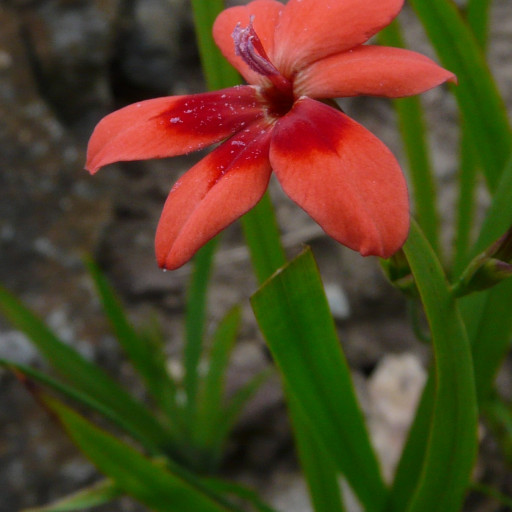
- 🌸 The Blooms: Six-petaled, star-shaped flowers that usually appear in shades of salmon, soft red, or pure white.
- 🎨 The Markings: Look closely at the three lower petals; they feature distinct, darker "nectar guides" that look like they were carefully painted on by hand.
- 🍃 The Foliage: Bright green, sword-shaped leaves that grow in a flat, fan-like arrangement, typical of its cousins in the Iris family.
🏡 In Your Garden
- 🌱 The Wanderer: Unlike many fussy bulbs, the Freesia Laxa is a prolific self-seeder. If it enjoys its location, it will gently "travel" across your rock gardens or gravel paths, filling in cracks with bursts of color.
- ☀️ Sun & Soil: It thrives in well-drained soil and actually prefers a bit of dappled shade in hotter climates. Because it grows from small corms, it doesn't mind being slightly crowded by the roots of larger shrubs.
⚠️ Safety & Toxicity
- 🐾 Pet Safety: While it is not considered "deadly" like some true Lilies, it contains compounds that can cause mild stomach upset, drooling, or lethargy in cats and dogs if ingested.
- 👶 Child Safety: Generally safe to handle, though the bright red seeds can be a choking hazard or look deceptively like candy to small children.
✨ Fun Fact
- ✨ Candy Seeds: When the flower pods dry and crack open in late summer, they reveal brilliant, shiny red seeds that look exactly like tiny pomegranate arils or "Red Hot" candies!

Detailed Care Instructions
Here are some steps you can follow to grow Freesia laxa plants:
- Choose a suitable location: Freesia laxa plants prefer full sun to partial shade. Find a spot in your garden with well-draining soil.
- Prepare the soil: Freesias prefer slightly acidic to neutral soil. Ensure that the soil is well-draining by adding organic matter such as compost or peat moss. This will improve the soil's structure and drainage.
- Planting the bulbs: Plant Freesia laxa bulbs in the late summer or early fall. Dig a hole that is 3-4 inches deep and space the bulbs around 4-6 inches apart. Place the bulbs with the pointed end facing up and cover them with soil.
- Watering: After planting, water the bulbs thoroughly to promote root growth. Make sure the soil is moist but not soggy. Reduce watering once the plants start to develop, allowing the soil to dry slightly between waterings.
- Fertilization: Apply a balanced slow-release fertilizer or a bulb fertilizer according to the package instructions before the bulbs begin to sprout. This will provide essential nutrients for healthy plant growth.
- Mulching: Apply a layer of organic mulch around the plants to help retain soil moisture and suppress weed growth.
- Provide support: Freesia laxa has tall flower spikes that may require support as they grow. Use stakes or similar support structures to prevent the plants from bending or falling over.
- Pruning: Deadhead the flowers once they fade to promote continuous blooming. Cut the spent flowers at the base of the stem. Avoid removing the foliage until it turns yellow, as this is the time when the bulbs are storing energy for the next growing season.
- Overwintering: In regions with cold winters, Freesia laxa may need protection from frost. Apply a layer of mulch or bring potted plants indoors. In warmer regions, the plants can remain in the ground.
By following these steps, you should be able to successfully grow Freesia laxa plants and enjoy their beautiful flowers for years to come.

Place in a bright room that is sun drenched almost all day. Or directly in a south-facing window.

To water this plant, ensure that the soil is completely dry before watering again. Use a watering can with a narrow spout to carefully direct water to the soil, avoiding getting any on the foliage. Water thoroughly until the excess water drains out from the bottom of the pot. Do not allow the plant to sit in standing water as this can lead to root rot.
Fertilize the plant once a month during its growing season with a balanced fertilizer, using a 10-10-10 or 20-20-20 solution. Make sure to dilute the fertilizer according to the manufacturer's instructions. Apply the fertilizer around the base of the plant, taking care not to splash any onto the foliage or flowers. Water the plant well after fertilizing. Avoid fertilizing during the plant's dormant period.
It is recommended to use a well-draining soil that is rich in organic matter for this particular plant. The soil pH should ideally be slightly acidic to neutral, with a range of 6.0-7.0. The soil should also be kept consistently moist, but not overly saturated, as this can cause root rot. It is important to avoid using heavy or compacted soil, as this can stunt the growth of the plant and inhibit its ability to take up nutrients. In general, a loose, loamy soil that is amended with compost or other organic matter should be suitable for this plant.
Propagation of this plant can be done through several methods, including division and seed germination. Dividing the plant is the easiest method, as it involves separating the clusters of bulbs during the dormant season and planting them individually. To propagate through seed germination, collect the seeds from mature pods and sow them in a well-draining soil mix. Ensure the soil is kept moist and place in a warm location for several weeks until germination occurs. New seedlings can be transplanted into individual containers once they have grown a few leaves.








