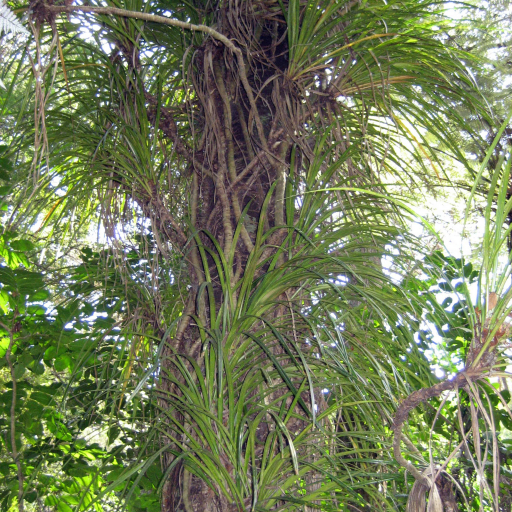
Plant Overview
Known to the Māori people of New Zealand as Kiekie, Freycinetia banksii is a spectacular woody climber that looks like a tropical escapee in the temperate forest. Often mistaken for a palm or a grass when young, this plant eventually transforms into a dense, scrambling "forest-weaver" that can shroud entire tree trunks in a lush, prehistoric green. In traditional culture, it is highly prized for both its versatile weaving fibers and its surprisingly sweet, edible flowers.
🔍 How to Identify
- 🌿 The Foliage: Long, narrow, sword-shaped leaves that grow in tufts. The edges and midribs have tiny, sharp teeth—if you run your finger the wrong way, you’ll definitely feel the "bite."
- 🎋 The Stems: Woody, flexible stems that act like ropes. They can climb high into the canopy using aerial roots or form impenetrable thickets on the forest floor.
- 🍍 The Bloom: In spring, it produces "Tāwhara"—thick, fleshy, cream-colored bracts (modified leaves) surrounding a central spike. These look somewhat like a deconstructed pineapple.
🏡 In Your Garden
- 🧗 The Scrambler: Unlike many garden climbers, Kiekie doesn't use tendrils; it scrambles and roots as it goes. It is perfect for a "wild" look or for covering an unsightly fence, provided you have the space to let it roam.
- 💧 Moisture Lover: While it is incredibly hardy once established, it thrives in damp, semi-shaded spots that mimic the forest floor. It hates "wet feet" in stagnant water but loves high humidity and rich leaf mulch.
⚠️ Safety & Toxicity
- ✅ Safe for Humans: Kiekie is one of the few native New Zealand plants with significant edible parts. Both the fleshy flower bracts (Tāwhara) and the ripe fruit (Ureure) are sweet and edible.
- 🐾 Pet Safety: It is generally considered non-toxic to cats and dogs, though the serrated leaf edges can cause minor physical irritation to the mouth or skin if a pet decides to chew on them.
✨ Fun Fact
Kiekie has a very special relationship with the endemic New Zealand Short-tailed Bat. While birds also visit the flowers, these unique walking bats are primary pollinators, crawling into the flower clusters to feast on the sugary bracts and getting dusted with pollen in the process!

Detailed Care Instructions
To grow a Freycinetia Banksii plant, also known as the forest-vine palm, you can follow these steps:
- Obtain a Freycinetia Banksii plant from a reputable nursery or garden center. You may also be able to find it online or through specialized plant collectors.
- Choose a suitable location. Freycinetia Banksii plants prefer partial shade or filtered sunlight. They thrive in shady areas under trees or in a room with plenty of indirect light.
- Prepare the planting site. Freycinetia Banksii plants prefer well-draining soil. If your soil is heavy or clay-like, consider adding organic matter like compost or peat moss to improve drainage.
- Dig a hole that is slightly larger than the root ball of the Freycinetia Banksii plant. Place the plant gently into the hole and backfill with soil, making sure that the top of the root ball is level with the surrounding soil.
- Water the plant thoroughly after planting to settle the soil and ensure proper hydration. Keep the soil moist, but not waterlogged, during the growing season.
- Apply a slow-release fertilizer specifically formulated for palm plants according to the instructions on the package. This will provide essential nutrients for healthy growth.
- Mulch around the base of the plant to help retain moisture and suppress weed growth. Use organic mulch, such as wood chips or bark.
- Regularly monitor the plant for any signs of pests or diseases. If necessary, apply organic pest control or consult with a local garden center for appropriate solutions.
- Freycinetia Banksii plants are vining plants and may require support as they grow. Install trellises, stakes, or a similar structure for the plant to climb on.
- Prune the plant as needed to maintain its shape and remove any dead or damaged foliage. Be careful not to excessively prune, as this could stunt growth.
- In colder climates, protect the plant from frost or freezing temperatures by moving it indoors or covering it with a frost cloth during winter.
- Regularly monitor the soil moisture levels and water the plant as needed, keeping in mind that Freycinetia Banksii plants prefer consistently moist soil.
By following these care instructions, your Freycinetia Banksii plant should grow well and provide an attractive addition to your garden.

Place in a window with dappled sun or a spot in the middle of a room. Or directly in a window facing west or east.

Freycinetia Banksii is a type of plant that requires regular watering to stay healthy and vibrant. To provide the right amount of water, it is necessary to observe the soil moisture level around the roots. One way to do this is by sticking your finger an inch or two into the soil and feeling for dryness.
During the growing season, Freycinetia Banksii requires consistent watering, usually every few days, especially if it is growing in a warm and sunny spot. However, it is important not to overwater the plant, as this can lead to root rot and other water-related problems.
To water Freycinetia Banksii, it is recommended to use room temperature, filtered water. To avoid disturbing the soil and the roots, it is best to water the plant gently with a watering can or a hose with a gentle flow. Make sure to water around the base of the plant and not on the leaves.
During the winter months, when the plant is dormant, it needs less water. Water once every two weeks or so, making sure that the soil stays moist but not soaking wet.
Overall, Freycinetia Banksii thrives in a moist but well-draining soil, so it's essential to avoid letting the soil dry out completely between watering. Proper watering, along with the right amount of sunlight and fertilizer, can help ensure healthy growth and beautiful blooms for this plant.
To fertilize this plant, use a balanced, slow-release fertilizer with an NPK ratio of 10-10-10 or similar. Apply the fertilizer to moist soil during the growing season, which typically occurs in the spring and summer months. Be careful not to over-fertilize, as this can lead to burned or damaged foliage. Instead, follow the instructions on the fertilizer packaging for application rates and frequency. If desired, you can also supplement with additional micronutrients, such as iron and magnesium, to promote healthy growth and vibrant foliage.
The ideal soil for the mentioned plant should be well-draining and loamy. A mix of several organic ingredients, such as peat moss, compost, and perlite or sand, will promote adequate drainage, airflow and provide essential nutrients for the plant's growth. The soil pH could be slightly acidic, around 5.5 to 6.5, which is the suitable range for the Freycinetia Banksii plant. It is essential to ensure that the soil doesn't get waterlogged, as it can cause root rot, which can be lethal for the plant. Additionally, adding a slow-release fertilizer to the soil mix can enhance the growth of the plant throughout the growing season.
To propagate this plant, you will need to identify a mature, healthy individual that you can take cuttings from. The cuttings should be taken from the nodes, which are the points where leaves are attached to the stem. Use a sharp, clean pair of pruning shears to make your cuts.
Each cutting should be approximately 3-4 inches long, and should have at least two to three nodes. Remove the lower leaves from the cutting, leaving only a few at the top of the stem.
Dip the cut ends of the stem in rooting hormone, and then plant them in a well-draining soil mix. Water the soil lightly, and place the cuttings in a bright, warm location with indirect sunlight.
Keep the soil consistently moist, but not waterlogged, and mist the cuttings daily to keep the humidity high. After a few weeks, the cuttings should begin to root and new growth should emerge from the top.
Once the new plants have established roots and are growing well, they can be transplanted into individual pots or into the ground. Remember to continue to water and care for the new plants until they are fully established.








