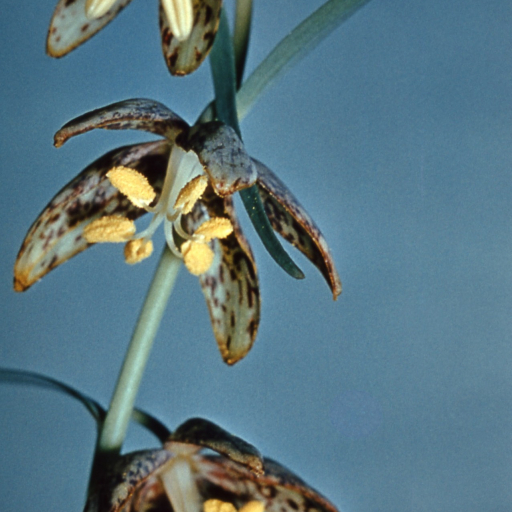
Plant Overview
Known as the Spotted Fritillary or Purple Fritillary, this elusive wildflower is a master of camouflage in the high-altitude forests of the Western United States. Often found hiding beneath the shade of Ponderosa pines, its nodding, "checkered" bells offer a subtle, sophisticated beauty that rewards the patient hiker. It is a shy spring ephemeral that disappears as quickly as it arrives.
🔍 How to Identify
- 🌸 The Bloom: Small, nodding, bell-shaped flowers that range from a deep chocolate purple to a mottled greenish-brown.
- 🎨 The Pattern: Distinctive yellow or tan spotting across the petals, giving it a "pixelated" or leopard-like appearance that blends perfectly with forest floor debris.
- 🌿 The Foliage: Long, narrow, grass-like leaves that are usually arranged in small whorls or scattered along the slender, upright stem.
🏡 In Your Garden
- ⛰️ Alpine Aspirations: This plant is native to dry, rocky slopes and coniferous forests. To succeed at home, you must mimic its mountain home with exceptionally well-draining, gritty soil and a cool, shaded root zone.
- 💤 The Disappearing Act: As a spring ephemeral, the entire plant will wither and vanish once the summer heat hits. Don't panic—it isn't dead! It is simply retreating into its bulb to wait for the next spring snowmelt. Mark the spot so you don't accidentally dig it up.
⚠️ Safety & Toxicity
- 🚫 Status: Toxic to ingest. Most members of the Fritillaria genus contain various alkaloids, including imperialine, which can affect the heart and gastrointestinal tract.
- 🐾 Pets & Kids: Keep this plant away from curious nibblers. Ingestion can cause vomiting, drooling, and more serious symptoms in cats and dogs. Some gardeners also report mild skin irritation when handling the bulbs without gloves.
✨ Fun Fact
The name atropurpurea literally translates from Latin as "dark purple," but the flower's unique mottled pattern is so intricate that early explorers often mistook it for a piece of shed snake skin or a cluster of forest shadows.

Detailed Care Instructions
- Choose a suitable planting location: Fritillaria Atropurpurea prefers well-draining soil and full sun to partial shade. Make sure the soil is rich in organic matter and has a pH level of around 6.5 to 7.5.
- Prepare the soil: Before planting, loosen the soil and remove any weeds or other plant debris. You can also add compost or well-aged manure to improve soil fertility and drainage.
- Plant the bulbs: Plant Fritillaria Atropurpurea bulbs in the fall, around 4-6 inches deep and about 6-8 inches apart. Place the bulbs with their pointed ends facing upwards. Cover the bulbs with soil and gently press down to ensure good soil contact.
- Watering and mulching: Give the newly planted bulbs a thorough watering to settle the soil. To help retain moisture and suppress weed growth, apply a layer of organic mulch around the plants.
- Maintenance: Regularly water the plants during the growing season, especially during dry spells. However, make sure the soil does not become waterlogged, as this can cause bulb rot. Remove any weeds that may compete with the plants for nutrients and water.
- Fertilization: Fritillaria Atropurpurea generally does not require heavy fertilization. However, you can apply a balanced, slow-release fertilizer in early spring to promote healthy growth.
- Protect from pests: Fritillaria Atropurpurea may attract pests like slugs, snails, or bulb mites. Monitor the plants regularly and take appropriate measures to control any infestations.
- Dormancy: After the plant finishes flowering, it enters a period of dormancy. During this time, the leaves will turn yellow and eventually die back. Do not remove the foliage until it has naturally withered, as the plant draws energy from the dying leaves to fuel bulb growth for the next season.
- Propagation: Fritillaria Atropurpurea can be propagated by dividing the bulbs during the dormant season, usually in late summer or early fall. Carefully lift the bulbs, separate the offsets (smaller bulbs), and replant them in a new location following the same planting instructions.
By following these guidelines, you can help your Fritillaria Atropurpurea plant thrive and produce beautiful flowers year after year.

Place in a bright room that is sun drenched almost all day. Or directly in a south-facing window.

To water this plant, you should first check the soil to make sure it is dry to the touch. If the soil feels moist, it is not time to water yet. When you do water, make sure to water deeply, so that the water reaches the roots of the plant. Be careful not to get water on the foliage or flowers of the plant, as this can cause damage. It is also important to avoid overwatering, as this can lead to root rot. Depending on the climate and growing conditions, this plant may need to be watered once or twice a week.
To fertilize this plant, use a balanced, slow-release fertilizer in early spring before new growth emerges. Apply the fertilizer at the base of the plant and water thoroughly. Avoid getting fertilizer on the leaves or flowers, as this can cause damage. Repeat the application once a month during the growing season for optimal growth and flowering.
Fritillaria Atropurpurea is a plant that prefers well-draining soil that is rich in nutrients and organic matter. The soil should have a pH level that ranges from slightly acidic to neutral. It prefers a soil that is moist but not waterlogged, as it does not tolerate sitting in water. Sandy loam soil mixed with compost and perlite or vermiculite is recommended for growing this plant. The soil should be regularly aerated, and it should be loamy or sandy to support root development. Loam soil with some perlite or vermiculite mixed in may also make a good growing medium. Additionally, it is important to avoid using heavy clay soils or soils that have a tendency to become compacted, as this can hinder growth and development of the Fritillaria Atropurpurea plant.
Here is how you can propagate the Fritillaria Atropurpurea plant without using its common names:
- Choose a healthy and mature plant from which to take cuttings. It should be free from disease and pests and have strong stems and leaves.
- Pick a stem from the middle of the plant that is about 4-6 inches long. Make sure it has several leaves on it.
- Use a clean pair of pruning shears or scissors to make a clean cut at a 45-degree angle. Make sure the cut is at least ¼ inch below a node (the point where a leaf meets the stem).
- Dip the cut end of the stem in rooting hormone powder. This will help it form roots more quickly.
- Plant the stem into a pot of well-draining soil. Water the soil so that it is moist but not waterlogged.
- Cover the pot with a clear plastic bag or a piece of plastic wrap to create a greenhouse-like environment. This will help keep the humidity high and prevent the cutting from drying out.
- Place the pot in a warm, bright spot but out of direct sunlight. Check the soil regularly and water it when it starts to dry out.
- After about 3-4 weeks, gently tug on the cutting to see if it has started to root. If it resists pulling, it has formed roots. If it is still loose, wait a few more days.
- Once the cutting has rooted, remove the plastic cover and move the pot to a bright spot with indirect sunlight. Water it regularly and fertilize it with a balanced fertilizer every few weeks.
- After a few months, the cutting should have grown into a healthy new Fritillaria Atropurpurea plant. You can then transplant it into a larger pot or into your garden.








