Plant Overview
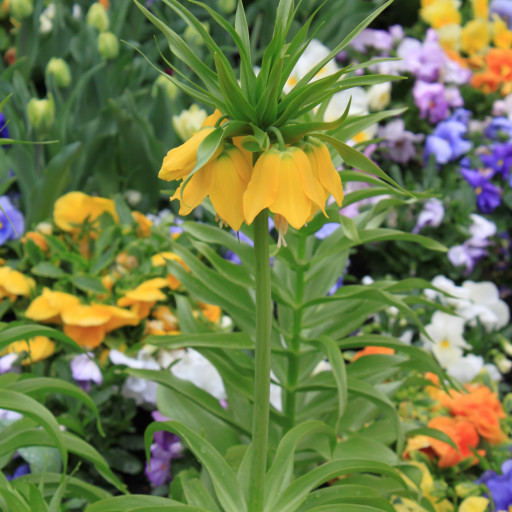
Standing tall like a royal scepter, the Crown Imperial (Fritillaria imperialis) has been a centerpiece of Persian and European gardens for centuries. Often called the "Kaiser’s Crown," this majestic spring bloomer is famous for its unique "pineapple-like" tuft of leaves and its dramatic, weeping nectar drops that legend says represent the tears of a shamed flower.
🔍 How to Identify
- 👑 The Crown: A distinctive tuft of bright green, pointed leaves (bracts) sits atop the flower cluster, resembling a leafy crown or a pineapple top.
- 🔔 The Bells: Large, pendant-shaped flowers hang in a circular cluster. They typically come in vibrant shades of burnt orange, sunset yellow, or deep brick red.
- 👃 The Scent: Both the flowers and the bulbs have a very distinct, "skunky" or musky odor. While humans may find it pungent, it serves a vital purpose in the garden.
- 🌿 The Stem: A thick, sturdy, leafless stalk that can reach up to 3 feet in height, emerging from a whorl of lance-shaped leaves at the base.
🏡 In Your Garden
- 🐀 Natural Pest Control: Because of its strong, musky scent, the Crown Imperial is a fantastic "barrier plant." It is famous for repelling underground garden pests like voles, moles, and even stubborn squirrels.
- 💧 The "Hole" Secret: The bulbs are unusually large and have a natural depression or hole in the center where last year’s stem was. To prevent water from sitting in this hole and causing rot, experienced gardeners often plant the bulbs on their sides.
- ☀️ Dormancy Needs: Like many spring bulbs, this plant disappears completely by mid-summer. It needs a dry "sleep" period during the summer months, so avoid planting it in areas with heavy automatic irrigation.
⚠️ Safety & Toxicity
- 🚫 Status: Toxic to humans and pets.
- 🤢 Ingestion: All parts of the plant, especially the bulb, contain alkaloids (like imperialin). If eaten, it can cause vomiting, low blood pressure, and heart rate irregularities.
- 🐾 Pet Warning: Keep away from curious dogs and cats, as the concentration of toxins in the bulb can be dangerous if they decide to dig it up.
- 🧤 Skin Sensitivity: Some gardeners report mild skin irritation after handling the bulbs; wearing gloves is recommended for sensitive skin.
✨ Fun Fact
The Crown Imperial is often called the "Weeping Mary" in some cultures. If you look inside the bell of the flower, you will see six large, glistening drops of nectar. If you shake the flower, the "tears" will fall, but they are quickly replaced by the plant, making it one of the most prolific nectar-producers in the bulb world!

Detailed Care Instructions
| Color | Red, Orange, Yellow |
| Soil Ph | Acid, Neutral And Basic (Alkaline) |
| Lighting | Full Sun |
| Soil Type | Well-Drained Sandy Or Perlite Soil |
| Bloom Time | Mid-Spring |
| Plant Type | Perennial Bulb |
| Mature Size | One To Three Feet Tall, Eight To 12 Inches Wide |
| Native Area | Asia And Middle East |
| Sun Exposure | Full Sun To Part Shade |
| Hardiness Zones | 5-9 |
To grow Fritillaria Imperialis plants, follow these steps:
- Choose a suitable planting location: Fritillaria Imperialis plants prefer a well-draining soil that is rich in organic matter. They typically need a full sun to partial shade location.
- Prepare the soil: Remove any weeds or grass from the planting area. Loosen the soil and amend it with compost or well-rotted manure to improve drainage and enrich the soil.
- Plant the bulbs: The best time to plant Fritillaria Imperialis bulbs is in the fall, around September or October. Dig a hole that is about 6-8 inches deep and place the bulb with the pointed end facing upwards. Space the bulbs about 12-18 inches apart, as they require room to grow.
- Watering: After planting the bulbs, water the area well to settle the soil around the bulbs. Fritillaria Imperialis plants prefer moist soil, so regular watering is necessary during their growing season. However, make sure not to overwater them, as excessive moisture can lead to rotting.
- Fertilize: Before planting the bulbs, you can mix some bulb fertilizer into the soil to provide essential nutrients. Additionally, you can top-dress the soil with organic compost or an all-purpose fertilizer in the spring to promote healthy growth.
- Provide winter protection: Fritillaria Imperialis plants are hardy but may benefit from winter protection in colder regions. Add a layer of mulch or straw around the plants to insulate the soil and protect the bulbs during freezing temperatures.
- Monitor for pests and diseases: Keep an eye out for pests like aphids, slugs, or snails. Regularly inspect the plants for any signs of disease, such as fungal infections or rot. Treat any issues promptly with appropriate organic or chemical control methods.
- Propagation: Fritillaria Imperialis plants can be propagated by division in the late summer or early fall when the bulbs are dormant. Carefully dig up the bulbs and separate them into smaller clumps, ensuring each division has healthy roots.
- Pruning: After the Fritillaria Imperialis bloom and the foliage starts to die back, you can trim off the spent flower stalks and yellowing leaves. Allow the remaining foliage to wither naturally, as it helps provide energy to the bulbs for future growth.
Remember, Fritillaria Imperialis plants take a few years to establish and bloom consistently. Be patient and provide them with proper care to enjoy their impressive flowers in the spring.

Place in a window with dappled sun or a spot in the middle of a room. Or directly in a window facing west or east.

To water this plant, ensure that the soil is kept consistently moist but not waterlogged. Allow the soil to dry slightly between waterings, but never allow it to become bone dry. When watering, ensure that water reaches the roots and does not just wet the surface of the soil. Avoid getting water on the leaves or petals to prevent fungal growth. Additionally, avoid letting the plant sit in standing water. It is important to water this plant regularly during its growing season, but reduce watering once it enters dormancy.
- Choose a well-draining soil for your plant and ensure it is planted in a location with plenty of sunlight.
- Fertilize your plant in the early spring when growth begins, and then again after the flowers have finished blooming in the summer.
- Use a slow-release, balanced fertilizer with equal amounts of nitrogen, phosphorus, and potassium.
- Apply the fertilizer at the base of the plant, being careful not to get it on the foliage or flowers.
- Water the plant immediately after fertilizing to help distribute the nutrients evenly throughout the soil.
- Continue to water and fertilize your plant regularly throughout the growing season to encourage healthy growth and blooming.
Fritillaria Imperialis plant prefers a well-draining soil that is rich and moist. The soil should be comprised of a mixture of organic matter, such as compost or peat moss, and sand or perlite to improve drainage. The soil pH should be slightly acidic, around 6.0 to 6.5. It is important to avoid using heavy clay soils that may retain too much moisture and cause the plant's bulbs to rot. Additionally, it may be helpful to add some bone meal or a balanced fertilizer to the soil to ensure the plant receives adequate nutrients.
Fritillaria Imperialis can be propagated through the division of its bulbs. The bulbs should be carefully removed from the ground during the dormant phase (late summer to early fall). The outer scales and dead leaves should then be removed to reveal the healthy bulbs. The bulbs can then be cut into sections, ensuring that each section has at least one growth point. The newly divided bulbs should be planted immediately in well-draining soil that is rich in organic matter. The new bulbs should be planted at a depth of around 10-15cm and spaced around 15cm apart. The bulb division process can be repeated every few years to maintain healthy, vigorous plants.








