Plant Overview
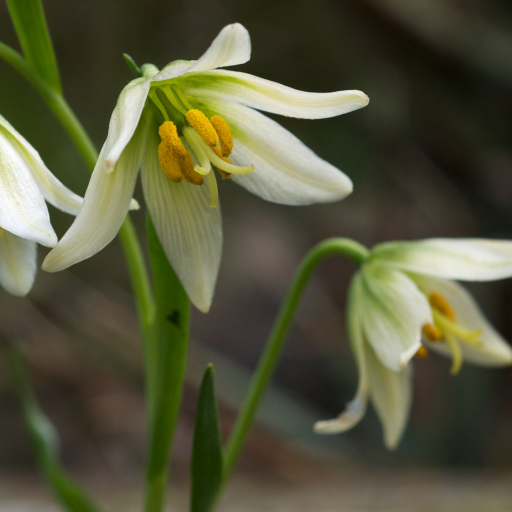
Known affectionately as the Fragrant Fritillary, this delicate wildflower is a rare gem native to the coastal grasslands of California. Unlike many of its cousins that carry a "skunky" odor, Fritillaria liliacea is prized for its sweet, lily-like perfume and ghostly white appearance. Because it is a specialist of heavy clay and serpentine soils, seeing one in the wild is a treat for any native plant enthusiast.
🔍 How to Identify
- 🔔 The Flowers: Graceful, nodding bell-shaped blooms that are creamy white to pale green, often featuring subtle green veins on the interior.
- 🌿 Leaf Arrangement: The lower leaves are usually arranged in a whorl (circular pattern) around the stem, while the upper leaves are smaller and alternate.
- 📏 Growth Habit: A slender, upright perennial that usually stands between 4 to 15 inches tall, emerging from a small, starchy bulb.
🏡 In Your Garden
- 🌱 Specialized Soil: This plant is extremely picky! It thrives in heavy, "shrinking-swelling" clay soils. In a garden setting, it needs a spot that mimics its natural grassland home—wet in the winter and bone-dry during its summer dormancy.
- 🛑 Rare Beauty: Because it is a listed rare species in many areas, you should never harvest it from the wild. If you find one for sale at a specialty native nursery, be prepared for its slow growth cycle; it takes patience to see its first bloom.
⚠️ Safety & Toxicity
- 🚫 Status: Toxic if ingested.
- 🐾 Details: Like many members of the lily family, the bulbs and foliage contain alkaloids (such as imperialine) that can cause vomiting or low blood pressure if eaten. Keep this plant away from curious pets and small children.
✨ Fun Fact
While most Fritillaria species are pollinated by flies attracted to musky scents, the Fragrant Fritillary evolved its sweet smell to specifically attract bees, making it a "polite" standout in a genus known for its funk!

Detailed Care Instructions

Place in a bright room that is sun drenched almost all day. Or directly in a south-facing window.

To water this plant, assess the soil moisture by sticking your finger an inch or two into the soil. If it feels dry, water the plant slowly and thoroughly, allowing water to soak into the roots. Once the water has drained from the soil, ensure that the plant is not left sitting in standing water. Watering frequency will depend on factors such as the plant's location, temperature, and humidity, but generally, allow the top inch or two of soil to dry out before watering again. Avoid getting water on the leaves or flowers of the plant, as this can lead to issues such as mold or rot.
Fritillaria Liliacea plant prefers to grow in a well-draining soil that is rich in organic matter. It should be planted in a soil that has a pH level of neutral to slightly acidic. The soil should be moist, but not waterlogged, as the plant cannot tolerate soggy conditions. Avoid using heavy clay soils as they tend to retain too much moisture, which may cause root rot. A good option is to mix a combination of soil, sand, and perlite to improve drainage. The plant requires good air circulation, so make sure to avoid planting it in an area with too much shade or overcrowding. It is important to water the plant regularly, but not excessively, and to fertilize it during the growing season.








