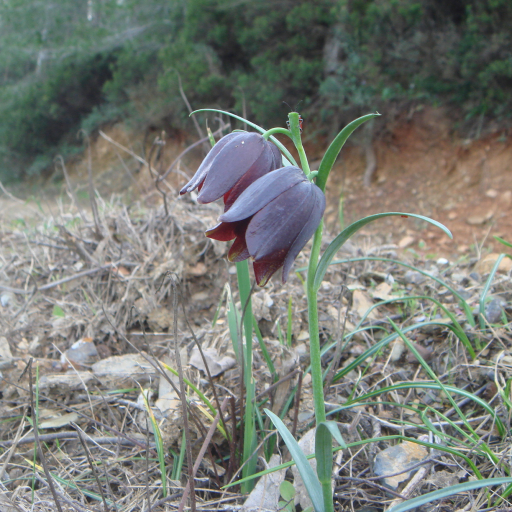
Plant Overview
Often called the Portuguese Fritillary, this delicate wildflower is a hidden gem of the Iberian Peninsula. It looks like a moody jewel hanging from a slender wire, featuring a metallic color palette that feels both ancient and elegant. In the wild, it peeks out from rocky crevices and sunny pine forests, bringing a touch of architectural drama to the early spring landscape.
🔍 How to Identify
- 🔔 The Flower: Single or paired bell-shaped blooms that hang downward, usually in shades of mahogany or dark purple with a subtle yellowish-green stripe or faint "checkered" pattern inside.
- 🍃 The Foliage: Long, narrow, linear leaves that are grayish-green (glaucous) and alternate up the stem, often resembling thick blades of grass before the flower emerges.
- 📏 The Stature: A slender, upright stem that typically reaches about 10 to 18 inches, appearing surprisingly graceful yet sturdy against the wind.
🏡 In Your Garden
- 🪨 The Drainage Rule: This plant is a specialist of rocky slopes, meaning it absolutely hates "wet feet." If you plant it in a garden bed, you must ensure the soil is gritty and free-draining to prevent the bulb from rotting during its dormant summer phase.
- ☀️ Sun Seeker: Unlike its cousin, the Snake’s Head Fritillary, which loves damp meadows, the Portuguese variety thrives in full sun or very light dappled shade, mimicking its native Mediterranean scrubland.
⚠️ Safety & Toxicity
- 🚫 Toxic if Ingested: All parts of the Fritillaria genus contain various alkaloids, such as imperialin, which are poisonous to humans and animals if swallowed.
- 🐾 Pet Warning: This plant should be kept away from curious cats and dogs; ingestion can lead to vomiting, drooling, and in rare cases, heart rate fluctuations.
✨ Fun Fact
🎲 The Name's Game: The genus name Fritillaria comes from the Latin word fritillus, meaning "dice-box," which refers to the checkered pattern found on the petals of many species in this family.

Detailed Care Instructions

Place in a bright room that is sun drenched almost all day. Or directly in a south-facing window.

To water Fritillaria Lusitanica plant, you should first identify the preferred soil type and soil moisture level for the plant. It is important to avoid overwatering, as this can cause root rot and other issues. Before watering, check the soil moisture level by sticking your finger into the soil up to the first knuckle. If the soil feels dry, it is time to water. When watering, make sure to saturate the soil evenly but avoid getting water on the leaves or flowers, as this can cause fungal growth or other problems. You may also want to consider using a drip irrigation system or watering from the bottom up to ensure even moisture distribution. Finally, be sure to let the soil dry out slightly between waterings to prevent excess moisture buildup.
The ideal soil for the Fritillaria Lusitanica plant should be well-draining and slightly acidic. The soil should be rich in nutrients and organic matter. It is important to avoid using heavy soils that retain too much moisture, as this can lead to root rot and other fungal diseases. A mix of sandy loam or clay loam, peat moss or leaf mold, and perlite or coarse sand is recommended. The soil pH should be around 6.0-6.5 to provide optimal conditions for the plant's growth. Additionally, it is important to ensure that the soil is well-aerated to promote healthy root growth and prevent waterlogging.








