Plant Overview
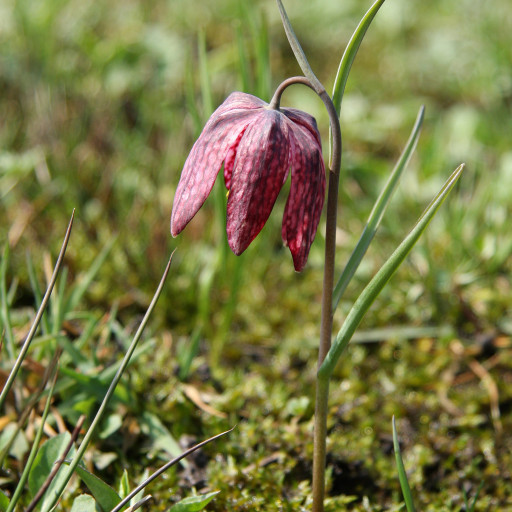
Often called the Snake's Head Fritillary because its drooping, unopened buds resemble a serpent’s head, this plant is a jewel of the damp meadow. It is famous for its almost impossible "checkered" pattern, looking more like a hand-painted textile than a living wildflower. Once common across European floodplains, it is now a cherished garden rarity that signals the peak of spring.
🔍 How to Identify
- 🏁 The Checkered Pattern: The petals feature a unique "tessellated" pattern of maroon, purple, and gray squares. Some varieties appear in a ghostly white-on-white "ghost" pattern.
- 🔔 The Nodding Bell: Each stem usually carries a single, large flower that hangs downward, protecting its nectar from spring rain.
- 🌿 Grassy Foliage: The leaves are thin, sparse, and grayish-green, often blending in so well with surrounding tall grass that the plant "disappears" once the flower fades.
🏡 In Your Garden
- 💧 Thirst for Dampness: Unlike many bulbs that rot in wet soil, these thrive in damp, heavy ground. They are the perfect choice for "boggy" spots, pond edges, or moist wildflower meadows where other plants might struggle.
- 🧅 Fragile Bulbs: The bulbs are "naked," meaning they lack the protective papery skin found on tulips or onions. They dry out very quickly when out of the ground, so they should be planted immediately or stored in damp peat.
- 🌱 Naturalizing: If they like their spot, they will slowly spread by seed, creating a stunning "carpet" of checkered bells over several years.
⚠️ Safety & Toxicity
- 🚫 Toxic Status: All parts of the plant are considered toxic if ingested.
- 🐾 Pets & Kids: It contains alkaloids such as imperialine, which can cause vomiting, low blood pressure, and a slowed heart rate. It is best to plant these in areas where pets and small children won't be tempted to "sample" the bells.
✨ Fun Fact
The species name meleagris translates to "guinea fowl." It was named this because the 16th-century botanists who first described it thought the spotted petals looked exactly like the speckled plumage of a guinea hen.

Detailed Care Instructions
| Color | From A Deep Burgundy To A Dark Pink |
| Soil Ph | Acidic To Neutral; Soil Tolerant |
| Humidity | Normal |
| Soil Type | Light, Sandy, Loamy |
| Bloom Time | Mid Spring |
| Difficulty | Easy |
| Plant Type | Perennial |
| Hibernation | Cold Period |
| Mature Size | 12" |
| Native Area | Canada, Western Us |
| Sun Exposure | Part-Shade |
| Hardiness Zones | Perennial, Zones 3-8 |
To grow Fritillaria Meleagris plants, also known as Snake's Head Fritillary, follow these steps:
- Choose the right location: Fritillaria Meleagris prefers a sunny or partially shaded spot in your garden. The soil should be well-draining and rich in organic matter.
- Planting time: Plant the bulbs in autumn for spring blooms. Fritillaria Meleagris is a perennial bulb plant.
- Prepare the soil: Remove any weeds or grass from the planting area. Dig the soil to a depth of around 6-8 inches and break up any clumps. Add organic matter such as compost if the soil is heavy.
- Planting depth and spacing: Dig holes that are around 4-5 inches deep and 4-6 inches apart. Place the bulbs in the holes with the pointed ends facing up.
- Watering: After planting, water the bulbs thoroughly to settle the soil and encourage root growth. Keep the soil slightly moist, but not waterlogged, during the growing season.
- Fertilizing: Fertilize your Fritillaria Meleagris plants in the spring with a balanced organic fertilizer. Follow the instructions on the fertilizer package for appropriate application rates.
- Mulching: You can apply a layer of organic mulch, such as wood chips or straw, around the plants to help retain moisture in the soil and suppress weed growth.
- Care: Fritillaria Meleagris is relatively low maintenance. Keep an eye out for pests or diseases, and address any issues promptly. Deadhead the flowers after they bloom to redirect energy back into the bulbs.
- After blooming: Once the foliage starts to yellow and die back naturally, you can cut it down to ground level. The bulbs will go dormant until the next growing season.
- Propagation: Fritillaria Meleagris can be propagated from offsets (small bulbs that form alongside the main bulb) or by sowing seeds. Allow the bulbs to multiply for a few years before dividing them.
Remember to consult local gardening resources or experts for specific guidance based on your regional climate and soil conditions.

Place in a window with dappled sun or a spot in the middle of a room. Or directly in a window facing west or east.

To water this plant, you will want to first assess the moisture level of the soil. Stick your finger about an inch into the soil and see if it feels dry or moist. If it feels dry, it is time to water. You want to make sure that you are watering slowly and thoroughly, taking care not to waterlog the soil. The soil should be moistened evenly throughout, but not so much that water is pooling on the surface. The frequency of watering will depend on the temperature, humidity, and light conditions of your growing environment. Generally, you will want to water this plant more frequently when it is actively growing, and less frequently during periods of dormancy. Remember to always water from the base of the plant to avoid getting water on the foliage, as this can promote fungal growth.
To fertilize this plant, you should apply a balanced, slow-release fertilizer in the early spring, just as new growth is emerging. Be sure to follow the recommended dosage on the fertilizer package and evenly distribute the fertilizer around the base of the plant. It is also recommended to water the plant thoroughly after fertilization to help the nutrients reach the roots. Avoid applying fertilizer in the fall or winter when the plant is dormant.
Fritillaria Meleagris plant requires well-draining soil that is rich in nutrients and organic matter. The soil pH should be neutral to slightly acidic, with a pH range between 6.0 and 7.5. The plant prefers slightly sandy and loamy soil and should be planted in a location with good light exposure but not under direct sunlight. The soil should be moist but not waterlogged, and the plant should be watered sparingly during the growing season. It is recommended to plant the bulbs in the fall to allow adequate time for root development before the spring growing season. Additionally, organic compost can be used when planting the bulbs to improve the soil's nutrient content and to promote healthy growth.
Fritillaria Meleagris plant can be propagated by division of its bulbs. Carefully remove the bulbs from the soil during the dormant period after the plant has finished flowering. Separate the bulbs into smaller groups and replant immediately in well-draining soil at a depth of three times the height of the bulb. Water the newly planted bulbs and keep the soil moist but not waterlogged. The bulbs will develop new roots and shoot up new growth in the following season.








