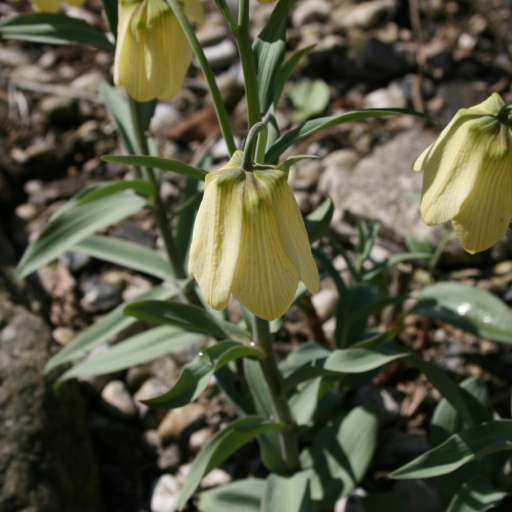
Plant Overview
Often called the Siberian Fritillary, this elegant mountain dweller hails from the high meadows of Central Asia and Siberia. Unlike its more flamboyant cousin, the Crown Imperial, Fritillaria pallidiflora carries an air of quiet sophistication with its nodding, lemon-tinted bells. It is a favorite among rock gardeners for its ability to bridge the gap between early spring bulbs and the full bloom of summer.
🔍 How to Identify
- 🔔 The Blooms: Features clusters of large, nodding, bell-shaped flowers that are a soft pale yellow or creamy-green.
- 🎨 Interior Detail: If you peek inside the "bell," you will find delicate, fine reddish-brown or maroon speckles tracing the inner petals.
- 🌿 The Foliage: The leaves are distinctively glaucous (a waxy, silvery-blue-green) and broad, spiraling up the sturdy flower stem.
- 📏 Stature: It typically grows to a graceful 12–18 inches, standing taller than many woodland fritillaries but shorter than the giants of the genus.
🏡 In Your Garden
- 🏔️ Mountain Roots: Because it originates from alpine meadows, this plant craves "cool feet." It thrives in soil that stays moist during the spring growing season but remains very well-drained to prevent the bulb from rotting during its summer dormancy.
- 🌬️ Climate Preference: It is exceptionally cold-hardy but struggles in humid, tropical heat. It prefers a spot that mimics a mountain slope—plenty of morning sun with some protection from the scorching afternoon rays.
- 🍂 Minimal Disturbance: Like many bulbous plants with a deep taproot system, it dislikes being moved. Once planted, leave it to naturalize and form a beautiful, shimmering colony over several years.
⚠️ Safety & Toxicity
- 🚫 Toxicity Status: Highly toxic if ingested.
- 🐾 Pets & People: The plant contains alkaloids that can cause stomach upset, vomiting, or more serious cardiac issues if eaten in large quantities. It is best kept away from curious pets and young children.
- 🧤 Skin Sensitivity: Some gardeners find the bulbs cause mild skin irritation when handled; wearing gloves during planting is a wise precaution.
✨ Fun Fact
The Fritillaria pallidiflora is so esteemed by horticulturists for its reliable beauty and hardiness that it has been granted the prestigious Award of Garden Merit by the Royal Horticultural Society. Its species name, pallidiflora, literally translates from Latin to "pale-flowered."

Detailed Care Instructions

Place in a bright room that is sun drenched almost all day. Or directly in a south-facing window.

Some plants require more regular watering than others, which should be done every few days. It's critical to maintain the soil moist all of the time. The water requirements of the same plant placed in pots with varying sizes will differ. Because the water in the smaller pot evaporates faster than the water in the larger pot, it will require more watering. Regardless of pot size, the surface should constantly be maintained moist.








