Plant Overview
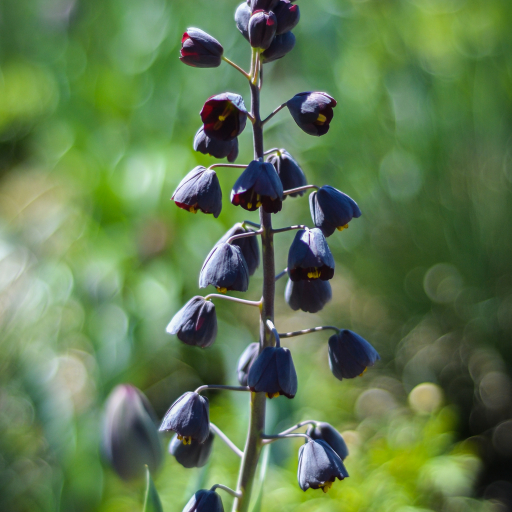
Often called the Persian Lily, this striking perennial is the "Goth" of the spring garden. With its towering spikes of dusty, plum-colored bells, it brings a dramatic vertical element that few other bulbs can match. Native to the rocky slopes of the Middle East, it is a hardy survivor that looks like it stepped right out of a high-fantasy landscape.
🔍 How to Identify
- 🔔 The Bells: Dozens of nodding, cup-shaped flowers (up to 30 per stem) in shades of deep eggplant, mahogany, or occasionally pale sea-foam green.
- 🌿 The Foliage: Spiraling, lance-shaped leaves with a distinct silvery-grey or "glaucous" tint that provides a soft contrast to the dark blooms.
- 📏 The Stature: A tall, upright grower that can reach 3 feet in height, acting as a natural exclamation point in a flower border.
🏡 In Your Garden
- 🏜️ Drainage is Vital: These plants originate from dry, rocky regions. They absolutely despise "wet feet" during their summer dormancy; sitting in soggy soil is the fastest way to lose the bulb to rot.
- 🏺 The Planting Trick: The bulbs are large and have a natural indentation at the top where water can collect. Experienced gardeners often plant the bulb slightly on its side to ensure water drains away from the center of the bulb.
- ☀️ Sun Seeker: To prevent the tall stems from leaning or flopping, they need a position with full, direct sunlight to stay strong and upright.
⚠️ Safety & Toxicity
- 🐾 Toxic to Pets: Like many members of the lily family, Fritillaria persica contains alkaloids that are poisonous if ingested.
- 🤢 Human Reaction: Eating any part of the plant can cause nausea, vomiting, and discomfort. It is best kept away from curious pets and small children who might be tempted by the bell-shaped flowers.
✨ Fun Fact
- 🏰 Ancient Heritage: While it looks like a modern designer plant, the Persian Lily has been cultivated in gardens since at least 1573, when it was first introduced to Western Europe from the city of Susa in ancient Persia.

Detailed Care Instructions
To grow Fritillaria persica, also known as Persian lily, follow these steps:
- Select a suitable location: Choose a spot in your garden that receives full to partial sunlight. Fritillaria persica prefers well-drained soil, so if your soil is clayey or heavy, amend it with organic matter or plant the bulbs in raised beds or containers.
- Prepare the soil: Prior to planting, prepare the soil by breaking it up with a garden fork or tiller. Remove any weeds or debris and incorporate compost or aged manure for improved fertility.
- Planting the bulbs: Fritillaria persica bulbs should be planted in the fall, usually in September or October depending on your region's climate. Dig individual holes, each about 6 to 8 inches deep and spaced 8 to 10 inches apart. Place the bulbs in the hole, pointed end up, and cover them with soil, gently pressing down to remove any air pockets.
- Watering: After planting, water the bulbs thoroughly to ensure proper establishment. Fritillaria persica prefers consistent moisture, so water regularly during the growing season, especially during hot and dry periods. However, be careful not to overwater, as excessively wet conditions can cause the bulbs to rot.
- Mulching: Apply a layer of organic mulch such as wood chips or straw around the planted bulbs. Mulch helps conserve moisture, suppresses weeds, and moderates soil temperature during cold winters or hot summers.
- Maintenance: Fritillaria persica is a relatively low-maintenance plant. Remove any weeds that may compete with the bulbs for nutrients and water. If necessary, stake tall stems to prevent them from falling over.
- Protection: Fritillaria persica can be prone to damage from pests like snails and slugs. Consider applying organic slug and snail baits or using physical barriers, such as copper tape, around the plants to deter them.
- Dormancy: After flowering, Fritillaria persica will go dormant. Allow the foliage to die back naturally, as this provides nutrients to the bulb for the following year's growth. Avoid cutting back the foliage until it turns yellow or brown.
By following these steps, you can successfully grow Fritillaria persica and enjoy its beautiful blooms.

Place in a bright room that is sun drenched almost all day. Or directly in a south-facing window.

To water this plant, it is important to ensure that the soil is consistently moist but not waterlogged. This can be achieved by watering deeply but infrequently, around once or twice a week depending on the climate and season. It is also important to water at the base of the plant rather than directly on the leaves to prevent fungal diseases. During the dormant season, watering can be reduced to avoid rotting the bulbs. It is important to monitor the soil moisture and adjust watering as needed.
To fertilize a Fritillaria Persica plant, apply a well-balanced, slow-release fertilizer in early spring before flowering. Mix the fertilizer into the top inches of soil around the plant and water thoroughly to distribute the nutrients. Avoid using high-nitrogen fertilizers, as this can lead to overgrowth and reduced flowering. Repeat the fertilization process once or twice more during the growing season, depending on the plant's growth and health. Always follow the instructions on the fertilizer package closely.
Fritillaria Persica prefers well-draining soil that is rich in organic matter. It requires a slightly acidic to neutral pH level (6.0-7.5) and a loamy texture. A soil mix consisting of peat moss, compost, and sand is suitable for this plant. It is important to ensure that the soil does not become waterlogged, as this can lead to root rot. The plant also benefits from a layer of mulch on top of the soil to help retain moisture and prevent weeds.
To propagate this plant, you will need mature bulbs that have been kept in cool, dry conditions. In the fall, carefully dig up the bulbs and gently separate the offsets from the parent bulb. Each offset should have a small amount of root attached. Trim any damaged or dead roots.
Prepare a well-draining potting mix, such as a mixture of sand, peat moss, and perlite. Plant the offsets just below the surface of the soil, making sure the roots are covered but the tips of the bulbs are exposed. Water thoroughly and place the pot in a cool, shady location.
Keep the soil moist but not waterlogged and avoid fertilizing until the following spring. During this time, the bulbs will develop new roots and establish themselves in the pot. In the spring, you can move the pots to a brighter location and begin fertilizing with a balanced fertilizer.
In a few years, the bulbs will have matured and will be ready to produce flowers. Fritillaria Persica plants are slow-growing and take several years to reach maturity, so patience is key when propagating this plant.








