Plant Overview
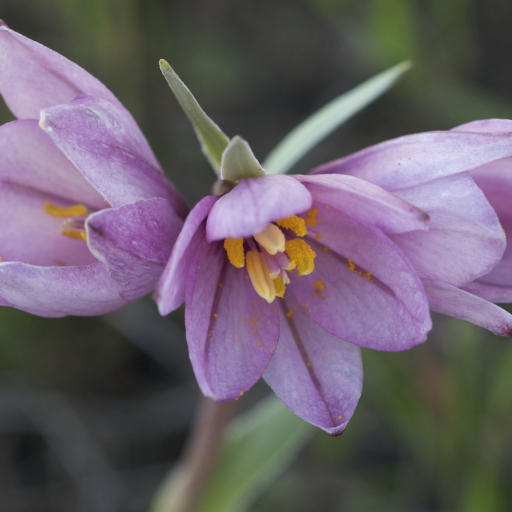
Known affectionately as the Adobe Lily, this rare California native is a true crown jewel of the foothills. Unlike many of its darker, "moody" cousins in the Fritillaria genus, this wildflower brings a soft, nodding elegance to the landscape with its bright rose-pink to magenta bells. Finding one in the wild is considered a lucky event for hikers, as it only flourishes in very specific, heavy clay soils that would suffocate most other plants.
🔍 How to Identify
- 🌸 The Blooms: Features 1 to 7 nodding, bell-shaped flowers. They lack the "checkered" pattern found in other Fritillaries, opting instead for a solid, vibrant pinkish-purple hue.
- 🍃 The Foliage: The leaves are long, lance-shaped, and often have a waxy, blue-green (glaucous) tint that helps the plant reflect intense sun.
- 📏 The Stature: It stands on a sturdy, upright stem reaching about 8 to 20 inches tall, lifting its heavy flower heads just above the surrounding grasses.
🏡 In Your Garden
- 🪴 Soil Snobbery: True to its common name, it demands heavy, fine-textured "Adobe" clay. It is notoriously difficult to grow in standard garden soil because it requires the high mineral content and specific drainage of its native range.
- 💤 Summer Slumber: This is a drought-deciduous bulb. Once the flowers fade in late spring, the entire plant disappears underground. It is vital to keep the area completely dry during the summer; artificial watering during its dormancy is the fastest way to rot the bulb.
- ⏳ Patience is a Virtue: If you are lucky enough to find a source for seeds, be prepared for a long-term commitment. It can take 5 to 7 years for a seedling to develop a large enough bulb to produce its first flower.
⚠️ Safety & Toxicity
- 🚫 Status: Toxic to humans and pets.
- 🐾 Details: Like most members of the Fritillaria genus, the bulbs contain various alkaloids (such as fritilline). If ingested, it can cause nausea, vomiting, and a slowed heart rate. It is best kept away from curious dogs or cats who like to dig in the garden.
✨ Fun Fact
Inside the pink bell, there are faint greenish-yellow markings at the base. These are actually "nectar guides"—evolutionary signposts that use specific colors to tell bees exactly where to land for a sugary reward!

Detailed Care Instructions
To grow Fritillaria Pluriflora plant, follow these steps:
- Choose the right location: Fritillaria Pluriflora prefers a partially shaded location, as direct sunlight can scorch the leaves. Select a spot in your garden that receives morning sun and afternoon shade.
- Prepare the soil: Fritillaria Pluriflora prefers well-draining soil with a slightly acidic to neutral pH. Amend the soil with organic matter, such as compost or peat moss, to improve its drainage and fertility.
- Plant the bulbs: Fritillaria Pluriflora is propagated through bulbs. Plant the bulbs about 3 to 4 inches deep, with a spacing of 6 to 8 inches between each bulb. Ensure that the pointed end of the bulb is facing upwards.
- Water appropriately: Fritillaria Pluriflora prefers slightly moist soil. Water the plant regularly, but avoid waterlogging, as it can cause the bulbs to rot. Allow the soil to dry slightly between waterings.
- Provide some support: Fritillaria Pluriflora can grow quite tall and may need support, especially in windy areas. Place a stake or install a small plant cage near the plant to provide support and prevent bending or breaking of the stems.
- Mulch the soil: Apply a layer of organic mulch, such as wood chips or straw, around the base of the plant. Mulching helps to retain moisture, suppress weeds, and protect the bulbs from extreme temperatures.
- Fertilize sparingly: Fritillaria Pluriflora does not require heavy feeding. Apply a balanced, slow-release fertilizer in early spring, following the package instructions. Avoid excessive fertilization, as it can lead to excessive foliage growth at the expense of flowers.
- Monitor pests and diseases: Fritillaria Pluriflora is generally resistant to pests and diseases. However, keep an eye out for snails, slugs, and rodents that may damage or eat the bulbs. If necessary, use organic pest-control methods to deter or eliminate these pests.
- Allow the plant to naturalize: Fritillaria Pluriflora tends to naturalize and multiply over time. Allow the plant to go through its natural lifecycle, dying down in late spring or early summer, and producing new bulbs around the original bulb. This allows the plant to establish a sustainable population.
By following these guidelines, you can successfully grow Fritillaria Pluriflora and enjoy its beautiful flowers in your garden.

Place in a bright room that is sun drenched almost all day. Or directly in a south-facing window.

Fritillaria Pluriflora plant requires regular watering during its growing season. Ensure that the soil is kept moist but not waterlogged. It is important to water the plant deeply to encourage strong root growth. Watering should be reduced during the dormant period to prevent rotting of the bulb. It is recommended to water the plant early in the morning or late in the afternoon to avoid water evaporation. Over-watering should be avoided as it may lead to fungal diseases.
Fertilize the plant with a balanced, slow-release fertilizer in the early spring before new growth appears. Use a fertilizer with a nutrient ratio of 10-10-10 or 20-20-20. Apply the fertilizer to the soil around the plant, being careful not to get any on the leaves or flowers. Water the plant thoroughly after fertilizing. Repeat the fertilizer application once more in the mid-summer. Stop fertilizing in the fall to allow the plant to go dormant.
Fritillaria Pluriflora is a plant that prefers well-drained soil that is rich in organic matter. The soil should be slightly acidic to neutral, with a pH between 5.5 and 7.0. It is important that the soil is not compacted, as this can lead to poor drainage and root rot. A mix of sandy loam, peat moss, and aged compost is ideal for this plant. When planting, it is important to ensure that the bulbs are positioned at the correct depth in the soil, with the top of the bulb just below the surface. The soil should be kept moist but not waterlogged, and it is important to avoid over-watering as this can also lead to root rot. Fertilizer can be applied in the spring and fall, but it is important to use a slow-release fertilizer to avoid burning the plant's roots.
To propagate this plant, start by collecting the seeds from mature plants in late summer or early fall. Sow the seeds in a well-draining soil mixture in a small pot or seed tray. Keep the soil moist and place it in a cool, shaded area. It may take a few weeks for the seeds to germinate.
Once the seedlings have a few leaves, transfer them to individual pots filled with a well-draining soil mix and keep them in a bright, but shaded location. Continue to water them regularly, but make sure the soil doesn't stay soggy.
As the plants grow and mature, they will start to produce offsets or bulbils around the base of the stem. These can be removed and carefully planted in their own pots, ensuring that the base of the bulbil is level with the surface of the soil.
Make sure to keep the soil consistently moist but avoid overwatering, as this can promote rotting. Transplant the bulbs or bulbils to a larger pot or into the ground once they have outgrown their current container.
With patience and proper care, you can expect your Fritillaria Pluriflora to produce more blooms and continue to thrive for years to come.








