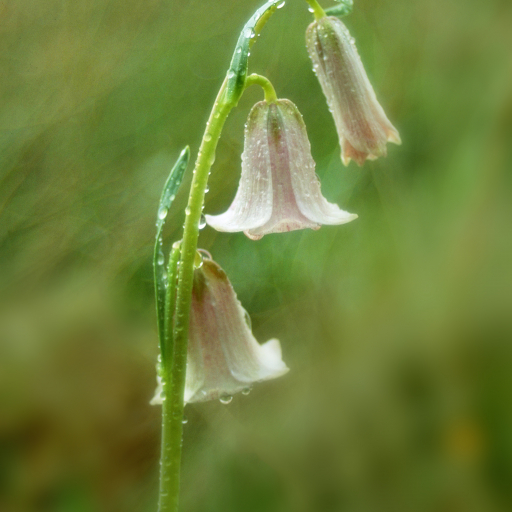
Plant Overview
Known affectionately as the Striped Adobe Lily, this rare California native is like a delicate ghost of the clay-heavy foothills. It is famous for its fragrant, nodding blooms that appear in late winter and early spring, often pushing through the heavy "adobe" soils that other plants find suffocating. Because it is a localized and threatened species, seeing one in the wild is considered a true treat for any "botany hunter."
🔍 How to Identify
- 🔔 Nodding Bells: The plant produces two to seven pendulous, bell-shaped flowers that hang gracefully from a central stalk, reaching up to 16 inches in height.
- 📈 Striated Petals: Each petal is a pale white to soft pink, marked by distinct, fine vertical veins of deep pink or purplish-brown.
- 🌿 Waxy Foliage: The leaves are long, narrow, and slightly wavy, often concentrated at the base of the plant to capture early season moisture.
🏡 In Your Garden
- 🧱 Adobe Specialist: As its name suggests, this lily has a unique relationship with heavy, alkaline clay. If you are lucky enough to grow it, avoid "improving" the soil with too much organic matter; it prefers the structural weight of natural clay.
- 💤 Summer Dormancy: This is a "spring ephemeral." Once the heat of summer arrives, the entire plant will wither and disappear underground. It is vital to keep the bulb dry during this dormant period to prevent it from rotting.
- 🌬️ Scented Beauty: Unlike many of its cousins in the Fritillaria genus—which can sometimes smell like wet fur or skunk—the Striped Adobe Lily is prized for its surprisingly sweet, intoxicating floral fragrance.
⚠️ Safety & Toxicity
- 🚫 Toxic if Ingested: All parts of the Fritillaria genus, particularly the bulbs, contain various alkaloids (such as fritilline). If eaten, they can cause nausea, vomiting, and a slowed heart rate.
- 🐾 Keep Away from Pets: This plant should be kept out of reach of cats and dogs. Ingestion by pets can lead to significant digestive distress and neurological symptoms.
- 🛑 Conservation Status: In many regions, this plant is protected. Never harvest bulbs from the wild, as this contributes to the decline of an already threatened species.
✨ Fun Fact
The Striped Adobe Lily is so specialized to its environment that it is almost exclusively found in the foothills of the Sierra Nevada and the Tehachapi Mountains. It has evolved to thrive in soil that is as hard as a brick in the summer and as sticky as glue in the winter!

Detailed Care Instructions
To grow Fritillaria striata plants, follow these steps:
- Climate: Fritillaria striata prefers a cool climate with temperatures ranging from 20°F (-6°C) to 75°F (24°C) during the growing season. Make sure it receives a period of cold dormancy in winter.
- Soil: Fritillaria striata thrives in well-draining soil. Amend heavy clay soil with organic matter, such as compost, to improve drainage.
- Sunlight: Plant the bulbs in a location that receives full to partial sun. Fritillaria striata can tolerate some shade, but it blooms best in full sun.
- Planting: Plant the bulbs in the fall, 4-6 inches (10-15 cm) deep and 6 inches (15 cm) apart. Space multiple bulbs at least 8-12 inches (20-30 cm) apart. Point the narrow end of the bulb upwards.
- Watering: Keep the soil evenly moist during the growing season but avoid overwatering. It is important to let the soil dry out slightly between waterings, as excessive moisture can cause rot.
- Fertilizer: Fritillaria striata generally doesn't require much fertilization. However, you can provide a slow-release bulb fertilizer in spring when growth starts. Avoid using high-nitrogen fertilizers, as they can promote leafy growth at the expense of flowers.
- Mulching: Apply a layer of mulch around the plants to help retain moisture and suppress weed growth. Use organic mulch like straw or shredded bark.
- Pests and Diseases: Fritillaria striata is generally resistant to pests and diseases. However, keep an eye out for common bulb pests like slugs and snails. If any pests are present, remove them by hand or use eco-friendly pest control methods.
- Dormancy: After the plant finishes blooming, allow the foliage to die back naturally. This process allows the bulb to gather energy for the next growing season. Do not cut back the foliage until it has turned yellow and withered completely.
- Propagation: Fritillaria striata can be propagated by division. After the bulbs have gone dormant, dig them up and separate the offsets from the main bulb. Replant the offsets, ensuring they have enough space to grow.
By following these steps, you can successfully grow Fritillaria striata plants. Remember to provide proper care and maintenance throughout the growing season.

Place in a bright room that is sun drenched almost all day. Or directly in a south-facing window.

To water this type of plant, it's important to keep the soil moist but not waterlogged. Allow the top inch of soil to dry out before watering again. Use room temperature water to avoid shocking the roots, and water at soil level to prevent getting the leaves wet. During the growing season, the plant may require more frequent watering. In the winter, reduce the frequency of watering to prevent root rot.
To fertilize the Fritillaria Striata plant, apply a balanced fertilizer in early spring as new growth appears. Use a slow-release fertilizer or top-dress the soil with compost or well-rotted manure. Avoid over-fertilizing, as this can burn the plant and cause it to produce weaker blooms. Water the plant well after fertilizing to ensure the nutrients are absorbed by the roots.
Fritillaria Striata plants grow best in well-drained soil with a medium to coarse texture. The soil should be slightly acidic to neutral, with a pH range of 6.0 to 7.5. It is essential to ensure that the soil is not waterlogged or too dry, as this can lead to poor growth or even death of the plant. The addition of organic matter, such as compost or leaf mold, can help improve the soil structure and fertility. It is recommended to plant Fritillaria Striata bulbs in the fall, allowing them to establish themselves before the growing season in the spring.
Fritillaria striata can be propagated by seed or division.
Propagation by seed:
- Collect mature seeds from the plant in autumn when the seed capsules have turned brown.
- Clean the seeds by removing any debris or husks.
- Stratify the seeds by placing them in a plastic bag with moist peat moss and storing in the fridge for 6-8 weeks.
- After stratification, sow the seeds in a potting mix of equal parts peat moss, sand, and perlite.
- Cover the seeds lightly with soil and water well.
- Place the pot in a protected area with indirect light and maintain consistent moisture.
- The seeds will typically germinate in 2-3 weeks.
Propagation by division: - Dig up the mature plant in autumn after it has gone dormant.
- Carefully separate the bulbs of the plant, making sure each bulb has a portion of the stem attached.
- Plant the bulbs in a potting mix of equal parts peat moss, sand, and perlite.
- Water well and place in a protected area with indirect light.
- Maintain consistent moisture, but do not overwater.
- The plant should begin to grow in a few weeks.








