Plant Overview
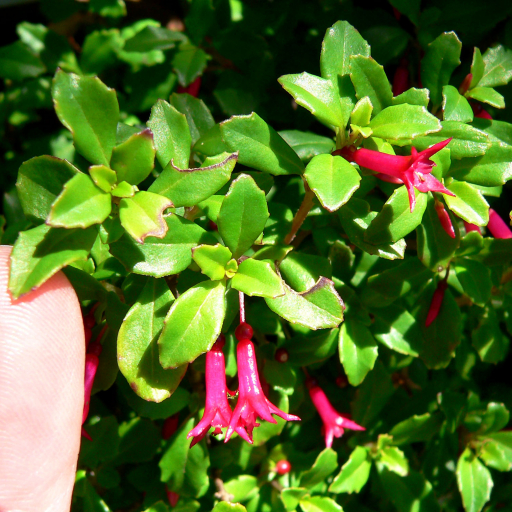
Often called the Littleleaf Fuchsia, this charming shrub from the mountains of Mexico and Central America looks like a botanical treasure from a fairy tale. Unlike its cousins with giant, heavy blooms, this species is prized for its miniature elegance and "bonsai-like" growth habit. It is a resilient survivor that brings a delicate, fine-textured aesthetic to any shaded corner or patio.
🔍 How to Identify
- 🌿 Teeny-Tiny Foliage: The leaves are remarkably small (often less than half an inch), dark green, and slightly glossy with finely serrated edges.
- 🌺 Jewel-Like Blooms: It produces hundreds of tiny, tubular flowers that hang like pendulous earrings. They are typically deep pink to ruby red and bloom profusely from summer through fall.
- 🍇 Dark Berries: After the flowers fade, the plant produces small, round, dark purple or black berries that add extra visual interest.
🏡 In Your Garden
- ☀️ Sun Versatility: While most fuchsias demand deep shade, the Microphylla is surprisingly sun-tolerant, provided its roots stay cool and moist. In hotter climates, dappled afternoon shade is its best friend.
- 🦋 Pollinator Magnet: Don't let the small size fool you; these flowers are high in nectar. Hummingbirds and long-tongued bees will frequent your garden specifically to find these "hidden" snacks.
- ✂️ Natural Structure: It has a naturally bushy, upright habit. Because it grows slowly and has small leaves, it is one of the best fuchsia species for training into a formal "standard" or a decorative bonsai.
⚠️ Safety & Toxicity
- ✅ Pet & Human Safe: Fuchsia microphylla is generally considered non-toxic to cats, dogs, and horses. It is a "worry-free" addition to a household with curious pets.
- 🍓 Edible Fruit: The tiny berries are technically edible and have a mildly sweet, peppery flavor, though they are usually left for the birds due to their minuscule size.
✨ Fun Fact
In its native cloud forest habitats, this plant has a unique survival strategy: it is "gynodioecious." This means some individual plants produce only female flowers, while others produce "perfect" flowers (both male and female), ensuring a high level of genetic diversity through cross-pollination!

Detailed Care Instructions
To grow Fuchsia microphylla, also known as the littleleaf fuchsia, you can follow these steps:
- Climate: Fuchsia microphylla grows best in mild to warm climates, with average temperatures ranging from 50°F to 75°F (10°C to 24°C). It is not recommended for areas with extreme heat or cold.
- Location: Choose a spot that receives bright, indirect sunlight or partial shade. Too much direct sunlight can burn the delicate leaves, while too little light may result in weak growth.
- Soil: Fuchsia microphylla prefers well-draining soil that is rich in organic matter. A mixture of compost, peat moss, and perlite or sand can be used to improve drainage.
- Planting: Dig a hole slightly larger than the root ball of the plant. Place the plant in the hole and backfill it with the prepared soil mixture. Gently firm the soil around the base of the plant.
- Watering: The soil should be kept consistently moist but not waterlogged. Water the plant deeply whenever the top inch (2.5 cm) of soil feels dry. Avoid overwatering, as it can lead to root rot.
- Fertilization: Fuchsia microphylla benefits from regular fertilization. Use a balanced, water-soluble fertilizer every 2-3 weeks during the growing season, following the manufacturer's instructions.
- Pruning: Prune the plant regularly to maintain its shape, remove dead or diseased branches, and promote bushier growth. Pinch back the tips of the branches to encourage branching.
- Mulching: Apply a layer of organic mulch around the base of the plant to help retain moisture, suppress weeds, and regulate soil temperature.
- Pests and diseases: Keep an eye out for common pests like aphids, whiteflies, and spider mites. Treat any infestations promptly with appropriate insecticides or natural remedies. Fuchsia microphylla is generally disease-resistant but may occasionally face issues like root rot or powdery mildew. Proper watering and good airflow can help prevent these problems.
- Winter care: In areas with frost or freezing temperatures, Fuchsia microphylla is not frost-hardy. Consider bringing potted plants indoors or providing protective coverings for outdoor plants during the winter months.
By following these guidelines, you can successfully grow Fuchsia microphylla and enjoy its beautiful foliage and delicate flowers.

Place in a window with dappled sun or a spot in the middle of a room. Or directly in a window facing west or east.

To water this plant, you should moisten the soil thoroughly but avoid over-watering. Water the plant until the soil is visibly moist, but make sure not to let the water pool on the surface or become too saturated. You should also avoid letting the plant sit in standing water or overly wet soil, as this can lead to root rot or other issues. It is generally best to water this plant regularly, but allow the soil to dry out slightly between waterings to prevent over-watering. Depending on the climate and environment, this plant may require more frequent watering in hot or dry weather, or during periods of growth or blooming.
- Begin by choosing a balanced fertilizer with equal parts of nitrogen, phosphorus, and potassium.
- Apply the fertilizer every two weeks during the growing season, which happens from spring to late summer or early autumn.
- Mix the fertilizer with water according to the instructions on the package.
- Water the plant before applying the fertilizer mixture to prevent root burn.
- Apply the fertilizer mixture to the soil around the base of the plant, being careful not to get any on the leaves or flowers.
- Water the plant immediately after applying the fertilizer mixture to help it soak into the soil and reach the roots.
- In late autumn, taper off the fertilization process to prepare the plant for its dormant season.
The ideal soil for the Fuchsia Microphylla plant is a well-draining soil that is rich in nutrients and organic matter. The soil should be slightly acidic, with a pH level of around 5.5 to 6.5. It should also be moist but not waterlogged, as the plant does not tolerate wet feet. A soil that is high in clay content may need to be amended with sand or perlite to improve drainage. Additionally, the plant benefits from a layer of organic mulch placed around the base, which helps retain moisture and provides nutrients as it decomposes.
To propagate this plant, select a healthy stem cutting from the plant using sharp, sterilized pruning shears. The cutting should be approximately 4-6 inches in length and have at least 2-3 leaves attached. Remove any lower leaves and dip the cut end of the stem into rooting hormone powder. Plant the cutting in a well-draining propagation mix, burying about 1-2 inches of the stem. Water the cutting thoroughly and cover it with a plastic dome to create a humid environment to promote root growth. Place the cutting in a bright, indirect light location and keep the propagation mix moist but not overly wet. After 4-6 weeks, when the cutting has rooted, transplant it into a small pot with fresh potting soil and continue to care for it as you would an established plant.








