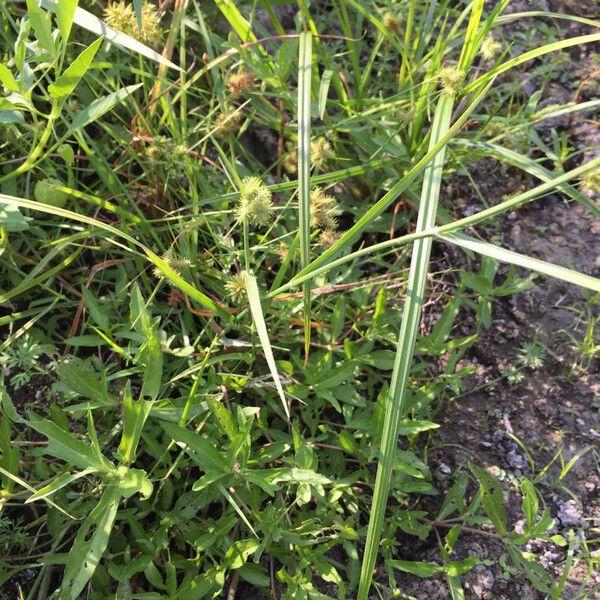
Plant Overview
Known affectionately as the Western Umbrella Sedge, this architectural beauty brings a structural, geometric charm to any wetland setting. It thrives where other plants drown, standing tall with unique clusters that look like miniature crowns or starry umbrellas. Native to the southern United States and Mexico, it acts as a vital anchor for muddy banks and a sanctuary for small aquatic life.
🔍 How to Identify
- 🌿 The "Umbrella" Bracts: The plant gets its name from the three or more leaf-like bracts that fan out at the top of the stem, perfectly framing the flower clusters like the ribs of an umbrella.
- 📐 Angular Stems: Like most sedges, "sedges have edges." If you roll the stem between your fingers, you will feel a distinct three-sided, triangular shape that provides incredible strength against wind.
- 🌾 Bristly Spikelets: The flowers appear in dense, brownish-green clusters. These spikelets have a slightly fuzzy or bristly texture, looking like tiny, prehistoric pinecones gathered at the center of the leaves.
🏡 In Your Garden
- 💧 Thirst for Mud: This is a true "water lover" that requires constant moisture. It is the perfect choice for the margins of a garden pond, a dedicated bog garden, or those "trouble spots" in your yard where water naturally pools and stays soggy.
- 🌱 Erosion Expert: Because it spreads via underground rhizomes, it is a master at holding soil together. It is often used in restoration projects to stop banks from washing away, but in a small garden, you may want to grow it in a submerged pot to keep its spread in check.
⚠️ Safety & Toxicity
- ✅ Non-Toxic Status: Western Umbrella Sedge is generally considered safe and non-toxic for humans, dogs, and cats. It is a "friendly" addition to a family backyard.
- 🧤 Rough Texture: While not poisonous, the edges of the leaves can be quite coarse and "toothed." If you are doing heavy maintenance or thinning out a large patch, wearing gloves is a good idea to avoid minor skin irritation or "grass cuts."
✨ Fun Fact
The genus name Fuirena honors Georg Fuiren, a 17th-century Danish physician and botanist. Despite its delicate appearance, the "petals" of this plant are actually modified bristles that evolved to protect the seeds as they hitchhike on the feathers of migrating waterfowl!

Detailed Care Instructions
Fuirena simplex, also known as slender fimbry, is a small, low-maintenance plant that can be grown easily in moist to wet soil. Here are some tips on how to grow Fuirena simplex:
- Choose a location: Fuirena simplex thrives in wet or moist soil, so choose a location in your garden or landscape that stays consistently moist. It can also tolerate full sun to partial shade.
- Prepare the soil: Make sure the soil is well-drained and slightly acidic. Add organic matter such as compost or peat moss to improve soil fertility and moisture retention.
- Planting: Plant the Fuirena simplex seeds or seedlings in the prepared soil, spacing them about 6-8 inches apart. Water the plants thoroughly after planting.
- Watering: Keep the soil consistently moist but not waterlogged. Water the plants regularly, especially during dry periods. Avoid letting the soil dry out completely.
- Fertilizing: Fuirena simplex doesn't require regular fertilization. However, you can apply a balanced fertilizer once or twice a year to promote healthy growth.
- Pruning: Trim back any dead or damaged foliage to encourage new growth and keep the plant looking tidy.
- Pests and diseases: Fuirena simplex is generally pest and disease-resistant. However, keep an eye out for aphids, snails, and slugs, especially in wet conditions.
- Propagation: Fuirena simplex can be propagated by division or by collecting and planting seeds. Divide the plants in early spring or collect mature seeds in late summer or early fall.
By following these tips, you can successfully grow Fuirena simplex in your garden or landscape. Enjoy the beautiful foliage and unique texture of this lovely plant!

Place in a bright room that is sun drenched almost all day. Or directly in a south-facing window.

To water the Fuirena Simplex plant, you should thoroughly saturate the soil around the base of the plant, allowing the water to penetrate deep into the roots. Check the moisture level of the soil regularly by sticking your finger into the soil about an inch deep. If the soil feels dry to the touch, it is time to water. Be careful not to overwater, as this can lead to root rot. It is important to water consistently, ensuring that the soil remains consistently moist but not waterlogged. Consider using a drip irrigation system or a watering can with a narrow spout to target the water directly at the base of the plant. Additionally, make sure the plant is placed in a well-draining pot or planting area to prevent waterlogging and promote healthy root growth.
To fertilize Fuirena Simplex plant, mix a balanced fertilizer with equal parts of nitrogen, phosphorus, and potassium. Apply the fertilizer once every two weeks during the growing season, from spring to fall. Dilute the fertilizer in water according to package instructions and water the plant thoroughly after application. Avoid over-fertilizing as it can cause damage to the plant. Monitor the plant for signs of nutrient deficiency or excess and adjust the fertilization schedule accordingly.
The best type of soil to use for the Fuirena Simplex plant is one that is well-draining and slightly acidic. A blend of peat moss and perlite or sand can help to ensure that the plant's roots have access to oxygen and do not become waterlogged. Additionally, adding some organic matter such as compost or leaf mold can provide nutrients for the plant to thrive. It is important to monitor the soil moisture levels regularly and water the plant only when the top inch of soil feels dry to the touch. Avoid using heavy clay soils or soils with high levels of alkalinity, as these can lead to root rot and nutrient deficiencies in the Fuirena Simplex plant.
To propagate Fuirena Simplex plants, you can start by collecting seeds from mature plants. Sow the seeds in a well-draining potting mix and cover them lightly with soil. Keep the soil consistently moist and place the pot in a warm and sunny location.
You can also propagate Fuirena Simplex plants through division. Carefully dig up the plant and gently separate the roots into smaller sections with a sharp knife or shears. Replant the sections in individual pots with fresh potting mix and water them well.
Another method of propagating Fuirena Simplex plants is by taking stem cuttings. Select a healthy stem with several nodes and cut it at a slight angle just below a node. Remove the lower leaves from the cutting and dip the cut end in rooting hormone. Plant the cutting in a small pot filled with moist potting mix and place it in a warm and bright location. Keep the soil consistently moist until roots begin to develop.
Regardless of the method you choose, be sure to provide the young plants with the appropriate care, including regular watering, adequate sunlight, and occasional fertilization. With proper care, your propagated Fuirena Simplex plants should grow into healthy and thriving specimens.








