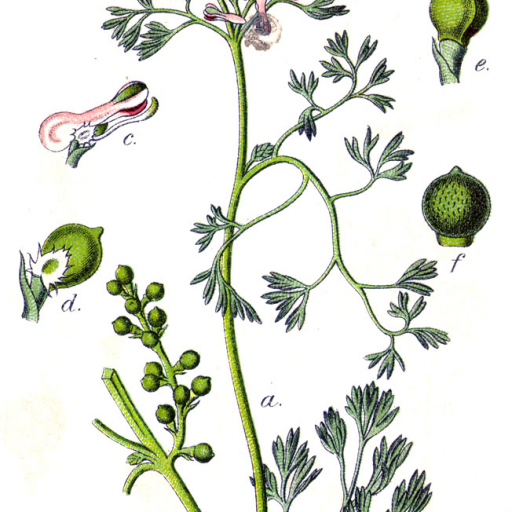
Plant Overview
Known as the Fine-leaf Fumitory, this delicate wanderer earned its genus name Fumaria (from the Latin fumes terrae, or "smoke of the earth") because its wispy, gray-green foliage resembles a low-hanging cloud of smoke hugging the ground. While it looks as fragile as lace, it is a resilient pioneer plant that has traveled from the Mediterranean to decorate garden edges and rocky fields across the globe.
🔍 How to Identify
- 🌿 The Foliage: The leaves are the standout feature—deeply divided and thread-like, resembling carrot tops but with a distinct waxy, blue-green (glaucous) tint.
- 🌸 The Blooms: Look for tiny, tubular flowers that grow in elongated clusters. They are typically white or pale pink, each tipped with a sharp splash of dark purple or deep red.
- 🌱 Growth Habit: It is a "scrambler." Lacking tendrils, it simply leans its weak, succulent stems against neighboring plants to lift its flowers toward the sun.
🏡 In Your Garden
- ☀️ The Sun Seeker: This plant is an opportunist that thrives in disturbed, well-draining soil. You will often find it popping up in vegetable patches or flower beds where the soil has recently been turned.
- 💧 Drought Strategy: Because it possesses a surprisingly sturdy taproot, it can handle dry spells better than most dainty wildflowers. It tends to complete its entire life cycle quickly in the spring before the intense heat of summer sets in.
⚠️ Safety & Toxicity
- 🧪 Alkaloid Alert: Fumaria parviflora contains several isoquinoline alkaloids. While it has a long history in traditional folk medicine, it is considered toxic if ingested in improper doses.
- 🐾 Pets & Livestock: It is generally avoided by grazers, but it can be harmful to horses and cattle if it hitches a ride into their hay. Keep an eye on curious pets, as ingestion can lead to stomach upset.
✨ Fun Fact
Ancient herbalists once believed that this plant did not grow from seeds at all, but rather from "vapors" rising directly out of the soil—a myth born from its smoky appearance and the way it seems to vanish into thin air once the summer heat arrives!

Detailed Care Instructions
To grow Fumaria Parviflora, also known as small-flowered fumitory, you can follow these steps:
- Obtain seeds or young plants: You can either collect seeds from mature Fumaria Parviflora plants or purchase them from a reputable supplier. Alternatively, you may find young plants available at local nurseries or online plant stores.
- Choose a suitable location: Fumaria Parviflora prefers a well-draining soil in a sunny or partially shaded location. Ensure that the area receives at least 4-6 hours of sunlight per day for optimal growth.
- Prepare the soil: Loosen the soil and remove any weeds or debris. Incorporate organic matter such as compost to improve fertility and drainage.
- Plant the seeds or young plants: If sowing seeds directly, scatter them on the prepared soil surface and gently press them into the soil. Alternatively, if using young plants, dig a hole in the prepared soil and place the plant carefully, ensuring the top of the root ball is level with the surrounding soil.
- Water regularly: Keep the soil consistently moist but not waterlogged. Fumaria Parviflora prefers slightly moist soil but can tolerate short periods of drought once established. Water the plants deeply at the base to encourage deep root growth.
- Mulch the soil: Apply a layer of organic mulch, such as wood chips or straw, around the base of the plants. This will help conserve moisture, suppress weed growth, and regulate soil temperature.
- Provide support: Fumaria Parviflora tends to be a climbing or sprawling plant, so consider providing a trellis or stakes for support if desired.
- Monitor for pests and diseases: Keep an eye out for common garden pests like aphids or spider mites. Use environmentally friendly pest control methods if necessary. Fumaria Parviflora is generally resistant to diseases.
- Harvesting and maintenance: Fumaria Parviflora can be harvested when the flowers are fully formed. Regularly deadhead or trim back the plant to promote continued blooming. Prune any dead or damaged stems as needed.
- Enjoy the flowers: Fumaria Parviflora produces delicate clusters of small flowers in shades of pink to purple. Enjoy their beauty and observe beneficial pollinating insects that may be attracted to them.
Remember, each plant has its unique characteristics and requirements, so it's always advisable to research specific care needs for Fumaria Parviflora to ensure success in your growing conditions.

Place in a bright room that is sun drenched almost all day. Or directly in a south-facing window.

To water this plant, it is important to ensure that the soil is moist but not waterlogged. One way to achieve this is to water deeply, allowing the water to soak into the soil rather than just wetting the surface. However, it is also important to avoid letting the soil dry out completely, especially during hot or dry weather. Monitoring the soil moisture level regularly will help determine when the plant needs watering. It is also important to avoid getting water on the leaves, as this can encourage fungal growth.
To fertilize this plant, start by gathering a balanced fertilizer with similar amounts of nitrogen, phosphorus, and potassium. Avoid using too much fertilizer, as this can cause damage to the plant. During the growing season, apply the fertilizer about once a month, following the instructions on the package for proper application rates. Be sure to water the plant well before and after fertilizing to help the nutrients absorb into the soil.
The ideal soil for Fumaria Parviflora plant is well-draining and rich in organic matter. It should have a slightly acidic to neutral pH level between 6.0-7.0. The soil should be loose and friable to allow for good root growth and to help air and water movement. Clay soils should be amended with sand or other coarse material to improve drainage. The plant prefers a fertile soil that has been prepared with compost or other organic matter. It is important to avoid using heavy, compacted soils or those that are excessively sandy, as they may lead to poor plant growth or development. Additionally, the soil should be kept moist but not waterlogged to ensure optimal growth.
Fumaria Parviflora plant can be propagated through stem cuttings or seeds. To propagate through stem cuttings, select a healthy stem and use a sharp, clean knife to cut a 5-7 inch section from the stem. Remove the leaves from the lower inch of the stem and dip the cut end in rooting hormone. Plant the cutting in a pot filled with well-draining soil and water it thoroughly. Keep the soil moist and in a warm, well-lit area until new growth appears.
To propagate through seeds, collect the seeds from the plant once they are mature. Sow the seeds thinly in trays filled with a well-draining seed starting mix. Cover the trays with a plastic lid or wrap and place them in a warm, well-lit area. Keep the soil moist and after a few weeks, remove the plastic and thin out the seedlings to give them more space. Once the seedlings are large enough, transplant them into individual pots or directly into the garden.








