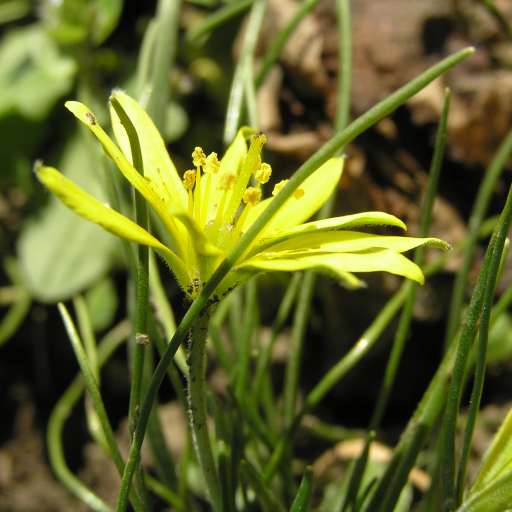
Plant Overview
Known as the Hairy Gagea or the Meadow Star-of-Bethlehem, this tiny, golden wildflower is one of spring’s earliest messengers. It is a humble "nomad" of the plant world, often found in the overlooked corners of old vineyards, cemeteries, and sun-drenched meadows. Unlike its more famous garden cousins, it has a rugged, fuzzy appearance that helps it withstand the unpredictable chills of early March.
🔍 How to Identify
- 🌟 The Bloom: Small, star-shaped flowers with six bright lemon-yellow petals. The backsides of the petals often have a subtle greenish tint.
- ☁️ The "Fuzz": True to its name (villosa means hairy), the flower stalks and the leaf margins are covered in fine, soft white hairs, giving the plant a shimmering look in the sunlight.
- 🌱 The Foliage: It typically produces two very narrow, grass-like leaves that emerge from the base. They are so thin they are often mistaken for blades of grass until the flowers appear.
🏡 In Your Garden & Nature
- 🍇 The Vineyard Companion: Historically, this plant is a "culture-follower." It thrives in the loose, tilled soil of traditional vineyards and orchards where larger weeds haven't had the chance to take over.
- ⏳ A Brief Appearance: It is a true ephemeral. It completes its entire life cycle—blooming and seeding—in just a few weeks before disappearing underground into its bulb to sleep until next spring.
- ☀️ Sun Seeker: If you are looking for it, go out on a bright day! The flowers are light-sensitive and will remain tightly closed on cloudy days or during the late afternoon to protect their pollen.
⚠️ Safety & Toxicity
- 🚫 Non-Edible: While not considered highly "deadly" like some of its lily relatives, the Hairy Gagea contains alkaloids and saponins that are not fit for consumption.
- 🐾 Pet Safety: If ingested in large quantities by cats or dogs, the bulbs can cause digestive upset, vomiting, or lethargy. It is best treated as an ornamental "look-but-don't-touch" plant for curious pets.
✨ Fun Fact
The Hairy Gagea is considered a "bio-indicator." Because it hates heavy chemical fertilizers and intensive modern farming, its presence in a field or vineyard usually indicates that the land has been managed traditionally and sustainably for a very long time!

Detailed Care Instructions
Gagea villosa, also known as Yellow star-of-Bethlehem, is a perennial plant that produces bright yellow flowers in spring. Here are some tips on how to grow Gagea villosa:
- Planting: Gagea villosa prefers well-draining soil and full sun to partial shade. Plant the bulbs in the fall, placing them about 2-3 inches deep in the soil.
- Watering: Keep the soil consistently moist but not waterlogged. Water the plant regularly, especially during dry spells.
- Fertilizing: Gagea villosa does not require much fertilizer. You can add a light application of a balanced fertilizer in the spring before the plant starts to grow.
- Mulching: Mulch around the base of the plant to retain moisture and suppress weeds.
- Pruning: After the plant has finished flowering, you can deadhead the spent flowers to encourage more blooms and tidy up the appearance of the plant.
- Division: Gagea villosa bulbs can be divided and replanted every few years to prevent overcrowding and rejuvenate the plant.
- Pests and diseases: Gagea villosa is generally pest and disease-resistant. Watch out for slugs and snails, which may feed on the foliage.
By following these tips, you can successfully grow Gagea villosa and enjoy its bright yellow blooms in your garden.

Place in a bright room that is sun drenched almost all day. Or directly in a south-facing window.

Gagea Villosa is a plant that requires moderate watering. The soil should be moist but not waterlogged. When watering, it is important to ensure that the water reaches the roots of the plant. This can be done by watering the soil around the base of the plant rather than watering the foliage. In addition, it is important to avoid overwatering, as this can lead to root rot. It is best to allow the soil to dry out slightly between each watering, as this will help prevent overwatering. In general, Gagea Villosa prefers a slightly acidic to neutral soil pH, so it may be necessary to adjust the pH of the water if it is too alkaline. Finally, it is important to monitor the plant for signs of stress or dehydration, such as wilting or browning leaves, and to adjust the watering schedule accordingly.
To fertilize the Gagea villosa plant, apply a balanced, liquid fertilizer diluted to half strength every two weeks during the growing season. Be sure to water the plant thoroughly before and after applying the fertilizer. Avoid fertilizing during the plant's dormant period. Follow the manufacturer's instructions on the fertilizer label for proper application rates and frequency.
Gagea Villosa plant prefers to grow in soil that is well-draining and fertile. It thrives in soil that is slightly acidic to neutral in pH, with a range between 5.5 and 7.0. The soil should be rich in organic matter, and it should retain moisture without becoming waterlogged. A combination of sandy loam and peat moss is ideal for this plant. It is also important to ensure that the soil is not compacted, as this can lead to poor drainage and root rot. Regular fertilization with a balanced fertilizer will help to keep the plant healthy and thriving. Overall, the best soil for Gagea Villosa plant is one that is well-draining, rich in organic matter, slightly acidic to neutral in pH, and free from compaction.
Gagea villosa can be propagated through division of the rhizomes or bulbs. To do this, carefully dig up the plant in early spring or fall when it is not actively growing. Separate the rhizomes or bulbs into individual sections and replant them in a new location. Make sure to plant each division at the same depth as they were originally growing and water them well after planting. With proper care and attention, the divisions should establish themselves and grow into new plants.








